19 hours ago
Anti-thacism as evidence of infertility of political thought in Kosovo
Periskopi(a year ago)
(a year ago)It says: Adri Nurellari One of the most famous sayings ever remembered by Eleanor Roosevelt is the saying that the brilliant “minds discuss ideas, average minds discuss events while small minds discuss people” Unfortunately in Kosovo for many years, political debate over persons, not on ideas and developments like [...]
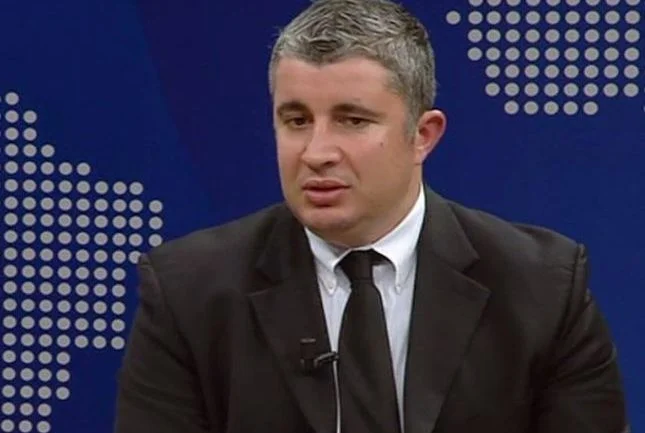
It says: Adri Nurellari
One of the most famous sayings ever remembered by Eleanor Roosevelt is the expression that the various <x0- mindsets discuss ideas, average minds discuss events while small minds discuss people”. Unfortunately, political debate over persons and not on ideas and developments in Kosovo has been taking place in more advanced political cultures. As if the soap operas were not enough to take over media space, politics began to be treated as soap opera by focusing on the actions, situations, or fates of the main characters. At the centre of the rumor of slander stands Hashim Thaci as the most important political personality in Kosovo of the past two decades. Understandably, the protagonist role itself makes a target of arrows, for as Newton's third law: <x2 says in physics > For every force there is always a counteraction equal to”. Therefore, the presence of anti-thacism as political action in a pluralistic era is quite natural. But what is strange is the dominance of this trend in public debate, which testifies to the sterility and poverty of debate and political opinion in Kosovo.
There are numerous individuals in politics, the media, the career-making civil society, and they have become famous only by carrying the anti-thacism flag. If you remove the widespread aggression and criticism of Thaci, there is hardly any contribution or other role left to public life that you deserve today's status in society. To some flagmen of anti-thacism so great is the emotional burden of obsession with this man that even psychological-psychiatric disorders of the form of psychosis manifest themselves when they talk about it. In the context of these attacks on the media, this coalition of anti-thecists, to sell as an opinion what, in fact, is their emotion and sell for analysis what is actually their personal opinion. What is more, this type of personal debate takes on a fiery, heavy emotional proportions that puts the whole sense and logic out of the game even degrades into banal insults.
This personality-based policy causes all political legalisation to be reduced to character, as well as one person's actions or inactions and not to deal with facts, balance, projects, ideas or reforms carried out or failed. Therefore, the strong presence of anti-thacism demonstrates that more than state interest dominates resentment, maize, resentment, envy, jealousy, personal greed or other similar complex forms. Hence, TV debates that deal with comments by political actors are increasingly similar to cafe gossip. The discussion takes on more of the form of clashes between fans of different football teams, where controversy gives way to insults and lack of thought is compensated for with empty word diarrhea.
The idea would be to help ideas dominate Kosovo's political debate, but it seems that it still takes time to lighten our mentality. There is nothing wrong with criticism, doubts and accountability on a political leader, rather, it is this pressure that makes it possible to ensure good performance. But in Kosovo the size of anti-thacism is abnormal and has achieved dimensions of a massive collective obsession that has usurped the political scene in the country over the past months that the final phase of dialogue with Serbia is being discussed. Always dealing with attacks on Thaci, he turns his attention away from the prepostering and contextary debate. For months the entire opposition, instead of specifically dealing with proposals, recommendations, suggestions for dialogue, dealt with personal attacks on the president and questioning his constitutional right to lead foreign policy in the country.
The public debate today is dominated by Thaci's collective attack on the opposition by those dimensions to restore the memory of the VLAN's creation a day after the day of the vote, when the ink from voters' fingers died, the will of the ballot box was replaced by the negotiating table among the missing parties. At the time, the obsession of anti-thachism together made a secular coalition of parties that had competed and attacked each other for years, pointing out they had no ideological orientation except anti-thacism. Even in the party that has once been the frontrunner in Kosovo in terms of launching ideological debate, the Vetevendosje Movement, the socialist orientation disappears whenever Hashim Thaci is in question. Personal commitment to Thaci in 2014 prompted Vetevendosje to abandon the alleged principles of self-determination by agreeing to negotiations, as well as to agree to co-operate with those charged with being tax collectors, corruption heads, Beftman Morina co-organists, or Belgrade's protracted political list. The fact that Thaci is in some way a polar orientation star of Vetevendosje's actions also witnessed the special court case. When he entered parliament to vote they were sharply opposed, but when an opportunity came near to disable the tribunal last December, the VV rejected itself and opposed this OVL initiative only because it thought it could suit Thaci.
Anti-thacism has been transformed into the main ideological pillar of the Democratic League, which from a political organisation in pro-man-oriented idolatry, Rugova and Rugovism has become a party that main orientation manifests attacks on Thaci or anti-thacism. Over the course of this year, discussion about the dialogue phase has never been heard from this party of any proposals, recommendation, suggestion and not talk about platforms or concrete vision of the content that should have the peace agreement with Serbia, but only dealt with the president. The whole party that boasts trained teaching cadres has not articulated even a basic idea of negotiating mode or the desired outcome where they should be led, but has only been dealt with by challenging the role of the president they themselves have chosen.
Currently, there is a favourable international political context, but very delicate and relatively temporary that can ensure the closure of the conflict with Serbia and the cement of Kosovo's international state subjectivity. There is international pressure by the European Union and the US to push ahead and finalise a full legally binding agreement between Kosovo and Serbia as soon as possible. On the one hand, the European Union is approaching the European Parliament's elections, and the likelihood is that with the strengthening of the populist parties of recent years, in the coming year we will have a different European Union. These non-conventional and non-conventional populist parties have taken power in some EU states and are approaching governance in many others, which means that their Isolationist, anti-environment, anti-migrant and Islamist policies have to become part of the EU's central policy. This means that the future European Union, under all odds, will not have the will to deal with the Balkans as it does today. Neither do we know in Serbia until we have a leader like Vucic who has so much concentrated power that he is willing to push ahead of a process that is not popular in his country.
But as strong as the anti-thacist Senate as the political opponents, for the sake of the uninhibited majority are willing to lose Kosovo this historic circumstance only for its anger or to act in accordance with the proverbial proverbial word, in spite of the mother-in-law, the deadliest man. This absurd anti-person stance could be at risk of repeating it in 2014 when the opposition then left Kosovo without an army of wrath against Thaci. Not wanting the merits of forming Kosovo's Armed Forces to take Thaci, the LDK and VV to vote on the continuation of countries reserved for a more mandate, which was the condition of Serb minority parliamentary political parties to vote in exchange for the formation of the military. Political representation in parliament in the subsequent elections changed completely with the involvement of the north in elections and the establishment of the Serbian List, and quite unlike the previous political representation, the List was strongly declared against the Kosovo Army. So, because of anti-thacism, Kosovo remained without military and the likelihood is that for the same reason it will remain without an agreement of recognition that is so much needed by Kosovo.
The dominance of anti-thacism in political discourse in Kosovo is not only worrying about the violation of state interests and the loss of historical opportunities for the country as did the military, but also about the health of democracy in the country. The lack of ideological debate, confrontation of views and presentation of program alternatives suggests that we are still experiencing a pre-political or pre-modern situation. As long as politics focuses on personalities and not on ideas and ideologies, we have voters who just vote on who the pilot will be, but not on what direction the country should take. Therefore, the fact that debate over personality prevails in Kosovo, so political leaders competing or playing a key role in public life testifies to a low developmental stage of political life. Unlike the policy on matters, personality-based politics deal with mudslinging rather than content, personal attacks, rather than beating ideas, interacts with the messenger rather than with the message, focuses on the individual's denigration, not on arguing with the proposals expressed. A political environment based on the personalities of debate is dominated by the individual's psychalysis - its elements of character, personality, behavior, physical traits, biographies, family, temperament, or other psychic traits. While debate on concrete topics is ignored, on ideology, institutions, processes, laws or reforms. Consequently, political debate has destructive tendencies that it aims at denigration of the opponent while it should be constructive in the form of confronting political options. So instead of dealing with standards and institutional performance, it focuses on attacking an individual as the incarnation of evil.
The ideal for a consolidated democracy is the policy based on the issue sets first values, ideas, principles, proposals, reforms, concrete policies or vision for the future. This kind of policy focuses on issues that affect the everyday life of a country's citizens and offers solutions that address them. In the case of Kosovo, the content policy based on issues would have to deal with issues affecting Kosovo's most citizens such as the country's international subjectivity, poverty, unemployment, ensuring an efficient judiciary and rule of law, access to quality public services such as education and health, the need for housing or back infrastructure. Many of these issues can often be addressed at the local government level in Kosovo, given the high level of decentralisation, but unfortunately local government representatives most often deal with personal central-level clashes.
Understandably, the individual's role in politics is very important and often crucial, as long as the candidate's role for prime minister in Britain or the US presidential candidate is seen to understand how strong the dimension of policy personalisation is. But when it goes to extremes and all politics focuses on the individual's role, many actors, factors, and circumstances that also play a key role become neglected. It should also be understood that in these two oldest democracies of Europe, it is not simply about charismatic individuals but individuals with concrete ideas and proposals. Britons and Americans believe only in certain celebrities but in people who believe and propose certain ideas. The modern history of the developed world shows that ideas to materialize require charismatic idealists who push these ideas forward. These individuals with the rhetoric they use, the programs they reveal, the attitudes that they actually hold turn into the incarnation of certain ideas that would be simply considered abstract ideas without them. So it's about politicians who are closely linked to clear sets of ideas by being offered in the package as offer for those who support these ideas.
Unfortunately, Albanians wherever they live have had no experiences of democracy, and in collective memory they know either the indictment of the high gate or the glorious communist leader of Enver Hoxha or Marshall Tito. Within the Ottoman Empire, except for two brief periods of constitutional monarchy and the assembly of the general representative assembly in 1876-78 and 1908 until Balkan wars, Albanians have had no experience in the past of any form of vestigial democracy. For the sake of truth, this way of conceived life as a hierarchy at the head of a presiding individual also fits our patriarchal tradition, where the word of the father or the first one of the family had the weight of the law. In Kosovo the lack of past experience of democracy and the inexorably focusing on the national problem -- that is, the post-communist challenge -- has left little room for the parallel post-communist transition to progress. As a result, political culture in Kosovo has not yet taken the place deserving of understanding institutions and processes, but continues to dominate the leadership's behaviour and will. This causes many citizens to have exaggerated expectations and resulting in excessive illusions against leaders.
In democracy, decision-making is much more complicated, decentralised and distributed to many actors and institutions, many state affairs and more than just one person's will is actually needed consensus and co-operation on many sides.
This communist past often stands out in the form of manifestation of anti-thacism in Kosovo. The attacks on it abounded in characteristic traits and styles of lexic attacks of totalitarian communism when the political or ideological opponent not only attacked for beliefs and attitudes but was personally denigrated in all aspects. In totalitarianism, the opponent was completely annihilated, not only by him but also persecuted and persecuted by his family and denied any good deed or trait that the victim could have had.
It is interesting how similar to these shades of Kosovo today, there has been a dominant political debate in Albania 15 years ago when it focused on the melodrama of two people, Nanos and Berisha. Political wings focused on the demonstration or clogisation of these two persons, creating the illusion that victory by one or the other would serve as panacea to cure all of Albania's miserable problems. Specifically, the Socialist Party of the Republic of Albania has been dominated by anti-berryism in its political legalisation, and there has been no clear ideological orientation even beyond attacks on Berisha, as photocopying the Democratic Party in actions and attitudes. Both of these figures left the platform of Albanian policy protagonism, and the Albanian state still suffers from the same thorny problems as poverty, unemployment, crime, corruption and the extremely outdated public services.
After all, there was nothing different about human life, to use Hobbes' words, is lonely, poor, evil, harsh and short, and people will continue to have egocentric, predatory and beneficial traits in nature, and only the rule of law with its democratic institutions can bring the welfare of society. It's already the past illusion of society's nearly-religious expectation of a holy leader of <x0-style Sean George who will kill the dragon of evil. Numerous societies around the globe have had this Messianic illusion for hundreds of years that to improve life and end injustice, an enlightened envoy would have to be hosted - a version of the Messiah, named Mahdi, Maitre, Calik, Lee Hong, or Sashiant in other cultures. But experience, the history of humanity, has already proved and proved convincingly that the prosperity of society comes from building liberal-democratic institutions and promoting specific human values such as tolerance, dialogue or solidarity. By focusing so much on leaders we lose the complete view of reality and neglecting values and ideas. Values are eternal and never disappoint you as they often do human beings who are imperfect and inevitably make mistakes.
Recently, this policy based on political figures and not on issues is harmful not only for institutions, for political debate and for the policy-making process, but for politicians themselves. As long as the race becomes that who attacks, slanders, bruises, or stains all politicians are branded and gradually in the eyes of the citizen, everyone seems dirty, and society gradually removes the belief that politics can bring a solution to their problems. The widespread loss of public policy distrust that is being demonstrated by polls is largely caused by this very negative personal approach that no politician seems pure to citizens. This negative approach to personal attacks brings political apathy, surrender, to abandoning the country from despair. And this kind of dirty game of personal attacks down the belt, not beating ideas and beliefs, the decuzion keeps away from any honest public personality that could contribute to the country by joining politics. Getting into the political ring with these non-combatal clashes makes it very difficult to enter and cool the political elite with the new pure blood of new figures.