 a day ago
A reminder of Alban Bujar- Eye of War, the memory of a nation
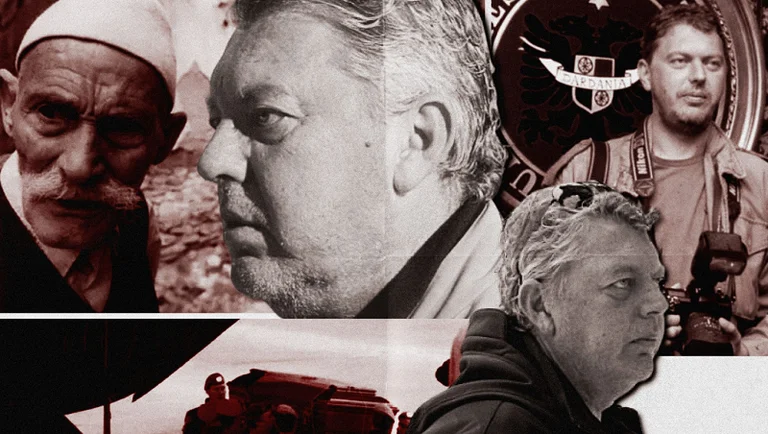
Periskopi(a year ago)
(a year ago)Alban Bujar witnessed the truth, chronict of pain and hope, which left behind images that the history of Kosovo and Albanians cannot forget: Baton Haxhiu Alban Bujar was my friend. He left us today. The photoporter of the struggle with the heart. An impossible dye. He enjoyed life with all [...]
Alban Bujar witness to truth, chroniclan of pain and hope, who left behind images that the history of Kosovo and Albanians cannot forget
It says: Baton Haxhiu
Alban Bujar was my friend. He left us today. The photoporter of the struggle with the heart. An impossible dye. He enjoyed life with all its benefits, even in times of war. I met her a few days ago in a small Pristina coffee.
I remember his sitting next to me in a little bar after the war, with a glass of cold beer in his hand and a warm smile. She enjoyed beer cups, good company, and long - smile stories.
He confessed the darkest events that we had lived together, but now he saw the fear of war in his mouth often turned into a mood once the shadows of horror fled.
He laughed at our dangerous events, like when we mocked the death he had ignored so many times, and the rest of us laughed with him, grateful that those days were left only stories of his pictures.
But after each joke, a truth was hidden - a memory of the war that he kept alive through photography. I still have a vivid description of his character - a gas and a postwar mood cannot dim the image of a courageous, alert, and stimulating man. Ben was very fond of Dog and bear.
I remember how, after we spent night and day on bullet roads, he toasted life tomorrow that he called <x0qepir” with his funny irony. It seemed like he wanted to tell death that we still laughed, we still drank beer, we still lived.
Early in the war, when the flame had just involved Kosovo, I found myself side by side with Alban in one of the events that sealed the fate of our country.
There were the January and March attacks on Licoshan and Mars, 1998 Precaze burned under the hail of bullets. Serbian forces had surrounded the family of commander Adem Jashar and the shots were heard away in Drenica. Alban and I arrived near Prekazi as the sky was covered by the smoke of the hit houses. I remember that the powder scent burned our noses, and the earth trembled at the blasts.
In that chaos, Alban did not think of himself as I saw him grasp the camera and fix up the images even when we had to cower. After three days of fighting, everything fell in severe silence. We enter the Yasar family courtyard when the danger had not yet passed completely.
Around, the walls of the house were destroyed and pierced by shells, the courtyard filled with bullet shells and traces of blood. The whole neighborhood was surrounded by special forces. The images were heavy: lifeless bodies listed in one country, women and children among victims a whole family burned by history.
Alban kneeled next to a tree, where an elderly woman would quietly weep over her nephew's body. He picked up the camera slowly, respectfully, as if he was saying a prayer, and shoots the picture. He wasn't talking, he was photographing because only the photoreporters let them near him. The burning house of the Jasharaites, a pair of opings of children left in the mud, a rifle still leaning against the wall as evidence of resistance.
Tears burned in our eyes, but Alban kept his pace. He had to document everything. I trembled with shock, and he, with a low voice and blooded hands from dust and debris, said to me: “These images we have to show. The whole world needs to know what happened here”
That's when I realized that my friend Alban had chosen a path, became a nation's eye, a witness to history in her most tragic hour. The Pracas slaughter and the Jasharan killing greatly shocked him, but it also gave him a purpose in life. Since then he proudly wore a belt in his camera... memory from that day of March... as if it were his oath that he would not stop photographing until Kosovo was free.
That year's summer, war raged through Kosovo, and we followed the hottest fronts. Rahovez had become a war arena in July 1998. The sun took away the vineyards of Rahovez, but the city was filled with the smoke of burnt houses. We set out for Rahovec along with Avim, Garentine and Arbana for the first KLA interview for a newspaper.
As soon as we learned that a fierce battle was under way between the Liberation Army and the Serb forces, we returned the next day. On the way, we saw hundreds of civilians fleeing on foot, with babies on their hands, and little spoil on their shoulders. It was the sight of a persecuted people.
Alban stopped taking pictures from time to time. A teary mother carrying a baby in her improvised blanket cradle, a man with a bandaged arm helping the elderly walk, a lost child looking around in shock. These are the faces of freedom or death”, he told me, erasing the sweat of the forehead. When we arrived in the city, we heard widespread blasts.
The streets of Rahovez were desolated, only stray dogs and a cow wandering in the middle of the street. Suddenly, a nightmare scene appears near an old mosque - the Rahovec massacre had left some bodies in the court of Sheh Myhedin, where residents had sought refuge. A tomb silence covered the site.
Alban came near, his face was darkened with terror, but his eyes shone with cold anger. He began to photograph with firm hands the lines of the bodies lying on the ground, their hands still holding hold on each other as if death had dealt treacherously with them. A burning Koran on the edge of the blade, a bloody family portrait left in the rubble.
Around, the walls of the mosque were stains of bullets and blood. In one corner I saw an elder weeping silently, his frozen eyes at a point, his lips trembling as he uttered prayers. Alban approached the elder, put his hand gently over his shoulder, and just sat down in honor. He didn't take a picture of that moment, out of respect for the living pain, but I know the moment remained in his soul.
Soon we heard footsteps and voices, and Serb forces were patrolling nearby. With a frozen heart, we were forced to remain silent. We went into a ruined house where the smell of spilled wine filled our noses, her basement was full of wine barrels broken by the shells.
Years later, when we drank a glass and recalled that day, Alban would laugh with tears as he related how we were drinking without drinking a drop. Those memories he already confessed to as almost funny adventures but I know that in his eyes he kept the memory of those victims in the courtyard of the sea forever. After the fear disappeared, only history and a bitter mood remained to confess.
The winter of 1999 brought even more pain. Every day came black news, and we were about to answer every call to testify. The morning of January 16, 1999, he found us walking through the freezing mist toward the village of Recak. Before the light went out, the word that a slaughter had occurred there had spread around.
We arrived in Recak very early with Benin, Agriculture, and Ylber Bayraktari. The village was covered by a Morty silence. The tiny dew that fell last night was stained with mud and... blood. The view that came our way will never fade my memory.
The massacred bodies of the village's inhabitants had been disfigured. Men slain with their hands bound, women lying on the dew on their faces from heaven, young men beside each other, and an angel child sleeping forever in the lap of his lifeless mother. Recak's massacre shook the heart's foundations.
A single clenched cry was heard in the air: The village elder was crying aloud as he touched the faces of one of the victims by calling their names. I've never seen such pain centered in one place. For a moment, my knees cut off; My eyes were filled with tears, and my heart was pain and anger. But Albany... Albany stood firm. Tears ran through the pages, but his camera would click after click, as evidence that we were still alive to confess to those who were no longer there.
At one point, I saw her walk by a young man, perhaps about fifteen years of age, who had been lying with her eyes open. The child's barren eye seemed to see the frozen sky. Alban kneeled next to his body, closed his son's eyelids easily, and then took a picture of his face, both to give peace and an image. “Bota must see this”, he said in a drowned voice.
A stranger nearby who came with us trembled with shock. Alban put his hand on his shoulders to carry it. No one could speak but the eyes of that man behind the camera and the bloody reality around them. Usually at other times, he would have been accompanied by a joke or a battu, but that evening he spoke for a long time.
Just when we saw them white, he started a sigh and, with a sad smile, he said: “Look what Serbia did to my boots. Recak Clay is not easy.” We laughed a little bit with bitterness. We knew that it was mud that we would never lose sight of.
However, as I listened to him humoring my boots, I realized that Alban was trying to escape the anxiety that had stuck his nails into his soul. Fear was slowly running away, and he, loyal to himself, was turning this chapter into an account that could be said with smiles, not to leave the last words to fear.
When the photos were opened, we glanced at one of them for Ballene at Koha Ditore, concerned about what might be worse than anything we had seen until then. We remembered the dimpled streets and roadblocks, where Arriving was driving the old car with tight jaws, but his eyes were fixed forward with a severity I had rarely seen.
On the way, we saw long columns of refugees being deported - men, women, children, and elders walking hundreds of miles to Albania. Many of them wept, some being muted by shock. Alban also photographed them from the window of the car, as if to record that Bible ecstasy of our people. I didn't want to believe in eyes, by the side of the road, on the wet soil from the rain of the night before, you saw fathers and sons side by side in death, families destroyed forever.
Some bodies were on foot covered in blankets or jackets from those few survivors who had dared to return to bid farewell. Close by, only wind blows and a distant cry of any woman calling “A voice raising your blood.
Albany got out of the car without saying a word. He slowly walked through the bodies with his camera in his hand, with his face frozen with pain and anger. I, who knew him, realized that he was experiencing the greatest pain of his life, but they were keeping their feet alone from his mission, showing the world this crime. He started shooting pictures with iron seriousness. Every click of Alban's camera there was like a silent cry to the world, an accusation and a prayer at the same time. Look what's going on here, don't be quiet!
A group of surviving men approach us crying. One of them carried a young man who had died in his arms. The boy's face was quiet, as if he slept, except for his chest rose up. Albanian slowly approaches that man. He put his hand on his heart, then raised the camera, and photographed that father with his lifeless son in his hands, his tears falling on the boy's forehead.
That image, I knew, would become a symbol of that tragedy and Albania knew that as well. When it was over, Alban put down the camera and closed his eyes for a moment. My shoulder trembled for the first time, and I saw my friend burst into oil in the middle of a job.
I held him tightly, between the corpses, and he wept in my silent body. That was when the weight of all that we had seen and experienced was poured out like a torrent of pain from his great heart. I let him cry, those tears were a surprise to all those who had no one to cry.
A few minutes later, he wiped his eyes with the back of his hand, took a deep breath and, with his voice frozen, said: “We won't forget...” That moment was a silent prayer and oath, that justice would avenge lost lives, that his testimony would overcome oblivion.
After Meya, Hasi's Rogova, Drenica and Recak, Podujevo and Gollaku, Gjakova and Decani, Alban had left the corner of Kosovo without stepping up: with his camera he had pursued every movement of the Serbian Army and police from towns in the most lost villages. We had often spent many nights in the editorials to avoid Serb roadblocks. His boldness was bound to stop us from Serb forces at times, threatened us, and even took his video, but he did not hold back. I remember one time at a checkpoint in Lipjan and Serb soldiers take our guns out of the car. I was sure they'd humiliate us.
Alban quietly pulled out his camera and reportedly was an international journalist, showing them an old permit he kept hidden in a pocket of a military collar.
I was shaking, but he managed to persuade us to get through with a laugh, although his heart was beating hard. “Saved my lies,” ridiculed me later, as he laughed with tears of relief. He also turned the most extreme risk into a history of laughter after it ended, such as to swallow anxiety. On another occasion, we spent hours crawling through thorns, we Berisha, to reach a surrounded village. When we came to the hill at dawn, we saw that Serbs were burning down the hill. Alban, tired and frozen, found the strength to grab the camera, and from a distance he fixed up that barbarous act - the flames that devoured the roofs, the silhouettes of running soldiers.
I'm also shooting fire, so they don't say tomorrow it happened,” said in anger. There was a sacred rage within him against injustice, and his only weapon was camera. With him he was shooting, not bullets, but undeniable truth.
The end of June 1999 found us together again, this time photographing, not death, but freedom. When the Serbian Army withdrew and NATO troops entered Kosovo, people began to emerge from the basements and forests they were hiding in. The streets were enlivened with long columns of those who returned to their homes in hopes, even in a bad state. I remember the day KFOR troops entered Pristina: the sky was clear, people embraced foreign soldiers with tears of joy, KLA fighters descended from the mountains and embraced their families. Albanians and foreigners danced in the streets, as if pain had never existed.
And Albanian, as always, on the front line, with the camera ready to catch happiness. I watched him run around like he didn't want to lose any smiles, no banners flying, no tears of joy on his face.
At one point I saw that he had left the camera down and was embracing a young boy, a KLA soldier in uniform. He was a friend of his who had fought them on the mountain. Alban would cry and laugh at the same time, carrying a bottle of beer that someone had given him for the party. He lifted the bottle up and called: “For freedom!”
A simple call that drowned in cheering the crowd. On that day, we drink beer in the middle of Pristina Square, surrounded by happy people, and Albanian excitedly told his stories as always. But this time, there was no need to turn into a mood to remove fear. Fear had fled, freedom had come, and his stories had become legend.
He immediately became known among his photographer colleagues because everyone knew that Alban Bujar had photographed the heart of war, had gone into hell to bring truth to people and the world. Many of those pictures were published in prestigious newspapers of the world. His name began to be coveted with honor, but he himself remained the same man.
I just did the “task, he would tell us when we cheered him, and he was trying to pass it with laughter, even the day we entered the offices of the daily “” and there was nothing left. The editorial there was nothing inside.
After the war, our streets split. I followed my work, he continued holding the camera in our hands daily, already documenting the reconstruction, fragile peace, and wounds still running in our society. I often met her in Pristina, in small cafes, not in the offices of the newspaper “Koha Ditore” where we had worked.
From time to time, I noticed a shadow of fatigue or sadness in his portrait. The war had left him constant signs of all sleepless nights, nightmares that caused him to wake up, citing his <x0) blood and gunpowder <x0). He was human in every cell, he felt the pain he had seen, and although he was humoring society, as an old friend he confessed to me that the shocks of the day still sounded in his heart.
Some battles continue inside us even when the war stops outside”, he told me one evening as we looked together at a glass of beer and red sky, which reminded him of Kosovo's flames of HINA.
Yet, Alban never gave up on darkness. He continued his noble work: opened photo exhibitions not to let history be forgotten. I remember when I didn't go to the opening of his exhibit “en route to freedom”, that I was away from Pristina, on the walls of the galleries were hanging pictures of Recak, Prekazi, Krusha, Dubrava, Meja... each a window in our common memory.
There was a silence in that hall when Alban put them on the walls because those pictures are his anti-forget bullets. And he was right, every image he caught in the movie was a living truth challenging propaganda, denial, or just forgetting time. It also exposed <x0). The blood to” with images of Hashi's Rogova Massacre and other tragedies, fixing them forever as part of our national memory.
The audience emerged from the shocked and appreciative exhibition. His legacy had already begun to brighten the new generations that were still born when the war occurred, learning from his photographs what price was paid for freedom.
Alban Bujar was more than a photorepter; he was a chronictale of truth, an artist of pain and hope that suffering turned into a collective memory. With his courage he showed how a man can cope with evil, not with weapons in hand, but with humanity and truth. He risked his life without hesitation because he knew that his pictures would become the voice of those who were forever silent.
Every time we see a photo of the war in books or museums today, a picture that thrills and reminds us of where we came from, somewhere in that image is Alban's eye, that sleepless eye that once saw the black reputation right in the face and did not back.
His pictures have become history, a living document that cannot be denied. In these we find the courage of a man who challenged death with a camera instead of a rifle, we find his sensitive spirit weeping for each victim but also smiles at any deliverance.
Today, while writing these lines, I still feel Alban's presence near me when we ran under the hail of bullets, even now when we ran under memories. He is no longer in this physical world, but he is everywhere, in every grim war picture he left behind, in every account showing a brave man with a camera in his hand, in every glass of beer that his friends lift for memory.
My old friend, I often meet with others who knew him and talk about him. And always, without exception, someone laughs because Alban has left us full of fun stories, full of bullets, full of crazy memories to confess. Like this one for his early death.
So he made us laugh even when the world was going down, never losing faith in life. He perpetuated the pain of Kosovo with his work, but also his strength and soul. Alban Bujar's legacy will live every time we talk about the Kosovo war because we can remember that time without remembering his photograph, his watchful eyes behind his great goal and heart.
On one of our last days together, where I was going out with Migen and Ismail Tashol before death grabbed him from us, we sat back in the same bar he wanted, like on after the war. Alban, despite his pain, ordered two beers. She handed me one drink and we knocked them out easily. He told me with that tired but honest smile.
For those who aren't anymore, and for those of us who are still here to show” I couldn't talk out of emotion, I just drank my glass and looked it in the eye.
To this day, every time the twilight falls and the memories of war come before me, I'll take a glass, lift it up to the stars and whisper: “Gross, Alban!” For the man who knew how to live completely, love you indefinitely and show courage to self-esteem.
He was and remains a photograph of an era, a witness to our history that kept his promise. He never let the truth be killed or forgotten. His memory will live in our hearts and in every image that tells the history of Kosovo.









