a day ago
US and Kosovo: From a Special Relationship to a More Competent Relationship
Periskopi(a year ago)
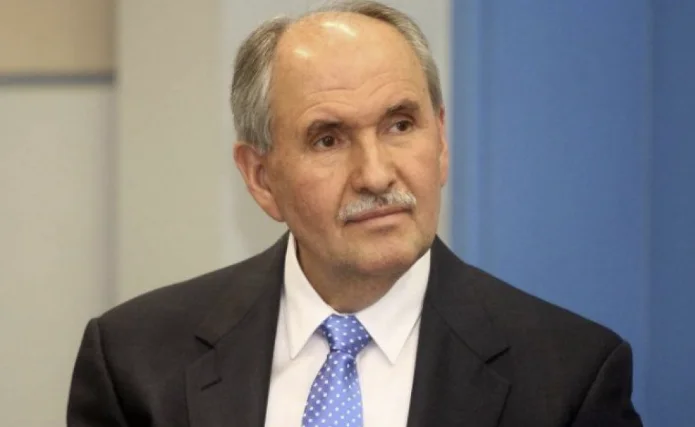
(a year ago)It says: Elez Biberaj Word at the conference on Kosovo's relations with the United States, held at George Washington University, on February 18, 2025 The United States and Kosovo have had a very, very special relationship. Like any bilateral, asymmetrical relationship, this relationship has gone through various stages, experiencing transformations [...]
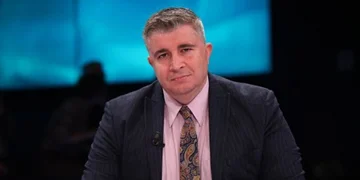
It says: Elez Biberaj
Word at the conference on Kosovo's relations with the United States, held at George Washington University on February 18, 2025
The United States and Kosovo have had a very, very special relationship. Like any bilateral, asymmetrical relationship, this relationship has also gone through various stages, experiencing significant transformations from periods of intensive interactions, interest convergence, and a high level of co-operation and policy co-ordination, to a more complicated relationship, which has sometimes been characterised by disagreements over fundamental issues.
The United States has been the driving force for Kosovo's liberation, declaration of independence and consolidation of statehood.
The successive American, Republican and democratic administrations have followed a stable policy towards Kosovo. America's vision for Kosovo has been a stable, prosperous and democratic country, with strong independent institutions, good governance, respect for the rule of law, respect for minority rights and good relations with neighbours.
For decades, the US has committed steadily to helping Kosovo face its domestic and external challenges, boosting its stability and democratisation and providing considerable diplomatic, political, economic and military support. The US played a direct role and leader in securing Kosovo's international position. The efforts of American public diplomacy on behalf of Kosovo were important in ensuring recognition by more than 100 countries. The United States also played a key role in protecting the Kosovo issue at the International Court of Justice, which ruled that Kosovo's declaration of independence did not violate international law. Kosovo enjoyed broad two-party support and was the focus of high-level attention. Kosovo leaders and officials enjoyed unusual approaches to leading American policymakers. In recent decades, the United States has provided about $2 billion in assistance. A contingent of American troops is part of KFOR, which protects Kosovo's security.
For its part, Kosovo has been a staunch American ally, an important partner in the Balkans and a supporter of American foreign policy actions. It has split American targets to oppose Russian and Chinese influence and their destabilizing efforts in the region. At Washington's request, she has also accepted Afghan refugees. Kosovo is certainly the most pro-American country in Europe. Many Albanians have concluded that the relationship with the United States is permanent and crucial to Kosovo's welfare.
Thanks to America's support, Kosovo is a success story. It has made significant progress in consolidating its state, there is a functioning democratic order, a market economy and good relations with all its neighbours, except for Serbia. Kosovo does not differ significantly from its neighbours in terms of governance, rule of law, independent institutions, protection of minorities, respect for human rights, freedom of the press, and holding fair elections.
Despite that progress, Kosovo is in transitional phase. Its biggest challenge is the threat from Serbia. Twenty-five years after the end of the 1999 war, Belgrade continues to undermine Kosovo's sovereignty, supporting parallel structures in the north, promoting violent incidents and working against Kosovo's membership in international institutions.
As the world has moved forward, Albanians and Serbs remain hostage to their troubled past. They still see their relationship as any victory for one side is loss for the other. With the competitive visions of their relationship, the two sides have failed to assume responsibility and advance the reconciliation process. As Kosovo seeks recognition from Belgrade, Serbia struggles for a de facto split and has so far rejected any election that would strengthen Kosovo's sovereignty.
The US and EU have been working closely to facilitate a dialogue between Pristina and Belgrade, addressing a range of issues in hopes that at the end of the process there would be a reconciliation and Serbia would recognise Kosovo. EU-launched talks led to the signing of a series of agreements in 2013 and 2015, envisioning the integration of police and judicial authorities in the north into the Kosovo system, the reciprocity of license plates, and, most discussed, the establishment of an association of Serb majority municipalities.
While some of the agreements were implemented, the agreement requiring an association of Serb majority municipalities caused major disagreements. Almost immediately, Belgrade and Pristina offered different interpretations of the agreement. Belgrade insists that the association should have executive power a red line for all major political forces in Kosovo. Many Albanians believed the agreement was flawed and that the dialogue process was essentially an attempt to renegotiate independence. According to them, the US and the EU were forcing Pristina to make concessions, while not exercising appropriate pressure on President Aleksandar Vucic to recognise Kosovo.
The creation of Specialised Chambers in The Hague was also a highly polarizing issue. Albanians viewed the establishment of the Special Court as an attack on Kosovo's sovereignty and as an attempt to equate Serbia's crimes with Albanian crimes. President Hashim Thaci's indictment in June 2020, while he was on his way to the White House for a meeting with President Trump and President Vucic, was seen by both his supporters and opponents as an extremely humiliating event.
The Kosovo government faced increasing challenges in balancing the priority of extending its authority to the north with calls to accept Serbian demands, which clearly aimed at reducing Kosovo's sovereignty. Pristina leaders were unable to propose a reliable alternative to the association agreement or to develop a consistent policy towards the Serb minority. Meanwhile, they faced the uncomfortable situation where the US, their main ally, gradually but with uncertainty, was changing its policies and, according to them, was increasingly taking the sides of Serbia. Many Albanians could not understand how Washington failed to show support for Pristina's position and how Western powers, who had undertaken the military campaign that liberated Kosovo, did not see Serbia through their prism. But the US and its European allies had never seen Serbia through Kosovo prism, and their attitude towards Kosovo was now part of a wider, regional context. President Vucic had been rehabilitated only Albanians remembered his ties to the Milosevic regime and was now seen as an important actor on various issues.
Despite the apparent disputes and times of tension over blocking talks with Serbia, Pristina co-operated closely with Washington. Senior leaders, such as President Thaci, Fatmir Sejdiu, Atifete Jahjaga and Prime Ministers Isa Mustafaj, Ramush Haradinaj and Avdullah Hoti supported the image of strong ties, and co-operation continued to expand in all areas.
Following his election as president, Hashim Thaci decided that he, instead of the prime minister, such as the practice until then, should lead the talks with Serbia. This became a very personal negotiation process, and other local actors were excluded. After a series of meetings with Vucic in the summer of 2018 Thaci proposed what he termed a <x0 limit correction” with Serbia. His plan sparked internal divisions and serious differences emerged between Thaci and Prime Minister Ramush Haradinaj, who denounced the president as the grave digger of Kosovo's independence. Dialogue with Serbia was interrupted in December 2018, when Haradinaj set a 100% fee for goods from Serbia.
Kosovo's strong and comprehensive relationship with the United States was hard tested by Prime Minister Albin Kurti's leadership. Kurti scored an impressive victory in the 2021 elections, securing 58 of the 120 seats in parliament. He had a stronger mandate than any other leader since independence to make difficult decisions in advancing the reconciliation process with Serbia.
From the beginning, Kurt made it clear that dialogue was not at the top of his agenda. He was reluctant to participate in talks with Serbia, but much progress was not achieved. In March 2023, Kurti and Vucic accepted an EU-brokered agreement, known as the Ohrid Agreement, aimed at fully normalising relations. The Ohrid Agreement provides a roadmap for implementing previous agreements, envisions a level of self-government for the Serb minority and mutual recognition of state symbols. The agreement does not require Belgrade to recognise Kosovo, but it prevents Serbia from blocking Kosovo's membership in international organisations. While Vucic orally accepted the agreement, he refused to sign it. Prime Minister Anna Brnabic later sent a letter to Brussels, declaring Serbia could not implement some parts of the agreement meaning de facto recognition by Kosovo's Belgrade.
The EU insisted that the agreement was binding and urged both sides to implement it. Kurti voiced readiness to sign the agreement, but he insisted that Kosovo will not continue with implementation if Vucic does not also sign the agreement and withdraw Brnabici's letter.
Meanwhile, the situation in the north deteriorated, with a series of violent incidents. Serbian MPs, mayors, judges, prosecutors and police resigned. Kurti responded by taking action to integrate the north into the country's legal and administrative system. He dismantled parallel institutions, closed Serbian banks, mandated currency use EURO increased the presence of special security forces. Kurti used a nationalist rhetoric and claimed his measures had led to the extent of Kosovo's sovereignty. His actions were popular and were welcomed by his supporters and the population in general, but they gave a strategic blow to Kosovo.
Despite repeated demands by US and EU officials to co-ordinate such controversial actions in the north, Kurti failed to show sensitivity to the US, thus seriously damaging relations with Kosovo's most important strategic ally. Both the US and EU imposed punitive measures on Kosovo.
Ironically, Kurt's mandate coincided with that of Joe Biden. President Biden was a good acquaintance of Albanian-Serbian issues and, as senator and vice-president, was one of Kosovo's strongest supporters. Top members of his administration had played important roles during the 1999 war and were considered friends of Kosovo. Instead of taking advantage of these personal relations and access to most of the senior policymakers, Kurti managed to alienate some of Kosovo's most ardent American supporters.
Kurti made no serious efforts to protect and build Kosovo's most important relationship. He underestimated the punitive measures imposed on his country and maintained the illusion that the relationship with the United States was intact. He also did not take any apparent effort on the plains of public diplomacy to explain his government's stance or offer a reliable alternative that could have been acceptable to Washington. While public diplomacy efforts in themselves could not have provided favourable solutions for Pristina, they could have contributed to enhanced relations and a better understanding of factors which supported Kosovo politics.
This was in contrast with the approach followed in the past by Kosovo leaders. In the 1990s, Ibrahim Rugova engaged in a broad public campaign in the United States, explaining Kosovo's attitudes and making efforts to secure support and strengthen ties. He managed to build valuable relations and secure support for Kosovo's position. President Rugova also engaged the small but influential Albanian-American community, which played a major role in raising public awareness and securing American support. The Albanians used a variety of tactics and media to influence leading American politics officials at the White House, the National Security Council and the State Department. Community activists also provided significant support to Congress. Powerful lawmakers, such as Representative Tom Lantos, Senator Dennis DeConcini, Senator Bob Dole, Senator Joe Biden, Representative Eliott Engel, and others, became strong supporters of Kosovo. After the liberation, Rugova and other Kosovo leaders continued creatively making commitments to extend Kosovo's support in the American political and media arena.
Ukraine's brutal attack by Russia in 2022 triggered a significant change in American foreign policy targets in the Balkans. The Biden administration focused on Serbia's commitment to the context of Russia's aggression against Ukraine. Although Serbia under President Vucic had consistently undermined the negotiations process with Kosovo, American attitudes towards Serbia shifted in ways that undermined Kosovo's position. Serbia's aggressive stance on Kosovo took second place in efforts to persuade Belgrade to change its pro-Russia stance.
The general view is that Kurti mismanaged relations with the United States and probably squandered the best opportunity he had during his period as prime minister to significantly advance his country's interests. While his actions damaged Kosovo's special relations with the United States, they did not seem to have improved Kosovo's position measurablely. Pristina's authority in the north remains weak and the integration of Serbs may have become even more difficult.
Today, the US-Kosovo relationship is at an important point. The new Trump administration and recent elections in Kosovo present both challenges and opportunities to turn US-Kosovo relations on track.
Kosovo faces a new geopolitical situation, which is not necessarily in its favour. President Trump's view of foreign policy is transactional, he has brought profound changes to the course of American politics. Improved relations between the United States and Russia, the depleting diplomacy that is being exercised against Ukraine to make concessions to Moscow, and other changes to the American strategy signal a departure from Washington's previous agenda for promoting democracy, fighting Russia's influence in the Balkans, and challenging growing authoritarianism in the region.
The Trump administration has not yet formulated a clear strategy towards the Balkans and remains to be seen if Kosovo will be the focus of administration attention. President Trump's message to President Vjosa Osmani, on the occasion of Kosovo Independence Day, was a positive message. He expressed full support for Kosovo and said the United States “mes are expecting to build a more productive relationship with the Kosovo government over the next year. ”
But Kosovo remains very vulnerable to the change of American politics and the new geopolitical landscape. Serbia now feels encouraged by the return of President Trump to the White House. In a speech at a rally in Mitrovica Srem on Serbia's Statehood Day on 15 February, Vucic used an aggressive tone. He claimed that Kosovo was “part of our territory” and claimed that three-month student protests were prompted by foreigners because he refused to “reached” on the Kosovo issue. It specifically denounced USAID and the National Fund for Democracy for allegedly organising a “revolution of colors” aimed at bringing it down from power. Vucic may try to use the Kosovo issue to draw attention to rising internal unrest through provocative incidents in the north and insisting on a deal similar to Dayton's. Kosovo lacks the capacity to protect its security and can no longer take it as a welcome place that KFOR would protect its sovereignty and territorial integrity.
The recent Kosovo elections, however, provide an opportunity. The new situation requires mature leadership that is able to take concrete and sustainable action to restore Kosovo's tarnished relations with the United States and to seek Washington's help in reaching an agreement with Serbia that strengthens its sovereignty. This makes it necessary to form a new government quickly. Regardless of who forms the next government, Kurti or opposition forces, Kosovo needs an interparty agreement to develop a consistent policy. It also needs to be appointed to important cabinet positions pragmatic, weighty and influential officials who have the skills needed to cope with complex situations. In the past, the lack of consensus on fundamental issues has damaged Kosovo's stance and created malice in the ranks of its strongest supporters. Given the uncertainties related to current strategic changes and the fact that Kosovo is acting from a weaker position, the country's main political forces will have to put aside their narrow political interests, develop a common position on core issues and draft a clear road forward.
Appointment of new EU Special Representative for Kosovo Dialogue- Serbia presents an opportunity for a new beginning. But an agreement between Kosovo and Serbia that would lead to mutual recognition is unlikely in the absence of an intensive American diplomatic commitment. The United States has made big investments in Kosovo and would now have to help Kosovo finally achieve its goal of ensuring its full sovereignty and attain a lasting peace with Serbia.
Washington has the credibility and ability to help Kosovo shape its future. A sovereign, stable, prosperous and democratic Kosovo is in US national interest.