4 days ago
Day of Separation From Our Largest Disease, Ottomanism
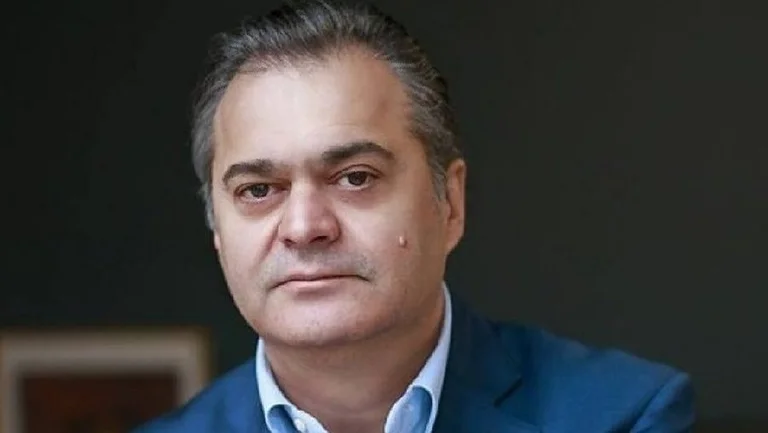
Periskopi(6 months ago)
(6 months ago)It says: Ben Blushi Today (November 28th) is our Great Independence Day that was achieved after 500 years of barbarous invasion by Ottomans and their Ottoman platform. What is Ottomanism? Ottomanism is a religious and racial doctrine to assimilate conquered peoples. Othomanism deprived us of our love for our work, our arts, of [...]
Today (28 November) is our Great Independence Day, which was achieved after 500 years of barbarous invasion by Ottomans and their Ottoman platform.
What is Ottomanism?
Ottomanism is a religious and racial doctrine to assimilate conquered peoples.
Othomanism robbed us of our love for our work, our arts, our language, and created a distorted report of our time.
The Ottomans convinced us that delay is not bad.
A job that is not done today can be done tomorrow or may not be done at all.
Our delay turned into a national feature.
That's how we took 500 years.
The great fate of Ottomanism's thrilling consequences in Albania is the lack of photography in the centuries 16, 17, 18 and 19.
If there had been pictures to show the misery of Albanians at the time, present-day Albanians would have been hurt.
Those who defend this cruelty would be ashamed, although lack of evidence cannot be an excuse for those who defend the extermination of their nation.
At the time, Albania's roads were filled with people who were barked, uneaten, and sick.
A third of the country lived in marshes.
There was no school, no hospital, no port, no land was released, and no railway was passed here.
Albania was an isolated territory from which only cattle and soldiers were occupied and where nothing was taken but weapons to oppress those who disobeyed.
The tools used by Ottomans were violence, hunger, malaria, murder and taxes.
But all characteristics of Ottomanism classify it as one of the most vicious forms of colonialism.
Those who do not know what Ottomanism is must know that this barbarian empire taxed people according to religious affiliation.
Who was not Muslim paid the tax.
This tax on religion was called jazz.
States impose taxes on property, land, work, profit and trade.
The Ottoman Empire also imposed a tax on the soul, so it is more heartless than all the fighting that has fallen on our backs.
Giswe was a kind of jazz where our national conscience was washed with water.
Colonials are always severe, harmful, and destructive, yet there are various types of colonialism.
We dropped the worst one.
By the time the Spanish, Portuguese, and then the English and French took the seas to conquer the world we who were so close to them had the worst destiny.
Ottoman Turks, so Ottomans who did not have fleets to go to America and Asia to discover China, or Africa stormed the Balkans.
In 1492 when Christopher Columbus went to America, the Ottomans completely occupied Albania after almost 50 years of vicious effort and siege.
Skenderbe had died in 1468, and Shkodra had been conquered in 1479.
After these two losses began a phase of brutal invasion, and our disaster is that unlike that of many other peoples we were colonised by a people more uncivilized than we are.
In every sense the Ottomans of the 1400s were much more underdeveloped than Albanians.
They were small tribes that made a country occupying us, we were small countries that returned to the tribe taking over.
It's cynical to say, but we had less luck than American Indians or many African peoples that were conquered by peoples more developed than they did.
We fell into a moral humidity that roted for 500 years.
So Ottomanism was not an invasion but was a colonialization.
When the Ottomans left, they left nothing behind.
Post Ottoman Albania emerged as the poorest, most robbed, most ignorant, sickliest, smaller and hungry country in Europe.
No enemy has treated us worse than bloody Ottomans.
They stripped us of the need to work, dream, and live in righteousness.
They cut us off from the trunk and let us rot into their nipples.
Without Ottoman conquest our story would be brighter and today we would be a bigger and fully integrated European people.
Therefore, Ismail Kemal's attempt that by going through the current ballet has succeeded in declaring Albania independent on November 28th of 1912 is probably the most courageous act of our history.
All the bad things we've suffered and we're still suffering, and today they have their source there.
In those 500 years of darkness, humiliation and national humiliation.
Othomanism is our disease that we must heal to the end.
I'm sure we'll make it.
We'll heal.
Happy birthday, everyone.