10 minutes ago
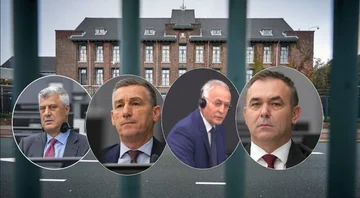
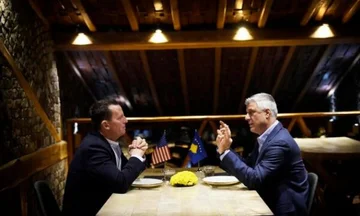
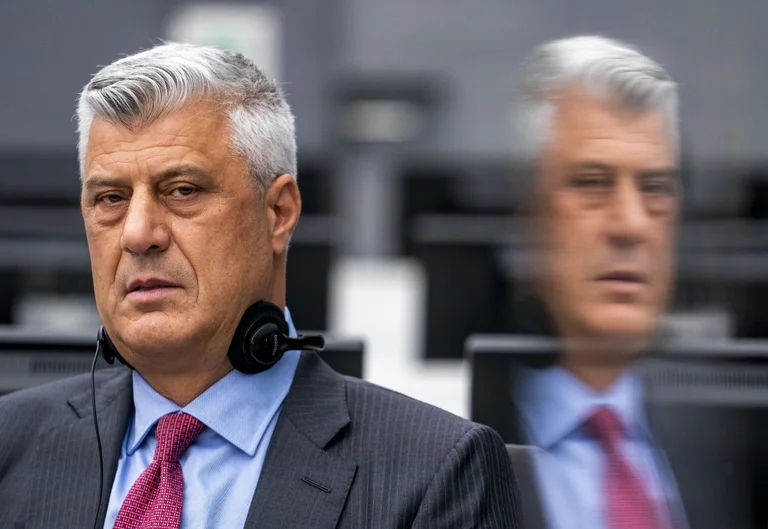
What Hashim Thaci said in last interview from The Hague
Periskopi(2 months ago)
(2 months ago)It says: Ismail Tasholli
Hashim Thaci's latest interview from The Hague was not just an interview. It was like a man who was trying to remember what he said yesterday and what he was doing today. Her identity.
The biggest problem in this process is not just law enforcement. The problem is hypocrisy.
Europe today speaks of universal justice, standards, equality before law, political morality. The same Europe, when it comes to Kosovo, behaves as if history starts only where it depends. Like all the violence, all the terror, all the ethnic cleansing, all the massacres, there's a tiring prediction before the law will have to be treated.
And that is where many in Kosovo have lost confidence in European sincerity.
How can you speak of individual responsibility when the indictment itself uses the common criminal enterprise? How can they say that the KLA is not being tried, when you have the main political and military figures of war at the dock? Who do you want to sell this legal neutrality to?
This is not just legal. This produces history. This produces narratives. This produces collective memory.
Europe knows that too.
But the thing is that Europe has always been in trouble with the standards it requires. Always.
When powerful states arrest, torture, eliminate people, then suddenly justice becomes flexible, diplomatic, strategic.
But when it comes to small nations, it quickly activates morality.
Did France accept the French resistance of World War II to the logic of joint criminal enterprise? Could Britain have landed at the dock bank all its military leadership of history? Did America ever attend an international real tribunal for Iraq, Guantanamon or civilian bombings?
Because political power is always controlling the limit of justice.
Even so, this is the big problem Thaci was trying to do without the visa saying directly: This process is not taking place in the legal vacuum. This process is geopolitical.
West Tried U CK when you needed to stop Slobodan Milosevic. The same world today tries to present itself as a completely neutral arbitrator, as history begins at the moment when Albanians have taken the gun.
That's what hurts people in Kosovo. Not the idea that someone could be tried.
The idea is that it's trying to create a moral equality among the people who fought against me and the state device that carried out ethnic cleansing.
Here again comes the disgust and revolt.
People aren't stupid. They see that the language of European values is very often used as a moral decoration for strategic interests. When you agree they speak of human rights. When you don't, they talk about stability. When you pass, they talk about law. When you don't agree, they talk about political realism.
For more, many in Kosovo see the whole process as an example of abuse of the international community with its superior powers, since post-war.
Criminal trials have been held where, in some cases, they talked about crimes even when the victim's total missing body or identity has been missing, yet punishment verdicts have been handed down. This has led to the conviction that in some processes there is not enough unattainable evidence, but there is enough political climate and the need for invasive, historical works.
Even more intense is the perception that around these processes is the building in our financial industry. Millions of expendable euros in the name of international justice, endless long-term processes, media and political pressure, selective flow, long isolation and penalties for verdicts. All of this for many has led to justice at a level that sometimes seems closer to the Mafia logic of blackmail than to the impartial legal standard.
Even this one raises questions that many dare not make: Should the international community face trial for its abuse of power, money, and political influence? Should there be a mechanism in Kosovo that investigates those who claim to be bringing about justice? Or does the international community consider itself to be the ultimate authority, with no responsibility but to God?
And all this has produced great cynicism in Kosovo towards Europe.
Thaci's interview, basically, was just this: you try to tell Europe that the problem is not just what's happening to him/them. The problem is what Europe is showing itself through this process.
Because justice used with different standards is no longer perceived as justice.
It's perceived as pure political power.