 18 hours ago
Kosovo is shrinking, empty, aging according to population census 2024
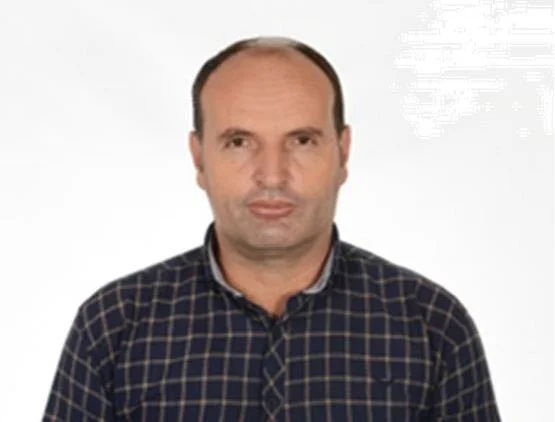
Periskopi(a year ago)
(a year ago)It says: Sami Behrami demographic resources represent one of the most significant and important segments of social development overall. A country's demographic potential is estimated according to the volume and structural characteristics of the population (biological, economic, educational, etc.) at a certain time, such as the time of population registration. Population census [...]
Demographic resources present one of the most significant and important segments of social development in general. A country's demographic potential is estimated according to the volume and structural characteristics of the population (biological, economic, educational, etc.) at a certain time, such as the time of population registration.
The census of the population of 2024 in Kosovo had the primary objective of defining data for the population's number and spatial distribution, which shows that Kosovo is experiencing deep demographic transformation by opening towards the demographic crisis, especially in the realm of migrations -- very high rates of migration, fertility- reducing the rapidness and population structure by age- towards the demographic non-recognition of which concerns have been raised in at least a decade but unfortunately faced and facing the deaf. However, three of the facts that were confirmed by the 2024 population census with negative and negative implications in all areas of life in Kosovo, including its future and security, which unfortunately are being developed without any attention from the responsible institutions, is the fact that Kosovo is eventually shrinking (reducing), is being emptied and aging.
What do the census data of 202 show? 4 Kosovo is contracting (smalling) -- the first published results of the 2024 population census show that since the last census in 2011, the total population in Kosovo has decreased by 154,259. Since in both cases, the census had been boycotted by four northern municipalities on the basis of AK's projections for the number of residents including the 4 northern municipalities, the total number of Kosovo's population has decreased by 177,506. So in 2011, in 2024, Kosovo lost 9% in the first case and 10% in the second case of the general population. Expressed figuratively, in the last thirteen years, Kosovo has lost as many residents as in the three relatively large municipalities of Mitrovica, Vushtrri and Skenderaj together.
In this case, it is of interest to see how spatial population decline has been spread in municipalities or to establish in which municipalities the number of residents has increased and what growth is. In the period between the two censuses 2011-2024 population is present in almost all municipalities and areas of the Republic of Kosovo. This is best supported by the fact that out of the 38 Kosovo municipalities , 76.3% (29) their population declines, while only 23.7% (9) is characterised with population growth, of which 8% (3) could be classified as population-stigm municipalities. Which means they have very low growth.
Population-growing municipalities, exempting Pristina and Fushe Kosovo, are municipalities with the smallest number of residents such as Partesh, Klokoti, Shterpce and Gracanica. Population growth in these municipalities could also be the consequence of greater population involvement in the 2024 census in proportion to that of 2011. The Ferizaj municipality, Obilics, and Mamushes can be classified as municipalities with population stagnation where population growth moves at between 1.5%.
Other municipalities (29) are characterized by population reductions, which amount to half the number of residents such as the Zvecan municipality (- 61%) and Zubin Potok ( -49%). Other municipalities are also marked by considerable population reductions where 30-39 %, there were 7 municipalities (Decani, Leposaviqi, Novo Brda, Junik, Ranillug, Northern Mitrovica and Kamenica); 2029 %, they had 7 municipalities (Malisha, Vitita, Suhareka, Skenderaj, Podujevo, Rahoveci and Kina); 10-19; %, they had 11 municipalities (Gjakova, Glogoci, Gjilani, Dragas, Kagucacaca, Mitrovica, Mitrovica, Prizren, Prizren, Skukaja, Skuva, kuva, and %ri and 2-Hari Eat of Elez and Lipyan.
For the accelerated trend of shrinking Kosovo's population, it well confirms that even municipalities with regional centres are characterized by population reductions such as Prizren, Pec, Mitrovica Gjakova and Gjilan. Kosovo is empty -- as in many countries of the world, even in Kosovo the immigration statistics are incomplete because many residents do not unregister their residence in Kosovo before leaving or doing so long after their exile. However, even such flawed data shows that by the period 2011-2022 abroad, some 350,000 inhabitants, this high number, have been displaced.
That migrations have taken on disturbing proportions and also evidence that during the 11-year period, Kosovo has been abandoned on average by about 32,000 people within the year, while during 2021 and 2022 on average within the day Kosovo has abandoned about 119 people or every 12 minutes 1 person. In other words, Kosovo in the period 2011-2022, has lost its population each year in a municipality the size of the Istog municipality.
Even more disturbing is the fact that based on different surveys conducted in the country, about 60% of respondents have expressed the desire to leave Kosovo mainly 20 to 40 years, which make up about half of the number of migrants and make up the main demographic and fertility contingent, the labour contingent, to security, and so forth., causing the <x0-capal human <x)” as the main host of socioeconomic development. Therefore, the continuation of mass departure means that Kosovo loses not only its workforce, but also generations of young people who would contribute to the country's overall development. Despite the fact that Kosovo faces very high migration flows, more than half of Kosovo's citizens (55.4%) agree that migrations will have a negative impact on future developments in the country, 15.3% agree that there will be no impact, 16.9% do not know what impact they will have, while only 11.6% agree that migration will have a positive impact.
Given the present but expected performance in economic development, employment opportunities and other non-involveable circumstances for a time should be expected, the migration movement of the less intense population. Unfortunately, Kosovo institutions have done very little in addressing the driving factors of migration such as economic development, unemployment, the prospect of a better and safer life, more dignified, etc. The consequences of migration manifest in all segments of life: a) demographic (the population size causing the loss of that part of the population, which constitutes potential development, birth rate, natural population growth, and population- demographic, economic, social, ethnic, etc.) structures. This conveys with natural population depletion, brain migration, population aging, etc. ; b) socio-economic growth (low GDP growth for the population, slow economic growth, loss of the workforce, and the negative impact on social migration and social pensions; others's (XI) safety for the country; XXI, the concept of GDP for the leadership; and other types of economic security; and other types of economic security; and other types of economic security; but, as well as well as well as well as well as well as well as well as possible, economic security, there are,
The first quarter migrations of the 20th century are the most unfavourable waves of migrations so far. This trend is developing under the circumstances of reducing fertility, declining natural growth, tending to decline the population's total number, and the accelerated process of deforming population structures, especially according to population age. Unfortunately, in Kosovo as a result of a lack of real policy towards diaspora, for today, migrations and diasporas, more can be considered a loss and threat than wealth and a partner, even though in reality the diaspora is very valuable asset in establishing Kosovo's own state.
Kosovo is getting older -- that Kosovo is facing the phenomenon of demographic failure, and is well shown by the fact that the growth of average population age, which in 2011 was about 29 years to reach about 35 years in 2024. This growth of the average population age, but other indicators (which can be treated as follows) which show that Kosovo's demographic failure caused in the first place by mass migration, the decline of fertility, but also the increasing life expectancy will radically change the way we live, work and build our future. The very rapid decline in natural growth and selective migrations (the 20-39-year-old group makes up close to half of migrants), have accelerated the population aging process. So by 2011, by the age groups over 60 were 9.6% in the population, this turnout rose to 16.1% in 2024. At the same time, the 0-19-year age group has shown a tendency to reduce turnout from 38.1% to 29.7%.
That Kosovo's population is aging and evidenced by the fact that population growth in the ages of 2011 to 2024, where the new age groups 0-19 years showed the tendency to reduce by 25.9%, the 20-59-year reduction group for -5.2%, while only groups over 60 years have shown growth for 49.7% (doubled). In favor of this fact goes on record that in the 2011 report, in 2024 all age groups from 0 to 39 years have shown the tendency to decrease, 40-44-year-old groups have been registered with a tendency to reduce while all age groups over 45 years have shown growth where older age groups have seen much faster growth. Population age is followed by negative consequences for demographic, economic, social and social developments.
To prevent the aging population from growing older because of the prevalence of new age in the migration flows, there is a need to discourage foreign migration of the young population, through improved conditions, opportunities, access and integration of young people in professional formation, professional education, university education at market-seeking and labour markets. In addition to today's disturbing negative demographic trends and consequences, recent migration trains are increasing the impact and other areas of life, such as the labour market, destabilising educational and health systems, and in the years to come, will be followed even by the destabilisation of the economic, social, pension, and so on. In the long term, the old working force structure, the negative natural growth, the removal of young people from Kosovo, will threaten the functioning of pension and disability insurance funds and health insurance, which will not have enough funds to finance future obligations. Less young people also mean fewer new and innovative businesses, less innovation and technology, less opportunities to adapt to labour market demands and job readiness to re-qualified modern economy demands and dynamics.
In the end, since migrations are the most important factor in shrinking, emptying and aging Kosovo's population, it is necessary for the state to act quickly in order to influence the reduction of causes that promote migration in the first place. Establishing conditions for people and especially for youth to trust in building a future in their country is key to preventing migrations and demographic crisis in Kosovo. Also, to reduce the negative effects of demographic processes on socioeconomic developments, it is necessary to adopt a set of measures and policies of population policies, policy-resistance measures to sustain migrations, then a series of economic reforms in the direction of revising the economy, raising citizens' standards that would improve business environment, stimulating job creation, favouring investments, and restoring optimism to young people who would reduce the income from Kosovo by turning negative migration from the process to a positive one, stimulating the birth of rest, regular payment and support of children and third-invillance, and additional child support to future couples, and third-invironment. It would also be important a conscious area for the importance and weight of childbearing through the media and media media media and public information tools, and not as is the current situation where much more is promoted and invested in emissions that discourage the birth and creation of new families.
Unless immediate measures that imply addressing population contractions, migration and population failure, Kosovo risks entering deep demographic, economic and social crisis. Thus, any delay in taking action to address issues addressed in this opinion implies deepening the general crisis and over time may be too late for their solution, which means getting out of the crisis. Unfortunately so far, the political will for addressing issues and concerns raised over the demographic problems presented has also lacked commitment to resolving them unfortunately does not appear on the horizon.
Author is a doctor of geography- demographic science









