21 hours ago
A confession to the Army: From Glodjani to Pentagon How Kosovo Army Was Created
Periskopi(a year ago)
(a year ago)It says: Baton Haxhiu First Confession: A meeting in Gllojan On a cold day in November 2017 in the symbolic village of Glodjani, Ramush Haradinaj, then Kosovo prime minister, meets with an American general. At this crucial meeting, the general says words that would pave the way for a new chapter: “make the list of actions [...]
It says: Baton Haxhiu
First story: A meeting in Glodjan
On a cold day in November 2017, in the symbolic village of Glodjani, Ramush Haradinaj, then Kosovo prime minister, meets with an American general. At this crucial meeting, the general says words that would pave the way for a new chapter: “make your list of actions and measure you one by one. If you do everything, you have us”.
It was a conditional promise, but a clear guarantee America would be there if Kosovo met the standards.
But the road to the creation of the Kosovo Army, now known as the Kosovo Security Forces (FSK), was everything but simple. Failure in domestic policy, pressure from Serbia through dialogue in Brussels and the resistance of some NATO members to keep this issue out of the framework of diplomatic agreements were just some of the main obstacles.
In the midst of that, Haradinaj tried to keep this national project independent of other processes, including dialogue with Serbia.
List construction: From Vision to Action
In January 2018, the list of actions was ready a document specifying every necessary step Kosovo had to meet to transform The KSF from a civilian force to a true army with a military mandate. The list included legal reforms, training, modernisation of equipment and clear commitments to regional security.
In this period, Haradinaj launched an intensified diplomatic offensive with NATO and American officials. At meetings with the Alliance's top representatives in May and June 2018, a <x0Plan B” was established to avoid the political blockade created by the Serbian List, which refused to support the constitutional changes needed for the military.
Instead, the transfer of KSF to military mandate was decided to be implemented through new laws, without constitutional changes.
The second confession:
Location moments: Meeting “
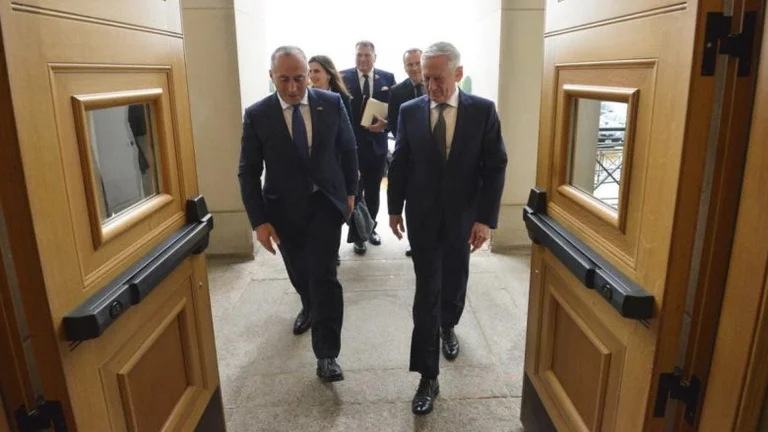
September 2018 brought a big turn. Haradinaj, with three military laws on his hands, traveled to the United States to meet with US Secretary of Defence James Mattis. It was a symbolic meeting. At that table, Haradinaj told Mattis: “These are the laws I sent you a few weeks ago, for our army I came to receive your blessing”
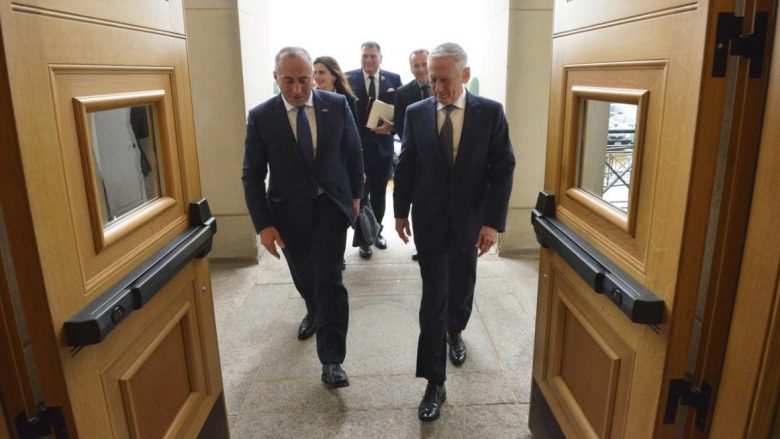
Mattiss' answer was simple, but defined: I bless the Kosovo Army”. At the end of the meeting, Haradinaj gave Mattis a map of Kosovo, adding: “This state we defend together”.
This moment not only sealed American support but gave a moral boost to the entire project.
The Third Confession
You're not gonna make an army, call Palmer.
It was a quiet afternoon in Veternik, a neighbourhood of Pristina, that looked toward mountains wet from late lighting of the winter sun. Our table, located near a large window in a popular restaurant, was filled with the aroma of traditional foods mixed with modern spices.
Kosovo Prime Minister Ramush Haradinaj and his wife, Anita Haradinaj, were my associates that had started with a friendly spirit and had gone into deep reflections for Kosovo's future.
As we were talking about the challenges and hopes of creating the Army, one of Haradinaj's bodyguards approached the table, speaking in a hesitant tone. Prime Minister, is requesting emergency, Mr. Matthew. Palmer” It was the United States special envoy for the Balkans and his call was, of course, urgent.
“ “It's been pressuring me for three days”, he said, turning to us. But I gave the word to Mattis and I will bring his blessing to the end of”.
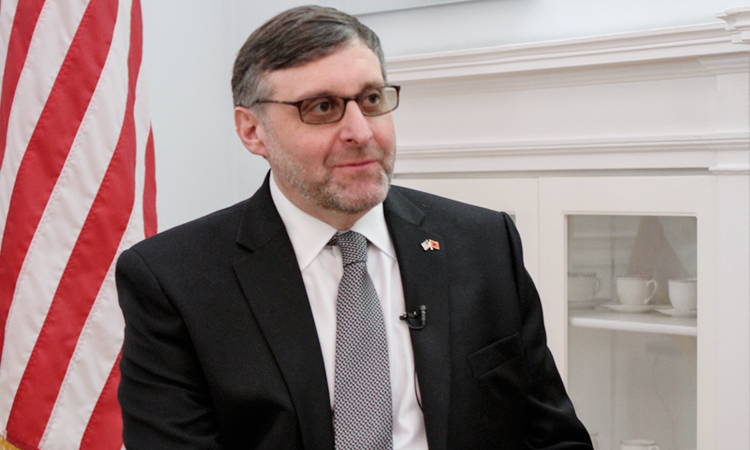
The atmosphere on the table got a little heavier. As Haradinaj described the key moments of negotiations with NATO and efforts to secure American support, the guard approached him again. “are insisting, Mr. Palmer wants to speak to you now”, he said softly.
The prime minister took the phone and, with a calm showing experience and determination, answered in English: “Here, Mr. Palmer”
The voice on the other side of the line was cut and tense. You shouldn't do the Army. You can't take acts where you decide without the approval of all”, Palmer said.
Ramush replied without hesitation: “You do your job, I'm working mine. I've received approval, and tomorrow I'll vote on the” law.
“marry from who?” asked Palmer, in a harsher tone.
“This is where I can say”, Haradinaj said. “Lugs for the army will be voted in Parliament tomorrow. That's all I got. Thank you for calling”. With a quiet click, he hung up the phone and put it on the table.
Palmer pressured, but he did not know that Ramush Haradinaj had already reached a clear agreement with Defence Secretary James Mattis, and NATO Secretary General. When he closed his phone, Haradinaj did not seem concerned. He did not refuse Deputy Secretary of State Palmer or show arrogance against Palmer, but as it seemed, for Haradinaj, Mattis was much higher in the hierarchy.
Approval for the Kosovo Army had been made directly with the Pentagon and the White House a point that could no longer be discussed.
Anita and I were silent, surprised by his determination and tranquillity. At that moment, he was not just a prime minister. It was the symbol of a state that does not succumb to pressures, be it diplomatic or otherwise. The restaurant around him continued his usual life, with low voices and the footsteps of the servants bringing new dishes.
But for us, that afternoon was all but common. It was a reflection of the history that was happening in front of our eyes. The story of the birth of the Kosovo Army.
The fourth confession:
Finalization and International Resistance
In December 2018, after months of lobbying and hard work, the Kosovo Assembly adopted three laws formalising the transition of KSF into a literal army. This step was met with mixed reactions in the international arena. Serbia strongly condemned that decision, while Spain, a NATO member country that does not recognise Kosovo's independence, asked for a review of Alliance reports with Pristina.
However, in January 2019, when laws went into effect, Kosovo supporters within NATO, particularly the United States, pressured there to be no negative review of the reports with the KSF. After a year of assessments and discussions, NATO confirmed its stance, continuing co-operation with Kosovo.
Last story:
An Army for the Future
The Kosovo Army, now the Kosovo Security Force, is the result of a long, strenuous and diplomatic effort. It was a project that required not only hard work and commitment but also a clear strategy to overcome political and diplomatic barriers. From a simple meeting in Glodjan, to the blessing of James Mattis, this story is a testimony to Kosovo's determination to secure its future as a sovereign and independent state.
The establishment of the Kosovo Army was not a casual act or a immediate decision. It was the fruit of a long, thoughtful and careful process based on a clear strategy and close partnership with the United States of America. From the beginning, Kosovo knew that without US support and co-ordination with NATO, any attempts to establish a real army would face insurmountable blockades, not only within the country but also in the international arena.
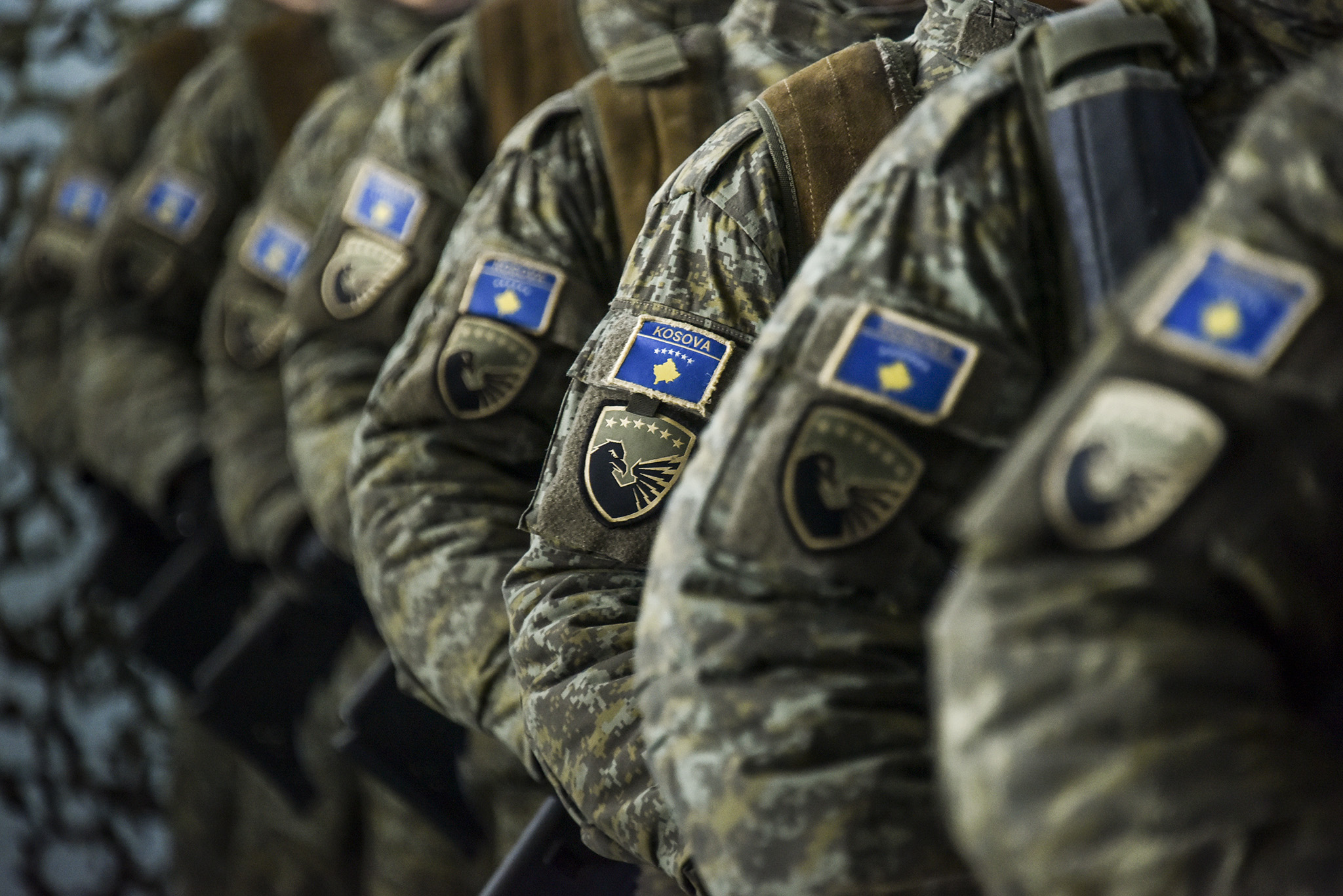
When Albin Kurti and many later tried to use the Kosovo Security Force (FSK) as a political trophy, the difficult process of raising it was often overlooked. But, just as Ramush Haradinaj explained in detail this path, amid initial hesitations, complicated dialogue with NATO and pressure from Serbia, the message was clear: The military is being made by firm plans, insistence and co-ordination with international allies.
It takes more than one vision to create a real army. And that vision, supported by the United States, would ensure that Kosovo had a protection force that belonged to the future.
At that important moment, when NATO and the United States placed Kosovo in the face of a crossroads, Haradinaj told an American general in Glodjan: “We will not stop. You measure us, we will fulfill all conditions”.
And it was that very spirit of determination that kept Kosovo on its way, in the face of any obstacle. This is what we need to learn from the history of the Kosovo Army. It is not a confession to the KSF of difficulties, but a clear example of how a national vision based on strong partnerships is built.
In TV studio and election campaign, when Ramush Haradinaj talks about Kosovo's road straight NATO and the importance of co-ordinating with allies, always has a reference to the history of the Kosovo Army's creation.
Those who do not have information about this process should be careful about it. Because this story shows that Haradinaj has not only taken this mission seriously, but he knows the path to NATO better than anyone else. This story is evidence that cannot be ignored.