19 hours ago
The archbishop we wanted, but he loved us!
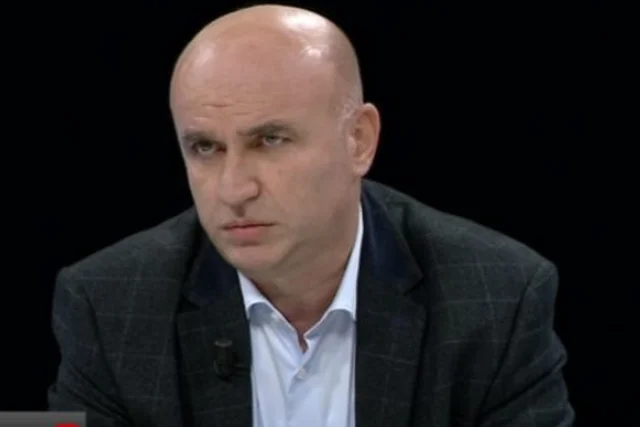
Periskopi(a year ago)
(a year ago)It says: Mero Base His Highness, Archbishop Anastas, will no longer be among us. To explain what it has been for the Orthodox Church in Albania and for the rest, the atheistic majority of our society is worthy of bringing some of my memories with it. His admission to the head of the Orthodox Church [...]
It says: Merro Base
His honor, Archbishop Anastas, will no longer be among us. To explain what it has been for the Orthodox Church in Albania and for the rest, the atheistic majority of our society is worthy of bringing some of my memories with it.

His admission to the head of the Orthodox Church in Albania in 1991, when the president was Ramiz Alia, and later his crowning as Albania's archbishop in 1992, when President Sali Berisha was, was accompanied by a long row. Although the formalism of the conflict ended with the start of his work, tensions never ceased whenever needed to be rushed.
However, neither Ramiz Alia nor Sali Berisha were fully invested against him. The reason was that international diplomacy was pleased and safe with him and conveyed this message to both presidents.
After the first year of power, when Berisha began to have problems with Greece in the southern part of the country, and especially with calls for Vorio Epirus' autonomy in Dropul by marginalised individuals, his prosectors returned to the Orthodox Church and Archbishop Anastas. The National Information Service (SHIK) turned into a Taliban department in pursuit of priests in southern Albania and any of their ties to Archbishop Anastas and Greece.
The climax of these tensions was the expulsion in the summer of 1993 of a Greek priest from Dropul, who led to tensions. It was this and one of the reasons why in the new 1994 Constitutional Project, Sali Berisha decided to include a provision banning religious institutions in Albania from having hierarchs, which were not Albanian blood and origin, at their helm. This was an almost racist notion, with clear political background against Archbishop Anastas.
This was Albania's first and last political battle with Archbishop Anastas. I asked Prime Minister Alexander Meksi in his office at the time, during an interview for the referendum, how possible was the removal of the Archbishop.
He saw from the ceiling once, to show that his office was begging, and he said to me:
Theohan Popa told me: Only God takes the Archbishop.
- Meaning when he dies? I told him with the young man's brutality without any religious sense.
Shake your head. But I saw it was clearly on the Archbishop's side.
The 1994 referendum, which resembled a confused crowd following Sali Berisha, was lost. The Socialists did not move from house to house for no rally; they just told everyone that “Sali Berisha will become king. ”
But then for the first time, I saw that the Albanian Orthodox became together in silence, without giving out a word against the public lynching of their Archbishop and stood by him.
This is when I began to reflect on his personality and his weight in the life of my country.
My conflict as a journalist with Archbishop
In 1995, when the Orthodox Church declared its holy St. Kozmain, there were public reactions. Some of the Muslim or anti-Greek scholars explained St. Cosmo's biography as an antiAlbanian Greek, while the church supported her as a saint who had spread Orthodoxism to Albanian communities.
I, being a reporter for the Voice of America, prepared a report on these clashes, including a spokesman for the Ministry of Culture that was not taking sides, but understood that it would be happier that St. Cosmo was not a saint of the Church.
The Church's reaction was unproportionate. They had sent a letter to Washington on this matter, but they never told me.
A few months later, at a dinner at U's boss's house AID in Tirana, former director of Voice of America gave me a friendly message:
- Don't fuck with the Orthodox Church because these things get misunderstood.
My other colleague from the Voice of America in Washington, who was also at that dinner and seemed to know the complaint, quickly added:
- Don't mess with them. Whoever listens to you in the United States does not question what a archbishop does.
Within seconds, I was surrounded by some of my friends at dinner, who were telling me the same thing:
- You're okay, don't write about it again.
At that moment, my black mood exploded and I said:
When I die, shouldn't I make news?
There was an embarrassing silence, which my colleague again broke:
Take the day off.
I realized that the invitation to dinner at Dee Dee Blance's house was intended to convey this message in a friendly manner. And so I decided to stop dealing with the Church.
But bad reputation didn't leave me alone.
Meanwhile, a priest in Elbasan, Father Nicole Mark, had decided to head a church in the city's fortress independent of Archbishop Anastas. The Albanian-language BBC through journalist Sokol Gruda prepared a detailed report on this event.
The next day, Biberaj asked me on the phone:
- Have you been to Elbasan at Nicole Mark's church?
No, I answered.
Did we have any reports of that?
- No, I said. I don't write about Church anymore, I promise.
He did a <x0m” and vent, but he didn't say anything else.
Then I learned that Thomas, the church spokesman, had again complained in Washington about the BBC report, as if I had done it for Voice of America.
Church reports with critical journalists were a separate problem and often opened to the Church more work than they helped. But that lie, fortunately, finally saved me from fights with the Church, for they had now lied.
Archbishop Anastas created Albania's new Orthodox Church
However, I was not divided by the feeling that I had been perceived as a critic of the Orthodox Church. I wasn't, but in Albania it turned into a popular sport.
All intellectuals of Muslim origin and atheistic formation were mad enemies of the Church, and I was having some of the conditions formally come true. In principle, this category dealt with Archbishop Anastas for 24 hours.
On the other hand, many Orthodox intellectuals spent 24 hours with the Chairman of the Muslim Community or with Arab mosques in Albania. They likewise wanted to reform opposers.
This ugly fashion of political commitment to bring religious communities under control is the only political crowd of religious divisions in Albania.
What seemed clear was that Archbishop Anastas enjoyed not only the real support of Orthodoxs in Albania but also the most important personality of the Orthodox world in the region. Thanks to it, millions of euros were raised as donations to the Orthodox Church, and most of the destroyed churches were rebuilt. He opened his seminars in Albania and prepared new generations of religious servants, who are today the healthiest religious family in Albania, with real discipline and spiritual commitment.
No one as Orthodox religion in Albania has been able to prepare so many people to serve in its religious institutions on its own. Our Hoxhari are educated in Arab countries with a radical Muslim culture, while Catholic priests normally educate the Vatican. Only the Orthodox Church has produced within Albania its basic hierarchy and now has a Sinod filled with religious personalities, mostly Albanians.
A Personal Meeting With the Archbishop
In the spring of 2018, I met Archbishop Anastas on a personal matter. I had a problem with the Church of Holiness in my village. Since I had started living with the plight of the village, I decided to rebuild the St.
In fact, I had no money, but the promises of my friends, who kept the whole word, making it possible to rebuild every work.
Even more beautiful was the story of the missing bell in 1967. Aliosha, a fellow villager of mine who lives in Tepelene, took on a pick, and even offered to buy it for his own money. After a few days, he called me and told me that someone had delivered the bell of the Peshtan Church to the Church of Tepelene. He did not want to be identified.
 I went to church happy to see him. It was the bell of the Church of St. Thanas, known in the village as the “Grand Church”. It still had the inscription: “The church tower of the village of Pestan. ”
The boy who had handed him over told me that he had a father among the members of the 1967 youth who had come to the village to destroy the church. His father had thrown the bell into some thorns near the church to hide it.
Then, at night, he was back with a friend and, part-time, they had transported the bell to Tepelene. Every night they took him from a piece of road until they hid him in his village. There the bell was preserved until 1990, in a basement.
When Communism was about to fall and he himself was at the end of his life, his father had left his sons to take the bell to Pestan because it belonged to them and because, according to him, she had protected them from adversity.
The tower owner even proudly added another fact - the bell was so important to his family that he himself had been able to become a soldier at the Republican Guard.
The village priest, Father Romano, one of the most pleasant people you can meet, brought home my Lord Johan, the Korac Mitrovica. I told him that I wanted to rebuild the church, and he encouraged me:
- Everything, talk to Father Romano, he told me.

Thinking it was a simple task, I decided to take up the work during the Passover of that year. Father Romano, however, explained that certain procedures must be followed: the blessing of the ruins where the church was to be established and a permit from the Mitrovica of Gjirokastra. The problems began when I went to a machine official who began telling me that I had to deliver the money to Mitrovica and they would decide what to do with it.
I realized I was facing a big “To avoid becoming angry, I decided to be brief and requested an appointment with Archbishop Anastas.
The answer came within hours. The next morning I went to his office in the cathedral of Tirana. Father Romano accompanied me and mediated the meeting. As a gift, I took the picture of a plaque from St. Call's Church in Peshtan, which read:

“Kisha was built in 1112. It was newly built in 1861. ”
The bishop waited for me at the door and hugged me:
God gave you light on the path that brought you here, he told me.
After a bit of a sense of humor in the past, we moved on to my plight with the Church of St. I told him that I would build the church with donations from my friends and that each of them would take on a special voice of work. I also explained that the bureaucratic obstacles of his people in Gjirokastra had made me nervous.
Calm down, he told me. When you have someone who will bother you, turn your face aside and don't look at him. Look at your goal. If you want to deal with anything that comes your way, poison will wait.
Then he asked me:
) Who do you want for a priest?
I told him.
He gave Father Romano the blessing and advised me to go to a meeting with Mitrovici Dhimiter in Tepelene to get a formal approval.
Now don't talk to me about this job anymore, he said smile. You're Orthodox.
My name is Merro, I told him.
He laughed a lot.
Maybe I don't know, but the name “Mero” is the name of Day of Health for Men. You don't have to change your name. Plus, we got another saint Omeros. You can't save us, he said, laughing.

I laughed at this “baptism” on dry-out history. He then went on to tell me about his life and the doctrine he had defended in Boston about the role of Patriarchy in converting Albanians to Muslims during the 18th century.
According to him, since the Patriarchate had absolute power over the Orthodox world within the Ottoman Empire, it had proved unable and unprepared to Albanians, since it banned Albanian schools and they were never able to read a Bible. In this way, Orthodox Albanians were less educated religious believers, making it easier to convert them to Muslims from the empire. This process took place mainly in Laberi and in the areas of Permet, Tepelena, and Gjirokastra.
- That's why I got so angry in Patriarchy, he told me. And one of my services in Africa has the basis for this sad truth.
I told him that in Laber and Zagor, villages that are no longer Orthodox are mostly Bektasin, but very few have cult objects. Even traveling dervishes often carry priestly clothing as they cross Orthodox villages. However, even the priests of these churches sometimes use them in humor.
- I know, he said smile. You're crypto-orthodox
This is where Father Romano became a serial and stood up and said,
I didn't!
Then we talked about the Church's financial woes. He told me of the endless difficulties the Orthodox Church had in Albania to finance. He had received two licences for hydropower, which he would use to secure the necessary income, but that was not a complete solution either. His anxiety for the days to come was evident.
Gradually, about three hours passed without feeling. Finally, he gave me several books and albums to rebuild the Albanian Orthodox Church.
I left with great peace of mind. To thrive, the church ended just two days before the festival of St. At its inauguration came hundreds of people, half of whom were village Muslims, who did not allow each other to enter church.
I met him later at a reception at the American Embassy and showed him the photos of the holiday and the rebuilt Church. He was very happy.


(Photos of Kisha how it was and how it was in the gallery)
Now that I am writing these lines, the Church has been completely transformed from the inside. She's wearing icons and images of saints, getting a whole new and unimaginable view a few years ago.
I hope I have the strength to come see him, he said.
Then Philip Cackul took over. Philip could speak to the Archbishop only once a year, for he of “ever condemned” after Philip related jokes to the priests, which, of course, ended up ironizing the Church.
But every time he saw him, he took his sentence off in five minutes until Philip showed him the next joke. Then he punished her again.
The last joke Philip showed him was two years ago:
Come on, the Archbishop told him. Come on, is there any news?
I don't tell you any more jokes, Philip said that he condemns me. But I have bad news.
What?
This year there will be no Passover.
Why?
I saw on the news since the excavations in Jerusalem the body of Christ has been found. So it's not like you said he was alive and gone.
She realized she was trapped.
Now you're grounded for two years, he said. Go, go!
Today Archbishop Anstas is the very resident of the next world, but what he has given to the Albanian Orthodox world will remain long in this country's history. The rest will be forgotten.