a day ago
The Reasons of a Visit

Periskopi(2 years ago)
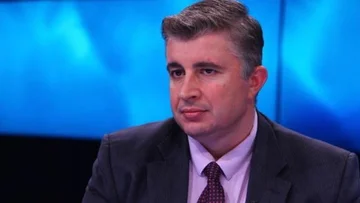
(2 years ago)It says: Enver Hasani This strengthens Serbia's position, both to the Russians and Chinese and to the US and West, and presents it as an independent actor with clear foreign policy. His ally in “Republic Srpska” is clearly seen, received the message of William Burns, given to him as amulets, as [...]
It says: Enver Hasani
This empowers Serbia, both to Russians and Chinese and to the US and West, and presents it as an independent actor with clear foreign policy. His ally in “Republika Srpska”, clearly, got the message William Burns, who became his charm, as he had received Perves Musharraf. Maybe Kosovo doesn't need to turn it back to the time of the stone, because we are also there: as long as Kosovo leaders lower the tone of war and nationalist rhetoric a little bit.
A Visit Without Pomposis
These days the Balkans visited the chief of the CIA, for the public without waiting. Kosovo, of course, was in the trajectory of William Burns' visit. Has he been able to visit the region without visiting Kosovo? Of course not? Was Kosovo an active visit, or all the places he stayed? We'll explain this in the following lines.
The visit was made without any pomp, as is the title of such a sensitive organ. Performances of Visit William Burns, of course they've been accompanied, as expected, with the intervention of points and internal problems of each country separately, but also of mutual accusations on the blame for Albanians this universal knowledge of President Alexander Vuciq of Serbia for everything that happens in the Balkans (sic).
This visit brought me back in the first few months of the postwar, when after almost a decade of fighting outside, I was returning to Kosovo. Exile, as it says Bedri Payani In the trial against him in Prizren, he had taken on characteristics of a serious and consequences. With the symptoms of this exile disease, I was visiting friends and friends, visiting my brother and friends with those who had lost loved ones. On one of these visits, I remember that today, an old man, then maybe my age today, was showing how Slobodan Milosevic had been an American man and had a deal with them to destroy the former Yugoslavia! That world was in my last year of doctoral studies, I was preparing the oral exam of one of the weightiest subjects in political sciences and justice Theory of International Relations (TMN). Professor I had the assistant of Kalevi HolstTo this day, my next friend. This subject explains in a very scientific way the war and peace from time not remembered until now, without any conspiracy doses, using and following scientific, quantitative, and quantum method of their countless methods. It may seem naive to me that day, but that's true: the one who was speaking, in the hope that I had encountered an unknown scientific reference researcher, I asked the question, without a double, in which book did you read this story, sir? Mixing a tea <x0... My close friend winked at me and realized that it was about another standard rating of international relations, which I had actually known, but from life long into exile, I had forgotten it, I had taken it out of my mind, as the people say. I shared that with the reader in the following lines in the scientific clarification of God's visit. William BurnsKosovo and the region.
“
It's incredible how accurate this is in both mathematics and sciences the legality of the state's action in international relations. Few are the exceptions, or anomalies, that are not explained in TMN methodology, where each of the methods used provides a certain rational explanation, some with less and more. Then, according to researchers, the rankings and analysis of the accuracy of the results produced at a given time and space are made. Realism in the TMN, there is general reconciliation, there has been and remains the most accurate and useful theory of clarifying the behaviour of other states and actors in international relations. All the others who have written from Tukids around here, including this author, have said very little changes the core of key factors that push states into war and peace. There are hundreds of thousands of pages written by various realistics, and more will be written, but will not change the basic concepts expounded by Tukidi to “The history of the Peloponnesian war”. They will be refined, specified, processed, but without affecting the basic premits of realistic theory. It has not been found, Tukiddit has not called the explanation realism (and no theory) his book on the multiyear - old Peloponnese War - others after him, when they also declared Tukid himself the first master of history to use comparable scientific methods.
Among Tukidi's basic promises has been and remains the scientific explanation of the war between Athens and Sparta. Later, by Harvard professor, Graham T. Aliso, this was called “When the tukiditath”. From his study of the causes of war from ancient times until recently, Allison had concluded that 12 of the 16 differences studied had ended in war. The cause had been the constant trend and effort of a growing, global or regional power, to shift or remove another dominant power that controls or dominates the existing international or regional order. Prof. Alison based this on Tukidi's basic premiere, which says the war between Sparta and Athens had occurred because of Sparta's fear of increasing the power of Athens. As a trigger for the start of the war in 431 and ended in 404 B.C.E., it was the conflict between Epidinos (Today's hand) and Corkyra (Today's Curb), as had been due to World War I in Sarajevo by Serb terrorist Gavrilo Princip.
Global Security and More
Professor Allison, his thesis in 2015, has started in an effort to explain US-Kine reports. There has been much criticism of his findings. Time every day has proven that criticisms have been in vain: the U.S. report China cannot be explained with other TMN theories, in particular not with the theories of international literature, which for decades has fostered illusions that the end of history had occurred with the collapse of communism so that now every authoritarian country would be seduced by ideas of democracy, free market, global opening and rule of law.
Another promise of implementation at the TMN is that states in international relations reinforce the same task, but with different capacities. This, then, applies to both the small states and the empires of superpowers. The fundamental task of each state is self - preservation (“self-preservetion”), which is achieved through the mobilization of existing material, military, financial, economic, economic, human, geographical and others in the function of preserving sovereignty and national independence. Among the resources that mobilise a country, big or small, are the other coalitions. This, for since ancient times, a single country has never been able to muster enough strength to dominate all the others in the system. That's what the United States does constantly. Self - existence is at risk every time when there is a global or regional uncertainty because states, like the leading actor of international relations, face difficulties when they identify their dangers, risk actors, and motives. These situations usually arise in the transitional periods of power, global and regional, which occur every time a hegemone power dominates the system and another power challenges this hegemony.
Braning China as Growing Power
There has been a decade that different establiment and theories in the U.S., expose and manifest the fear of fast-growing China and its manifestation of open trends of enlargement and disrespect of the rules of the existing international order. When a power openly displays revisionistic trends, by countering the validity of existing international and regional order, as China is doing in a continuous manner, in particular in space Indo-PicificeThen the hegemon State must learn lessons from this revisionist behavior. The epitom of this Chinese challenge is the project known as “a belt of land”. To achieve its final goal, China has formed alliances and deeply interfered with the realm of Western influence, such as the Middle East and the Balkans. He makes sense to Serbia and the Serbian world. In the Middle East, through its beads, China has managed to attract Iran and Saudi Arabia, the main rebel part in Yemen (“The Howja”), through Iran and Syria, has also exerted influence on Lebanon. Russia has acknowledged the role of China's vassal, entitleing China to all its allies. Last October 7th's terrorist act against Israel also enters this group of Chinese efforts (through Russia) to challenge the existing international order dominated by the US and West. For this reason, there is a broad consensus in the United States regarding China: it should be contained, not balanced. The displacement of various American administrations has not produced results: China has only expanded its influence and seriously challenged the American and western domination of international order. Therefore, the coming of Donald Trumpit in power and the execution of foreign policy to China, as outlined in “Project 2025” of “Herage Foundation” constitutes a existential issue for the role and position of the West in the world.
The essence of William Burns' visit
China's movements in the Middle East, in the Balkans, and were found to be aimed at driving away the attention and distribution of American energy and resources found, so that, at the appointed moment and by surprise, it could capture Taiwan's freedom. Such a step would be the end of the international system, where the US and West have the key word. Such a situation - the loss of Taiwan - would end Western control of key international trade routes and, as a result, its domination in the world. Those who have controlled international trade routes in seas and oceans have made international law. This has been and remains the fundamental rule in international relations.
It is here that we must see the essence of the visit William Burns Kosovo and the region. The Balkans have recently expressed an emphasis on violence and war. It has been clear that the rhetoric of war has not been a source of the Balkan countries' internal problems, but of external incentives. The many visits of Serbian leaders to Russia, Chinese visits to Serbia, nationalist orgies of the leader of the “Republika Srpska”, all together have conveyed the clear message: US attention and energy attraction and allies were taking place in this part of the world, not where the balance of China is being balanced. This aggressive Serbian discurs have also been added to Montenegro, following the recent elections there, and to some extent to northern Macedonia (the president of this open country has challenged international rules in its report to Greece). Kosovo's leadership has a time, unfortunately, that has entered the whirlwind of nationalist rhetoric and played the same game that has played those who have had Chinese and Russian agendas, making Kosovo a place of violence scenes, the use of special police against civilians, as well as the inadequacy of calls for regional security and stability. One of the most beautiful sayings I have heard from Alia Izetbegovic, leader of the Muslims of Bosnia and Herzegovina, was she when she told Bosniaks that the war will be lost that day when we look like the enemy!” This has happened with Kosovo for the past two or three years: we began to look at the warmongering Serbian rhetoric in many, not realizing that this rhetoric complements the mosaic of Chinese and Russian efforts to disrupt the American and western dominance in the global plan.
The duration of this situation in the region, without a doubt, must have become inlerable for American and western security circles. The situation in the Middle East is nearly on the verge of the explosion, the West and the Americans cannot tolerate during an Iran that plays the role of regional hegemony that promotes their allies. Any outbreak of violence there can get out of control, and this is reflected in the first order in US-Chinese reports with their respective allies. The U.S. cannot contain China with the Balkans that at a certain moment could explode worse than the Middle East. It cannot balance the odds with aggressive Iran when a grouping of its Muslim allies could potentially sink into conflict in the Balkans. Such a conflict, apparently, could appear religious and thereby satisfy the Russian and Chinese desire for religious conflict in the Balkans. That would be a return to the beginning of the breakup of the former Yugoslavia. These are some of the scenarios that fill the core of the visit William Burns in the region: to curb China, increased power and the main challenger of international order, the US and the West must curb their allies, put them under strict control. Otherwise, they cannot know where they are, in case of an outbreak of violence in the Middle East. The basic message he has brought William Burns In the region, no doubt, it has been the same for all: refrain from fighting rhetoric and use the safety umbrella it offers NATOFor peace and prosperity, for progress and human development. It is a bad fact that Kosovo has allowed to enter the category the same as aggressive leaders in the region, who, after the visit, William BurnsThey surrendered, making it clear that they are not against Bosnia and Herzegovina's integrity. It is likely that the message to Milorad Dodik was similar to that of President George Bush, Jr., had sent to the former Pakistani President Perves Musharaf: If you continue with the support of the Taliban, we will send you back to the time of the stone! It could have been so harsh William Burns Even the rest, including some leaders in Kosovo, but this remains to be seen. After all, it does not carry any tone of message left in Kosovo. What carries weight is the fact that the entire region, in the eyes of the US and Westerners, is one and only, NATO's security zone and their allies. Balkan actors have to bring this postulate in. I am sure that the public in Kosovo will be spared, from now on, from the rampant anti-Serbia and anti-Wucciq rhetoric, of the war and suffering stories of the people of Kosovo, which we all know much better than the rhetoric.
Two local issues appeared on this visit by the CIA chief: the first, the reasons for global security, and the equivalent of bringing some of Kosovo leaders to Serb leaders in the region; and, second, Vuciq emerged peacemakers and stability factors in the region: his meeting with the Russians aims to convey the message that, in case of a global conflict, Serbia will remain neutral. Serbia's neutrality is enough for Americans and West. This is what everyone in Kosovo needs to understand. This time too, as when the war began in Ukraine, Vuciq proved to be chief of the region, making peace, and, through his Bethelites, even war if needed. This empowers Serbia, both to Russians and Chinese and to the US and West, and presents it as an independent actor with clear foreign policy. His ally in “Republika Srpska”, clearly, got the message William Burns, who became his charm, as he had received Perves Musharraf. Maybe Kosovo doesn't need to turn it back to the time of the stone, because we are also there: as long as Kosovo leaders lower the tone of war and nationalist rhetoric a little bit. /Express
(Autori is the first president of the Constitutional Court and professor of law and international relations)