a day ago
As students in “Columbia University” sparked a nationwide revolt
Periskopi(2 years ago)
(2 years ago)When police raided a group of protesters at “Columbia University” last week, students in Yale were ready. They with their smartphones followed every minute of chaos. If students at “school Ivy League” would risk arrest, then they would risk it too. The next morning, Yale demonstrators had set up the tents [...]
When police raided a group of protesters at “Columbia University” last week, students in Yale were ready.
They with their smartphones followed every minute of chaos.
If students at “school Ivy League” would risk arrest, then they would risk it too.
The next morning, Yale's demonstrators had set up their tents.
In a call to the Zoo that day, more than 200 students from dozens of other colleges across the country were drafting strategies on how they could repeat the “Columbia University” protest.
“We talked about what it was like to recruit people and join, and what it meant to stay in solidarity together”, said Sophie Ascanase, 21-year-old at “Barnard College”, who was arrested.
What followed was the beginning of what historians now call one of the most important student uprisings the American nation has seen recently.
Although officials hope that tensions will calm when classes end next month, the protests have turned into a crisis for college managers trying to stem demonstrations.
Although demonstrations have become major headlines around the globe in recent days, they are the peak of months of activism and previous tensions in campus.
Protests began at college campuses within days after Hamas' attack on Israel on 7 October.
The students later began to organise and focus on a particular request: the removal of the university by arms producers.
Their activism steadily escalated throughout spring, as students used increasingly aggressive tactics.
The increased momentum has been added by social media and phones, which allowed students to communicate quickly with each other and repeat tactics in unimaginable ways in previous university movements.
Historians like David Court, a professor Emeritus At Notre Dame University, they say demonstrations are already compared to several other major movements over the past 60 years, including the campaign to end apartheid in South Africa.
But unlike protests from past decades, college managers have fewer tools available to calm demonstrators' demands.
Experts say students' demands are not only unrealistic, but are also likely to bring little or no real benefit.
More widely, students can face a challenge in trying to build alliances.
We never lived in normal times.
When war broke out in Gaza, universities became a new front line.
In “Brown University”, protests against Israel's response to the October 7th attack by Hamas erupted almost immediately.
Police arrested 61 people in two demonstrations last fall, including Ariela Rosenzweig, a longtime graduate student.
Similar demonstrations were being held simultaneously in other colleges.
Rosensweig said campus demonstrations were organic, student-led initiatives anchored in a demand that the university give up arms producers.
She stressed that students remained in contact with their peers in other schools, a process that is often co-ordinated through national chapter “Law students in Palestine” (Students for Justice in Palestine) (SJP).
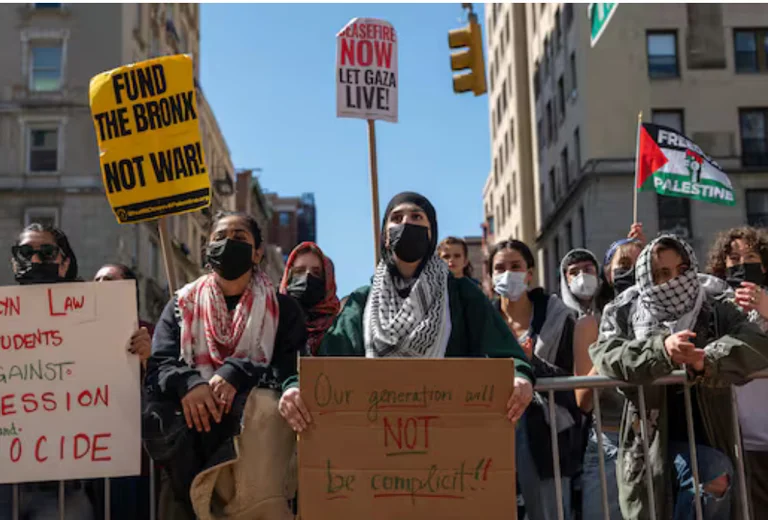
We all have our phones and we all know each other. We have friends in other schools and young people in our country feel... our institutions, whether our government or universities, cannot be collaborators with the invasion, apartheid and genocide”.
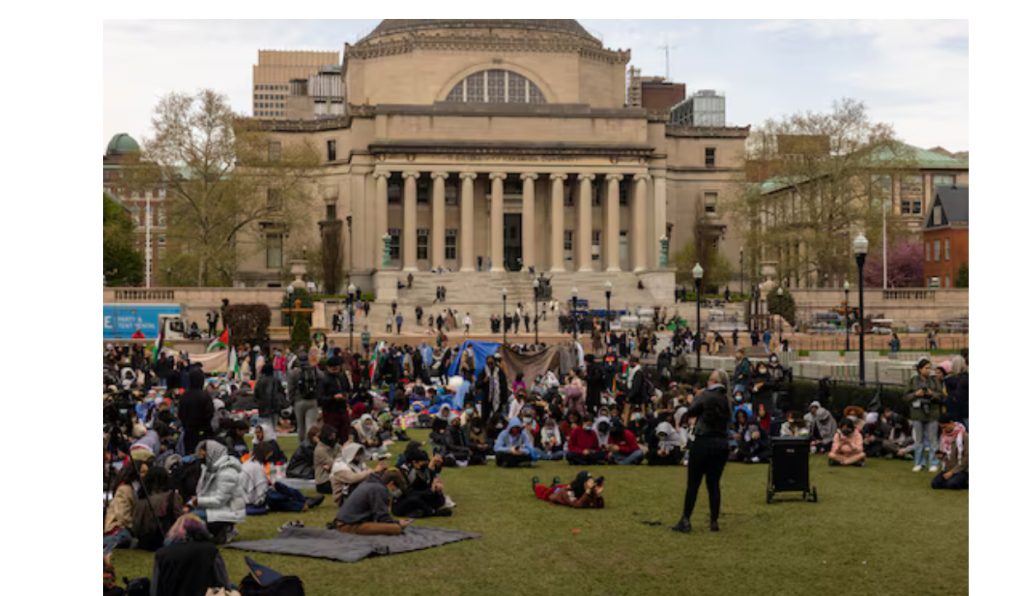
The push was gaining a pull at other elite universities, including “Columbia University”.
Administrators there suspended SJP chapters and “The Hebrew Office for Peace” (Jewish Voice for Peace) in November, as students were unauthorized in support of Palestinian territories.
The results made the students want to protest more.
Within days, students formed a coalition called “CU Apartheid Diverst”, a call for the successful movement of student protest that forced Colombia to leave South Africa of the apartheid era in the 1980s.
It soon received support from more than 90 campus groups.
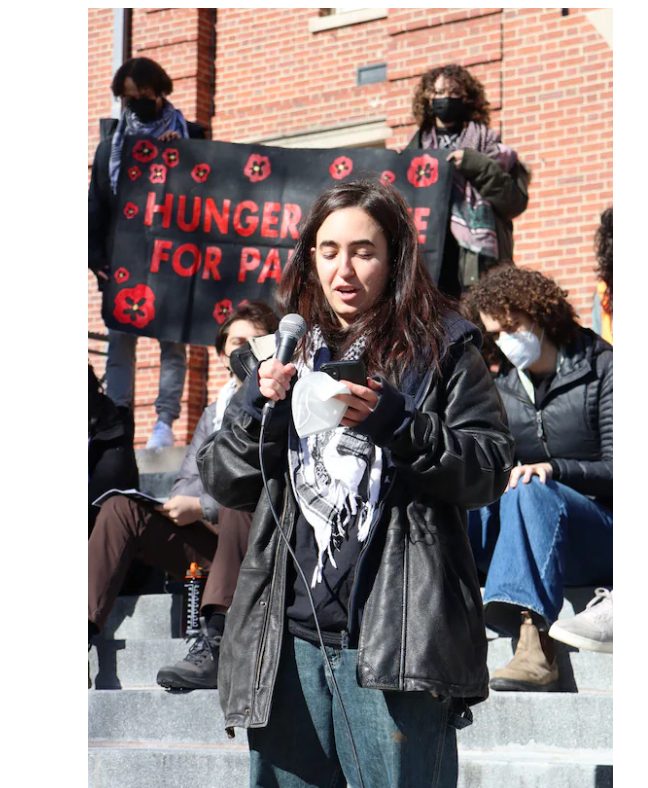
“We realised that the administration was still not listening to us, no matter how loud we shouted or how much we prayed”, Ascan said.
“We realised that a escalation was necessary”.
The night before the proclamation of the new coalition, Ascanese and friends stayed up until 4: 00 a.m., drafting a manifesto with a thousand and 800 words that was published on November 14th at “Culbia Spectator”.
The university's “officials underestimate our commitment”, the students wrote.
“We will not rest until the university leaves Israel of apartheid, Palestinians will be free and free for all people oppressed worldwide”
In the following weeks, students continued protesting by holding a kind of demonstration at least once a month.
During winter holidays, activists kept in touch with video calls.
And when they returned for the spring semester, they began meeting in apartments outside campus, for fear of being discovered by administrators.
In some meetings, before enjoying the plate immersed in the special spice mix “zatar” and Palestinian olive oil, students put their phones and laptops in another room to protect themselves from leaks of information.
They were already working on something bigger and wanted it to remain a secret.
Protests were increasing in other universities.
In February, Rosenzweig and 20 other students of “Brown University” held an eight-day hunger strike to boost meeting their demands.
She said the students decided to do so after finding out how former students had held a hunger strike to protest apartheid in South Africa in the 1980s.
“We found ourselves in the legacy of those student protests”, Rosenzweig, who is Jewish, said.
In “Columbia University”, students were also being inspired by the past.
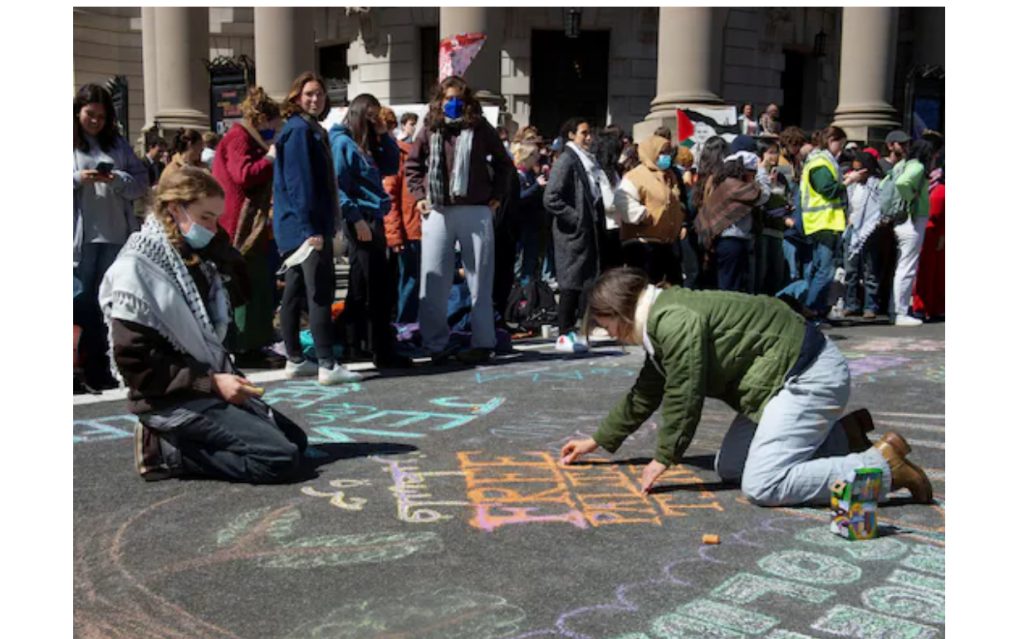
Ascanian said they investigated the student protesters who set up camps in 1968 and 1985 against the Vietnam War and apartheid in South Africa
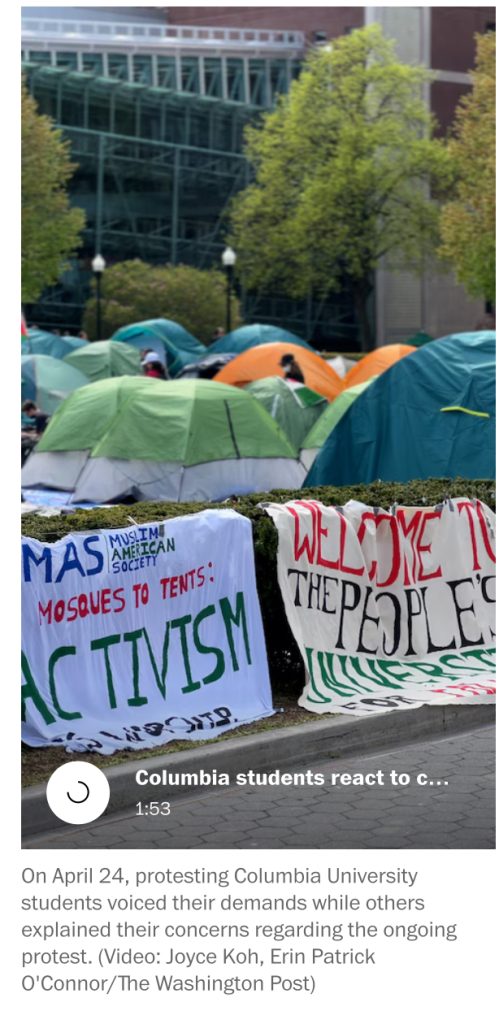
After reading, they began preparations - ordering tents, food, masks, and medical supplies.
They thought about responding to arrests, possible suspensions, and toilets for “the new” invaders.
On April 14, students finalised their date: The invasion would begin three days later, when the university president would be out of town witnessing before Congress.
Demonstrators thought that “Columbia University” would be more difficult to coordinate an answer with the outgoing president.
Plus, they hoped to hinder university graduation preparations.
At 8: 00 a.m. before the departure time, Ascanas sat down to paint a large banner showing “the Union of Solidarity of Gaza”.
Later, student protesters split up into campus, tightening their tents and supplies and providing text updates on security guards' positions.
They stayed accumulated, waiting in the cold to act.
Ascanian revised a YouTube video that gave instructions on how a tent is set up.
Far more complicated
Protests are freely organised, without central leaders and a key requirement: for colleges not to invest in arms producers or companies doing extensive business with Israel.
In Brown, students have prepared a 50-page manual on how to do this and say it can be modeled according to university steps to give up smoking in 2003 or fossil fuels in 2020.
Brown also left companies doing business with Sudan in 2006 on the crisis in Darfur.
This new generation, frankly, will not allow the gross misuse of our tax money”, said Nour Abaherah, a graduate student who participated in the hunger strike.
But the way universities invest their money makes it complicated to remove investments, said Chris Marsicanno, an assistant professor of education at Davidson College.
First, it is impossible to know how and where the university funds are invested: Schools are very closed for this, revealing as little as they can.
The discovery of investments could lead to large and small complications.
When funds are so large, we're talking about tens of billions of dollars, there are legal and practical reasons not to show exactly, in an experimental way, what they're invested in”, Marcicano said.
Many of the student groups seek to put an end to this secrecy.
For example, students in “Columbia University” are demanding that the university provide full “transparency for all... financial investments” an impossible perspective.
Universities may have very little or no direct ties with companies that are Israeli-based or arms producers; most of these relations come through index funds.
After the raid
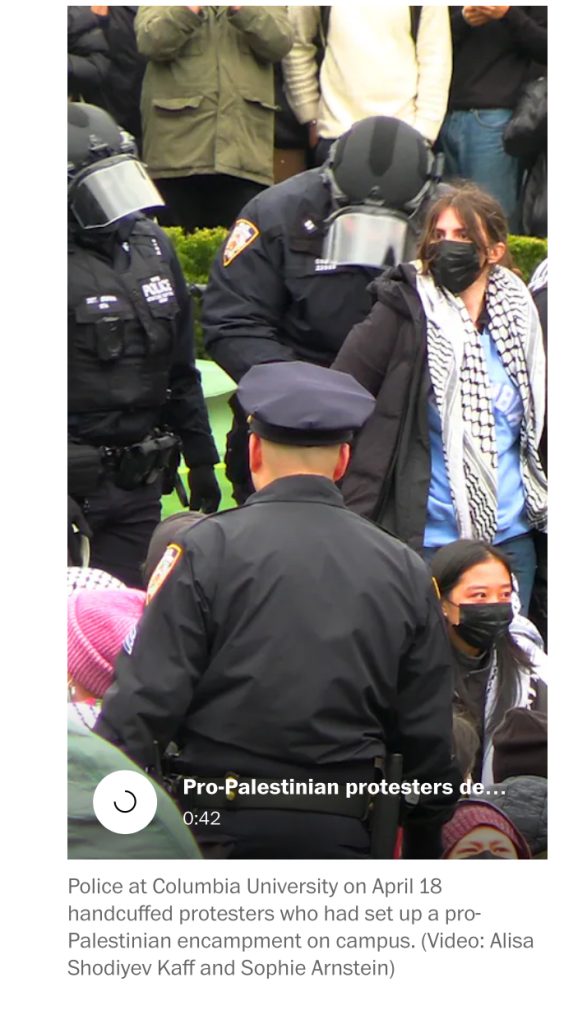
One day after establishing their tents, managers called the Police Department to campus, saying students were violating numerous university rules.
As police moved to the “Columbia University” camp, Ascanase said students sat down singing “classic protest song”.
Ascanian later looked as student protesters were on a bus and sent to prison.
When Ascanian was released hours later, a friend shared some unexpected news: Protesters had already established a new campus.
What happened next recalls the way protests spread in 1968 when students occupied five buildings to protest the Vietnam War and promoted the activity of antiwar students throughout the country.
That movement eventually closed hundreds of campuses, said Thai Jones, a professor of “Columbia University” studying radical social movements.
He warned it is too early to say whether the pro-Palestinian demonstrations will be equal to the power of fire of 68.
But “it confirms the very close connections between student movements in different campuses and the power of the media to display the extremely dramatic images of arrested students, which can really spark a massive” movement.
In Yale, at the time when news of the arrests began spreading to the 23-year-old platform X, Adam Nusbaum, the number of random supporters increased dramatically.
Since the outbreak of the protests, there have been reports in newspapers and social media on the harassment of Jewish students, behaviour including calls from the river to the sea” a slogan some see deeply offensive, interpreting it as a call to eliminate Israel.
Jonathan Greenblatt, chief executive of the Anti-Proliferation League, wrote in an X post that he spent one afternoon walking through the university and saw that the Jewish “students were effectively threatened”.
Protest students in camps throughout the country have repeatedly denied any such exciting behavior, often attributing it to foreigners.
A Generation Changed
Although summer holidays are fast approaching, student protesters say they will use time away from campus to understand ways in which their movement can be returned with greater force in autumn.
This student movement is of great importance”, Rosenzweig said.
There will be other countries where students will express their dissatisfaction in the coming months.
The Republicans and Democrats' appointment conventions are scheduled for this summer, and both are expected to attract a large number of protesters.
Generally, students are offering little specifics for their next steps, saying that they wanted to avoid alarm.
Meanwhile, while protests create a chaotic end of the school year in many countries, some students just want to stop.
Cameron Ofogh, a 22-year-old young in “George Washington University”, is not one of those protesting ʹ as the overwhelming majority of his student body, he noted.
Ofogh said he does not believe that campus conquests and calls “from the river to the sea” represent an effective way to have an essential discussion about the war.
He respects that people on both sides of the conflict have strong opinions.
But he would like them to start arguing over them instead of cheering slogans or hiding in dormitories. /Washington Post