 a day ago
Jamie Fetay's promise fulfilled
Periskopi(2 years ago)
(2 years ago)It says: Skender Berisha 24.4.2010 Paranthesis the 20th anniversary of the reconciliation of blood to talk about the first events of nearly three decenys, you must have strong moral impetus. The push that came as a moral debt that has not been reflected in its full dimension, personality, breadth, and depth of witness to the nation within these last years. [...]
It says: Skender Berisha
24,4,2010
Paranthesis 20th anniversary of reconciliation
Speaking about the first events of nearly three decenys requires strong moral impetus. The push that came as a moral debt that has not been reflected in its full dimension, personality, width, and depth of witness to the Xhemajl Fetahaj nation within the past few years.
Personal events that will later become historical may not necessarily learn to be complete or comprehensive, but complement the mosaic fragmented by individuals by plotting the new “account of personal experiences. This personal story of mine, I don't intend to set points, but I don't even forget it.
The subject of reconciliation of women as painful and proud as it is expected to be celebrated this year, remembering the 20th anniversary of the organization, moved me to tell the truth of the experience from the first spark of this idea. Experiences that arouse particular pride in me because I was a witness, not just me, of a giant, glorious promise of time.
A promise that Xhemajl Fetahaj-witness of the nation gave to the District Prison in Pec in 1984. With the realization of this promise, Kosovo would heal its semi-major wound to reinvigorate its forces towards great victory, its final liberation. Because, according to Xhema, the reconciliation of the children, marked the last alignment before the big confrontation with the Serb and their tools.
James Meta and I were lucky to be in a prison room for about 19 (nineth) months. Gemma, after so many years, remains in my mind the same day of the first meeting. Sincere, just, strong, and brave.
The work for which Xhema was in prison with friends was similar to other works “vs.volutionary” of the illegal groups at the time. Deloning “the toughness” of the members of this illegal group, the dimension of presenting huge slogans, unprecedented by then in Kosovo -- banners over a hundred and two hundred meters long, placing slogans in remote electricity that Serbian police caused their removal to be stubborn.
Xhema represented and lived the ancestor experience of resistance to the secular enemy, from the beginnings of the coming of the fall to the Plains of Dukagjin, lived the cleanest and most representative tradition of the Albanian oppressed for centuries willing to sacrifice for rights, never saving his own life.
In short, Gemma's traits were samples of dignity, wisdom, and national determination.
He came to prison taught, carried the burden of the finest experience of a family member Fetahaj in the wider Dukagjia. He had a passion, he taught Italian, and among other things, we practiced the occasional dance that our friend Enver Avdiaj of Sine taught us. We had many friends in the room from different parts of Kosovo, such as Fatmir Gajchev, Sheremet Pantinan, Hysen Kryeziu, Hasan Busat, Africa Deda, Haxhi Hadziu, Milazim Mavrej, Hazir Lulajn, Xhafer Mulliq, Dibran Raja and many other friends.
Xhema was furiously debating with samples and the best experiences of national tradition, of the boy raised in the fetahaja oda, adding to the original personal capacity of grasping the essence, actions of the Serbian state-run device against the Albanian people, but also the opening of our strategy and actions against the Yugoslav enemy. He was well aware of the actions and remains of the agrarian Reformation, the Second War, the weapons collection action, the deportation to Turkey, the favors, but also the damages that brought to Albanians 1968, 1974 and the 1981 explosion. Gemma, in effect, bore the heavy burden of suffering from our people for centuries. He also brought with him the optimism of our resistance, our moral power, and national dignity for centuries. In the gloom of prison days, we were subjected to debate on how the national ideal is realized, stories of the liberation of other nations, but also the epic and legend of Oso Kukes, Jouj Selmani, Ahmet Delia, Selman Kadria, and the memorable songs of Dervis Shaqes.
On the brink of facing the existing titan ideology of the 1980s, Xhema in prison discussed and shone on the easiest ways to find specific solutions, with wisdom, sincerity and justice.
Witnessing the endless confusion the power organized at the expense of our people, sending prisons to hundreds of thousands of Albanians, cutting off any family development on one side, and adding to the face-to-face among Albanian families, Gemma saw the risk of being fed by dencinia among traditional families. Risk, Gemma said, is in particular the confusion among large families that needed to deal with themselves rather than educate generations at universities, schooling girls, and raising quality of life.
These hostilities, Gemma, saw them as an obstacle to the unity of our people to resist the most powerful Serbs. He even viewed such confusion as a success of Serbian power to keep us longer under occupation.
Of the amount of getting stuck and backward among our people, one day, in the spring of 1984, Xhemajl Fetay, to his prison room two friends of three, said:
I don't have to tell myself Xhemajl Fetay but how I hired the Buqolls. The first job I've got to do after prison, I'm gonna make it up to you!
Gemma served six years in prison. When Jamie Meta decided to do something, it would be done. It would be because his visions of the state, of the people, and of the nation, his concepts of liberation from the Serb was clear. He also knew the possibilities. His love for the people and the nation was limitless, unfathomable, and unfathomable.
Compliance as a phenomenon was known to our people, ending on the eve of every major war likely “siliat”, general reconciliation and similar to the “Luqa” that was a good memory of Dukagjin and the whole nation.
Gemma had not stated this promise as a new invention but was moved by love for her fellow villagers from work and daggers back home. Gemma had given a promise: We must stop the murder brother. This would probably be the constant burden of Xhema's prison because in Peja prison, she also served the sentence of the Rasushiki Bucholls, whom we often saw involved in tragedy.
History will later tell you that the first family agreed that at the Dukagjia settlement initiative, it was the Buqolli family in Raushiq.
Jamie Fetahit was convinced that our people shouldn't run out of energy against each other, because we've been facing the entire killing machine.
For the historical reconciliation of the '90s, all the citizens of our country contributed. Family tragedy thanks to blood and closes, someone gave vision and tear, someone's action and funding, someone's manly act of sacrifice, and the army of thousands of religious intellectuals and patriots devoted to quenching the existence of our people. This glory certainly belongs to all the people. Disfellowshipping system devices.
Luka's wines, I can't imagine separated from the vision of the nation's witness, Xhemajl Mete Fethaj and his promise given in the District Prison in Pec, in 1984, for the first reconciliation, for the Rasushiqi Bus.
Let this be the memory of Gemma, his contribution to reconciliation of the blood and love of each other.
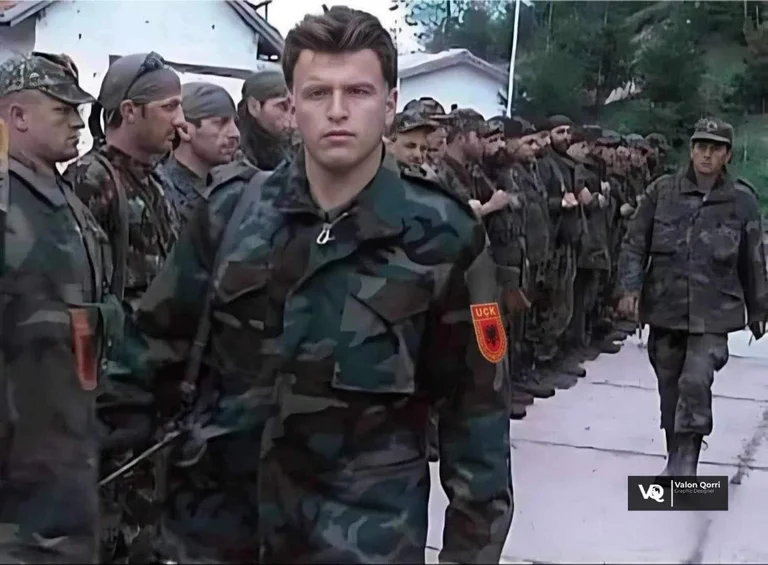
Xhemajli, a witness to the nation, is now resting in the tombs of Kostare, along with the martyry companions of the glorious KLA army, as evidence that the closure of the Hasherries is the path to unity. The union has brought freedom of our country, unity will lead us further into the midst of advanced nations.
May the memory of the worthy son of the Albanian nation, Xhemajl Fetahaj, be eternal.









