 a day ago
Is Germany sick of Europe?
Periskopi(2 years ago)
(2 years ago)The German model of economic growth is CHAkaput. Although Germany remains the eurozone's largest economy, it is now one of its worst, says Britain's gloomy analysis of the Guadiaan. The Guardian Germany is getting along. Its economy has not marked growth in the best part of both [...]
The Guardian
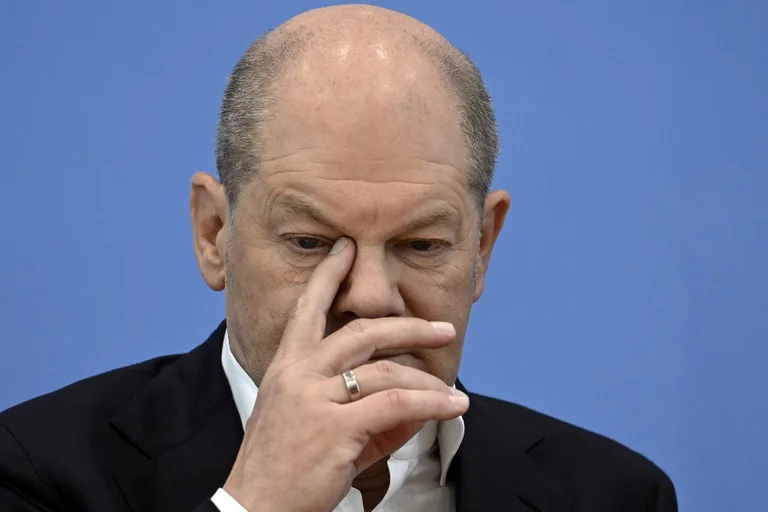
Germany is glorifying itself. Its economy has not marked growth in the best part of two years. Its infrastructure needs much modernisation. There are strikes on the railways. Farmer protests have blocked Berlin. Deutsche Bank is cutting thousands of jobs. The quality of education is declining. There is growing support for parties of extreme left and far-right. For the second time in a quarter century, Germany is being labeled Europe's sick.
Germany has a history of economic problems that fuel political extremism, but talking about a return to the Vajmar Republic is a bit excessive. The economy is falling, but not in collapse. There is nothing that fits the hyperinflation of 1923 or the massive unemployment of the early 1930 ' s.
That said, the government coalition led by Chancellor Olaf Schelz is in serious trouble, being shaken by the crisis. At the end of last year, the country's constitutional court ruled against a plan that allowed the money destined for emergency measures for the pandemic to be spent on transition to a zero-source carbon economy. This created a 60 billion-euro hole in the budget that now has to be met by austerity measures. As in many other European countries, immigration is a toxic political issue.
Last time, Europe's “patient label” failed to paste. Germany withdrew from its problems and soon returned as Europe's main economy. Its production base meant that it was ideally set for the fast - growing Chinese market. Joining the euro with a competitive exchange rate and securing cheap energy supplies from Russia increased corporate profits and generated a huge trade deficit.
When South European countries faced severe financial difficulties during the Eurozone crisis, they could expect lectures from politicians in Berlin. The open message for Spain, Italy, Portugal and Greece was that they should follow Germany's example.
Although Germany remains the eurozone's largest economy, it is now one of the worst. It contracted by 0.3% in the last three months of 2023 and was somewhat ironic. It was better than the expected performance of Portugal, Italy and Spain that spared the eurozone from crossing into a technical recession.
Peter Bofinger, professor of economics at the University of Würzburg, says the German economy has structural problems and that what was once considered to be strong points of the German business model has become weakness. Germany is far more focused on exports than other developed countries, production accounts for a greater share of the economy, and the auto sector became highly dependent on China and has been slow to adapt to increased demand for electric vehicles. The German economy, Bofinger says, is facing a fundamental challenge to its business model, which cannot be corrected by easing regulations and cutting taxes.
Writing for Social Europe, Boginger, says “Germany is sick. But she could be treated if she was willing to change her life - style and take the medication needed to regain her health. ”
“Ilici is a public debt used as a growth engine not by lowering accompanying taxes and transfers, but by increasing public investments to stimulate domestic demand and the release and establishment of new technologies. ”
Holger Schmidt, economist atenberg Bank, is much more optimistic about Germany's prospects. He is convinced that the economy will return.
German is not Europe's sick man. It has one of the strongest labour markets in Europe and a fiscal position that envys other advanced economies. There are problems, but they are mostly temporary. ”
Schmidt says Germany is suffering temporarily because China is no longer the engine of global growth and because it had to leave its Russian free energy.
German is very dependent on global trade. When global trade is flourishing, everyone is amazed at how well Germany is doing. When global trade is poor, Germany becomes Europe's sick man.
But China's demand for German industrial goods will be less and less as a result of the Asian giant's orientation towards a service-oriented economy and moving towards greater protectionism. Meanwhile, the risks of being dependent on Russian gas have become clear over the past two years and demonstrated weaknesses in Germany's growth model.
“German has evidently become less competitive as a business country in recent years. In addition to higher energy costs, a host of other factors have contributed to this: a high and unchanged tax burden, increased bureaucratic costs, slow progress in digitalisation and increased lack of qualified workers.”, says Timo Wolmershäuser, head of projections at the IFO Institute, one of the main institutions of German economic thought.
The good news for Germany is that it has shown in the past a determination to solve its problems. As with the United States, those who erase Germany do so at their own risk. After all, this is a country that spent 2 trillion euros over 30 years raising the level of eastern Lands after reunification.
The bad news is that the way to get out of the country's difficulties will be difficult and will not be helped by government cuts and deep-based opposition to public debt.
Karsten Brzeski, from the ING Bank, says Germany is facing problems similar to other Eurozone economies ʹ higher interest rates and war in Ukraine but with several additional issues that will take time to resolve and require German companies to adjust to survive.
According to him, the internet network is weak, infrastructure is being destroyed, there are delays and strikes affecting railways, and the country is falling on the international table for educational achievements.
All these are structural issues that are damaging the German economy. They don't point from the sky.Ki. / Translated from The Guardian: Periscope









