20 hours ago
Lessons for Kosovo from parallel between Armenia, Serbia
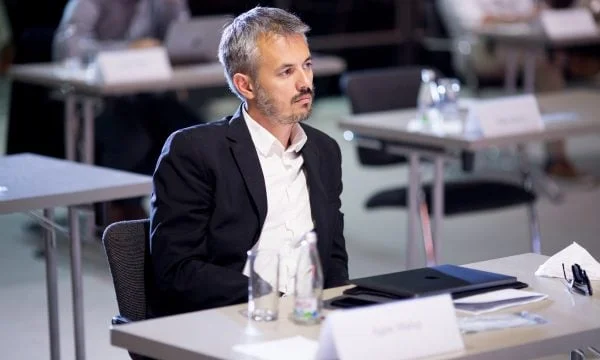
Periskopi(2 years ago)
(2 years ago)It says: Agon Maliqi Armenia prior to the war in Ukraine was completely dependent on Russia's defence -- allies with strong historical ties -- in its almost existential conflict with Azerbaijan (and Turkey). It was the only former Soviet country that continued to have Russian military bases. At Armenia's border points were members of the Russian FSB. Armenia [...]
It says: Agon Maliqi
Armenia before the war in Ukraine was completely dependent on Russia's defence, ally with strong historical ties, in its almost existential conflict with Azerbaijan (and Turkey). It was the only former Soviet country that continued to have Russian military bases. At Armenia's border points were members of the Russian FSB. Armenia was part of the CSTO some kind of evil Russian version of NATO. In Nagorno-Karabah of Azerbaijan, Russian peacekeepers were the only shield preventing the ethnic cleansing of Armenians from Azerbaijan (which in recent years became more powerful militarily strong).
After the war in Ukraine, Armenia's democratic government realized that Russia's full dependence was a unstable strategy and began a west approach. Within the last two years, Armenia narrowed away from the CSTO and removed the FSB from many border points. It began a negotiation process with Azerbaijan under the EU and US umbrella and is aiming to obtain EU candidate status. Russia did not remain indifferent to these steps. Russian peacekeepers withdrew and allowed the ethnic cleansing of Armenians by Nagorno-Karabahu from Azerbaijan.
Similar moves after the war in Ukraine did Serbia. Surrounded by NATO on all sides, Serbia realised that the defence could no longer guarantee the desperate and weakened Russia. While publicly maintaining balances and allowing Russia space of action in Serbia as a threat to the West, Serbia backstaged concrete steps to approach NATO: aircraft purchases from France, Ukraine's sale of ammunition, strategic industries associated with the West.
Russia was generally tolerant of this approach because Serbia continues to perform as much work as being blocking the integration of the Balkans into NATO and the EU. In most cases (such as that). Russian sabotage acts in the region took place in co-ordination or with Belgrade's approval.
But at certain moments Russia has also known to threaten and punish Serbia to draw the limits of action. One of the ongoing Russian threats is the fate of Serbs in Kosovo. The ideal scenario for Russia (and the pro-Russian currents in Serbia) to destroy any idea that NATO can protect Serbs in the region is for Serbs to leave Kosovo before the eyes of the NATO mission. The Russian intelligence struggle in Serbia is constantly talking about the ethnic cleansing of Serbs from Kosovo and NATO at first glance this parachute is read as solidarity, but in mafia language it is also a threat: “the fate of Nagorno-Karabah awaits! ”
Attacks on critical infrastructure that provoke interethnic tensions are Russia's instruments towards that goal. Russia's hopes and pro-Russian elements in Serbia depend on finding fools in Kosovo, primarily radical Serbs. But even among the terrified Albanians who view this scenario as desirable and who, apart from having no humanitarian consideration, do not understand that Kosovo is neither Croatia in 1995 nor Azerbaijan in 2023 (UN-known states), but depends on NATO-led interests and security.