21 hours ago
Germany we knew is gone.
Periskopi(a year ago)
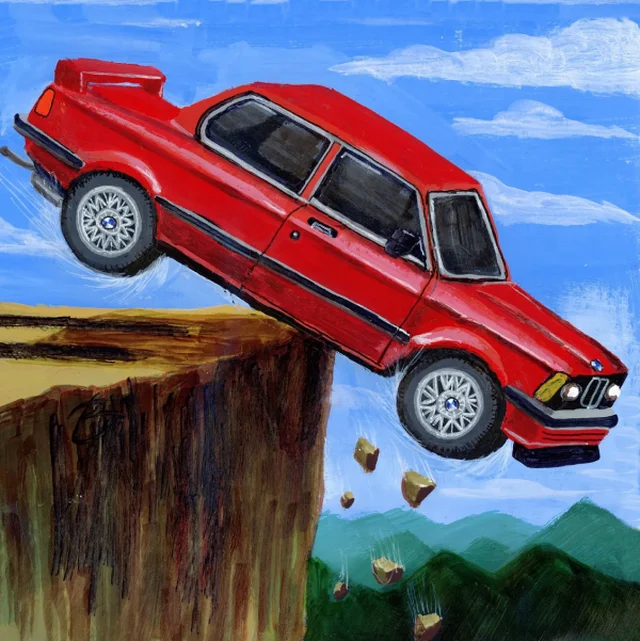
(a year ago)I finally rented a car in Las Vegas from Anna Sauerbrey New York Times, and I was in the United States to cover the elections. The agent in the gym insisted on giving me a BMW. “You will feel at home”, he said, viewing my German license. I took the keys and thought [...]
Finally I rented a car in Las Vegas, I was in the United States to cover the elections.
The agent in the gym insisted on giving me a BMW.
“You will feel at home”, he said, viewing my German license.
I took the keys and thought of something: Outside Germany, Germany is still intact. I often find this when I travel.
Outside Germany, Germany is still a car country, home to a thriving economy. Outside Germany, Germany is still a prosperous country, where they all drive a BMW or similar one. Outside Germany, Germany is still a well - arranged country, a pleasant country both politically and socially.
I smiled at the agent. But inside, I was touched.
Because Germany no longer feels like Germany in Germany.
On Monday, Chancellor Olaf Scholz lost confidence vote in Bundestag German Parliament, formally ending his government. It was a formality: the three-party coalition had fallen in early November, when Scholz fired Finance Minister Christian Linder.
The movement left Scholz, a Social Democrat, with a minority government together with the Greens.
Rather than wavering, he decided to call early elections to be held on February 23rd.
At first glance, the government's collapse seems like a very boring political motivation “House of Cards”, focused on a budgetary struggle.
However, there is a existential crisis. Economically prosperous and politically stable Germany has fled. And this government, shaken by external shocks, proved unable to succeed.
How did we get here?
In the fall of 2021, things felt very different.
After Angela Merkel decided not to run in office anymore 16 years later, Scholz defeated her Christian-Democratic successor and formed the first three-party government in German history.
Younger politicians, such as Annalena Baerbock, Foreign Minister and Linder, appeared.
It was the first time that the Greens -- a left-minded economic party rooted in the ecological movement of the years HINA80s -- had shared national power with the Free Democrats, a pro-civil and pro-business freedom party.
In interviews with a book I was writing, many of those young politicians talked about overcoming ideological barriers to modernise Germany after Merkel's long reign.
They spoke enthusiastically about the country's digitalisation and promotion of green industries.
The energy felt real.
Led by Scholz, stable and moderate, the government seemed well prepared to address the country's challenges.
But problems started.
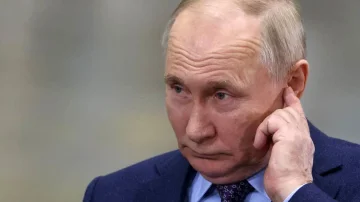
The first was the invasion of Ukraine by Vladimir Putin, who sent the new Government into crisis management mode.
After Scholz declared a “ZeitenWende”, a turning point in foreign policy, the government allocated 100 billion euros for the reconstruction of the German Army. All of this came after the economy shook.
While other G7 countries are on the rise, Germany is ready to register the second consecutive year of recession.
Her businesses are facing difficulties. Volkswagen, who employs about 300 thousand people in Germany, plans to close production sites and fire thousands of workers. Ford, Audi and Tesla have also announced layoffs, including ThyssenKrupp, a large steel producer.
Once Europe's prominent economy, Germany has moved from leader to impasse.
The reasons for the decline are complex.
The sudden end of Russian free gas is a major factor, of course, but there is also the government's agenda for green reforms that have exacerbated energy costs. This has not helped German car producers, who are struggling to compete with their Chinese counterparts. Some companies have clearly made poor decisions, but even the government has failed to support them.
In general, the government is guilty of insufficient investment not only in major industries but also in schools, railways and roads.
Overall, the total appearance is bleak. All the time, a toxic debate on migration has been under way. Since 2015 millions of people have come to Germany, recently including about one million Ukrainians. The country's stance has been bipolar.
On the one hand, the fact that Germany is a multiethnic society is widely accepted. But, on the other hand, there is dissatisfaction with the fact that it repeatedly turns into waves of anger for immigration.
The government has offered a similar mixed response, making migration easier for qualified workers and establishing strict border controls, with tougher measures for asylum and more deportations. The file didn't like anybody. These attempts have combined with devastating political effects. In the face of so much hardship, it has become increasingly difficult to govern.
The public has not been sympathetic: frustration with the government is widespread, its parties are not popular. In this atmosphere, a newly formed pro-Russian party, Sahra Wagenknecht, has advanced and the alternative for extreme-right Germany has been cemented as the second most popular party in the country.
If the trilateral coalition was an experiment to cope with the country's fragmented policy, it failed.
Time, with Donald Trump growing and Europe in a mess, couldn't be worse.
However, not everything is lost. Germany's crisis is real, but it's as much a crisis of confidence as anything else.
Unemployment may increase, but it is still minimal. Our budgetary restrictions, far from a natural force, can be overcome by political will.
The party system is breaking down, but even the most divided states have been able to form governments.
Next year we can see the restoration of a stable coalition between Christian Democrats and Social Democrats.
With generations and generations of immigrants integrated, there is no reason we cannot do it again.
Yet, attention is worth the effort. Most of our neighbours and friends face the same problems: the costs of transforming carbon-based economies, the risks of responding to new geopolitical challenges, the difficulties of achieving social cohesion.
If Germany can't do this, who is it?