 21 hours ago
Albin with a Family Photo revealed a serious, symbolic distinction with Kosovo
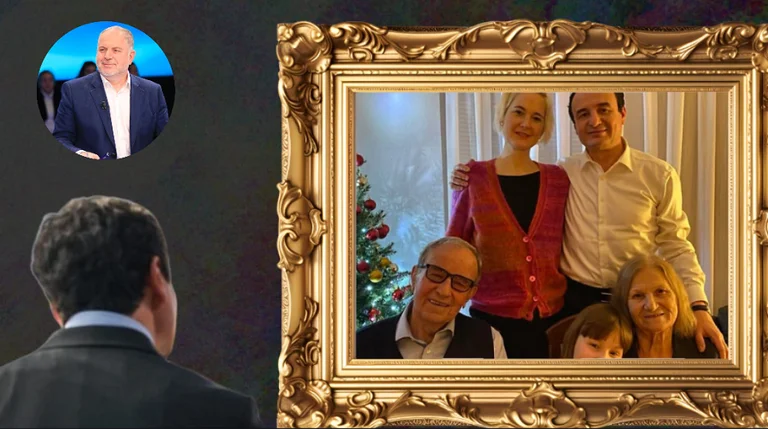
Periskopi(a year ago)
(a year ago)It says: Baton Haxhiu a family photo, publicly shared by Albin Kurti to congratulate citizens New Year's Eve, shot at 2021, at first glance it looks like a simple moment of warmth and harmony. It features Albin Kurti, his wife Rita, their daughter, and Kurt's parents a sight that [...]
It says: Baton Haxhiu
A family photo, shared publicly by Albin Kurti to congratulate citizens New Year's Eve, shot at 2021, at first glance it looks like a simple moment of warmth and harmony.
It features Albin Kurti, his wife Rita, their daughter, and Kurti's parents with a view intended to convey the festive atmosphere and family unity.
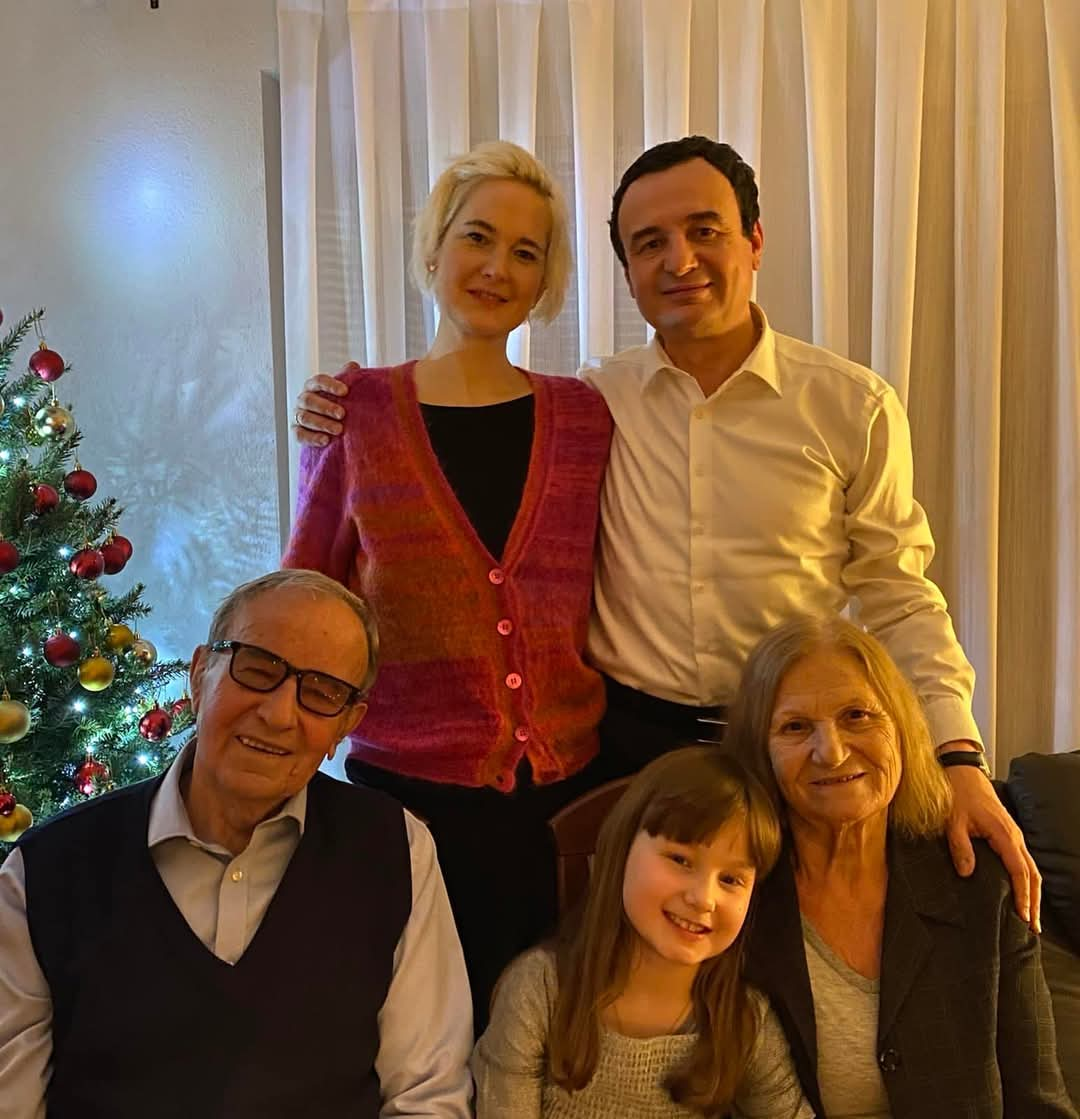
But when this photo returns today, three years later, in a reality where Rita and their daughter continue to live mainly outside of Kosovo, while Kurti heads the country, it gets another meaning: it becomes a symbol of the distance of not only physical but also symbolicly between his private life and the expectations of his citizens.
But beyond the warmth that this photograph conveys, for those who carefully follow Albin Kurt's personal and public history, this moment raises profound questions about the symbolic personal decisions of a leader and their impact on the perceptions of the citizens he represents.
At the heart of this discussion lies a key episode from the past: Kurt asked members of his party to approve of marrying a foreign woman.
At the heart of this discussion lies a key episode from the past: Kurt asked members of his party to approve of marrying a foreign woman.
The request Albin Kurt made before his marriage to Rita to take up his party's opinion is an act that can initially be seen as a sign of respect to fellow workers and an attempt to harmonise personal life with public expectations.
But this approach also raises important questions for a leader who has built his career on independence and the power to challenge traditional norms. Was this question a reflection of his concern about public perception in a small and conservative society like Kosovo, or a deeper uncertainty suggesting that a leader should not seek “lee” for personal elections that are deeply intimate?
This sensitivity to public perception may be viewed as human and modest, but in a political environment it exposes an excessive dependence on collective consensus, even on issues that should remain private. Today, when his personal choices convey symbolic messages that create distance between him and his citizens, he seems to have lost that initial sensitivity to public perceptions.
The picture of Christmas is not just a festive wish, but a reminder of the deep symbolic and real division that his personal decisions have created with the people he represents.
The Dating Symbol and the Role of Rita as Intellectual
Marriage to Rita, an intellectual and a woman with strong international presence, had the potential to convey a contemporary and hopeful message to Kosovo. A woman who could be an inspiring model for Kosovo women and youth, who could promote gender equality and an opener approach to interculturalism, has become an almost invisible figure in the country's public life.
Besides appearing at international events or diplomatic meetings in Paris, Rita's presence in Kosovo appears to have been reduced to a minimum, leaving a huge void in her representation as a strategic and symbolic partner of a leader who claims to embody hopes and change.
Rita's lack of daily life in Kosovo raises questions: Is this her choice to stay away from an environment that she may consider restrictive or derogatory, or a reflection of a mutual complex where neither it nor the environment can find common language? Whatever the reason, this distance is perceived as a symbolic departure from the people of Kosovo and as a failure to use its intellectual power to contribute to the country's social and cultural development.
Girl education and Kosovo Education Message
Meanwhile, the decision to educate their daughter in Norway conveyed another disappointing message. A leader who has repeatedly criticised political elites for using private education and health services abroad now faces a profound paradox: his choice not to educate his child in Kosovo conveys the idea that he himself does not believe the country can offer a better future for younger generations.
For citizens trying to educate their children in an educational system with limited resources, this choice sounds like an insult to their efforts and a testimony to their leader's lack of confidence in local institutions.
If leaders themselves choose to take their children away from Kosovo, what message does this send for thousands of parents struggling to provide quality education for their children in the country? His daughter's education in Norway, although a private and legitimate choice for any ordinary parent, becomes a symbol that highlights the gap between words and actions.
Two parallel lives: Prime Minister in Kosovo, Rita in Norway
This physical and symbolic distance becomes even more evident from the fact that while Albin Kurti lives in Kosovo, his wife and daughter live mainly in Norway. A leader who leads a small country with great challenges must embody the idea of having inseparation with his people. The presence of a leader is not limited to his office; it includes his family, elections and daily engagement. In this case, physical and conceptual separation between his life and the life of his family creates a distance that citizens feel and interpret as a lack of complete devotion.
Christmas photo and the previous request for party approval are two moments that reveal a complicated narrative for a leader who is divided between personal life and public obligations.
If Albin Kurti then demanded the party's view of marriage, he should show an even greater sensitivity to citizens' perceptions of his personal elections today. These choices are not merely private; they convey powerful messages to the society he directs.
To restore confidence and overcome the distance that has been created, Albin Kurti must take concrete steps to link the symbolic of his personal decisions to his public responsibilities. Not only through festive images but through clear actions that show that he shares the reality and daily challenges of his citizens.
Only then can he regain the role of a leader that embodys not only the vision of a better Kosovo, but also the sincere commitment to building a closer and common future with his people.









