20 hours ago
What Happens After Trump's With Ukraine
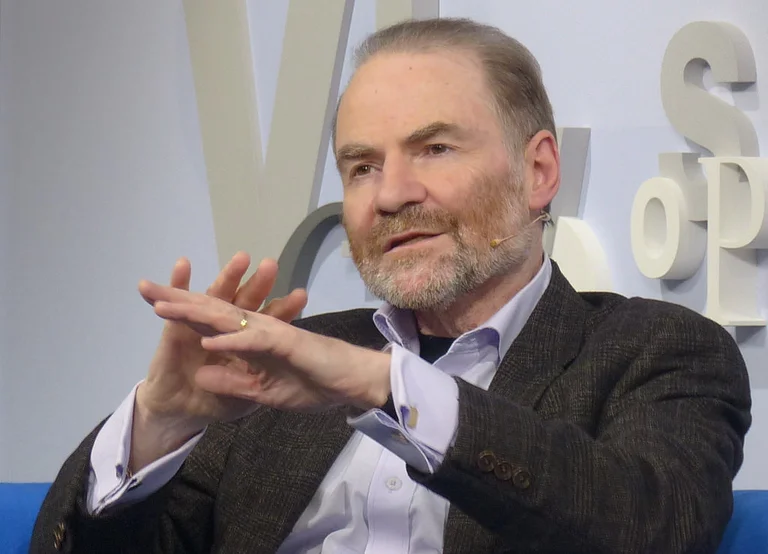
Periskopi(2 years ago)
(2 years ago)It says: Timothy Garton Ash, The Guardian first victim of Donald Trump's second term as president of the United States will probably be Ukraine. The only ones who can prevent this disaster are Europeans, but our continent is in chaos. The coalition government in Germany chose the very day we woke up [...]
It says: Timothy Garton Ash, The Guardian
The first victim of Donald Trump's second term as president of the United States will probably be Ukraine. The only ones who can prevent this disaster are Europeans, but our continent is in chaos. The coalition government in Germany chose the very day we woke up with the news of Trump's victory to break apart amid deep outrage among allies. If Europe fails to meet this challenge, not only Ukraine, but the entire continent will end up weaker, more divided and angry while entering a new and dangerous period of European history.
Even in Ukraine, people are trying to find a little hope in this fast - approaching orange cloud from Washington. Even before that happened, they were increasingly frustrated by the successive obstacles of the Biden administration.
I saw that hope quite clearly in a SMS that sent a Ukrainian commander from the front line. Trump, he wrote, “is a surprise man, maybe things will improve”.
I would say there is an opportunity from 5 to 10%, that the 47th president, “the surprise man”, increase support for Ukraine in the hope that through this threat, would force Vladimir Putin to accept more easily a peace deal, just as some of his most prominent supporters, pro-Ukrainian, as former US Secretary of State Mike Pompeo, have proposed.
As Ukrainian President Wolfymyr Zelensky points out, Trump hates more than anything you think is a loser.
However, there is 90 to 95% chance that he will act exactly as he has promised, sometimes, that he will end the war by imposing an agreement. In July, he told Fox News: “Enough. You have to make a deal” although he added that he would threaten to give “much more” help for Kiev to push Putin to the negotiating table. But the conditions predicted by his deputy president, JD Vance ʹ accession to Ukraine's current territorial division and this country's obligation to accept neutrality would be a major victory for Putin.
In reality, perhaps there is no agreement that Putin and Zelensky can accept together with joy. In a rare and true statement, Putin's spokesman, Dmitry Peskov, observed: “you cannot end the Ukrainian conflict overnight”. What the future American president can do, however, is to reduce American economic and military support in such a drastic way that Kiev feels too weak and is forced to seek a ceasefire. Worse still, this could create what military expert Jack Watling called it a Brest-Litovsk scenario, where Ukraine could try to reach an agreement from a position so weak that even the threat of a new enemy offensive could force it to do more withdrawal, as did Russia during negotiations on the 1918 Brest-Litovsk Treaty with Imperial Germany and its allies.
However, even in “peace scenarios by force”, predicted by people around Trump, Europe will have to do much more.
In an article written this year for the Wall Street Journal, “A Trump Peace Plan for Ukraine”, former Secretary Pompeii proposed that NATO's European allies would have to increase defence spending to 3% of their GDP and contribute 80% of a $100 billion fund for Ukraine's weapons. And, of course, to buy American weapons and ammunition. Robert O'Brien, former National Security Council of Trump, wrote in Foreign Affairs that “the approach of Trump would be to continue to offer powerful assistance to Ukraine, financed by European states, to provide itself with the possibility of finding a diplomatic route with Russia”.
On an intellectual level, many Europeans admit that, in the midst of a Russian woman who is moving forward aggressively and a rapidly retreating America, Europe must do more for its protection. With intellectual formation, Emmanuel Macron, who is also president of France, reacted to Trump's victory by announcing the Titansphera (X) that he had talked with German Chancellor Olaf Scholz and that they would work together for a more unified, stronger and more sovereign <x0).
But because of this same Macron himself, France now has a weak and unstable government, which, in fact, supports its political survival in pro-Poutin populist, Marine Le Pen. Scholz's government was also disbanded hours after the proclamation of Trump's victory, leaving Europe's central power in a state of uncertainty, which is possible to continue over months, of this political crisis.
One of the obvious reasons for the dissolution of the coalition was the rejection of Liberal Party leader, simultaneously and Finance Minister Christian Lindner, to approve an additional 3 billion-euro emergency aid to Ukraine under a 9 billion-euro emergency spending package.
Europe is also deeply divided in its response to Trump. In many of the more than 40 European states represented at the European Policy Community Summit held yesterday in Budapest, there are important political forces that enthusiastically support the new US president, and some of them are in power. At the top of the list is Hungary's leader, Viktor Orbán, host of the meeting, but he joins dbe figures such as Robert Fico in Slovakia, Aleksandar Vučić in Serbia and Geert Wilders, who is part of the ruling coalition in the Netherlands. Giorgia Melon can do the same. Although not officially in power, figures like Marine Le Pen in France, Nigel Farage in Great Britain, or forces like AfD in Germany, the Party of Justice and Law in Poland and Vox in Spain have too much influence on their countries. According to a study by Europe Elects, in seven European states, Slovenia, Slovakia, Moldova, Bulgaria, Hungary, Georgia and Serbia a majority of respondents would have voted for Trump if they had the opportunity to do so. They are joining approximately 78% of Russians who would have voted the same. So Trump is Russia's choice.
What about Britain? The key members of Prime Minister Keir Starmer's cabinet have in the past described Trump with the strongest insults (“sociopat, sympathising with neo-Nazis” etc), but recently a communique for the prime minister's call Starmer with the elected president, showed us that he expressed the warmest “ ” and that they remembered their <x4mer than” their courtship meal during September. Of course, this is the common hypocrisy of international relations, but there is a real possibility that, in view of Britain's difficult economic situation after Brex and 14 years of savings from conservatives, the left government may be tempted to ask for an exception from the “special acquisition” to avoid the severe tariffs Trump threatens to hit Europe.
However, as Friedrich Merz recently commented, Germany's possible future Chancellor, if Europe wants to save Ukraine and stay strong in the face of an increasingly dangerous world, close co-operation is required from it, at least between Germany, France, Poland and Britain. Can a defence and diplomatic unity be achieved with such a political and economic divide?
We have two months, until January 20th, on Trump's oath as president to find a better answer. We have to. (But that doesn't mean we can do it).
Timothy Garton Ash He's a historian, writer and columnist of the daily. Guardian