a day ago
Europe's Film and the Enlargement Process
Periskopi(2 years ago)
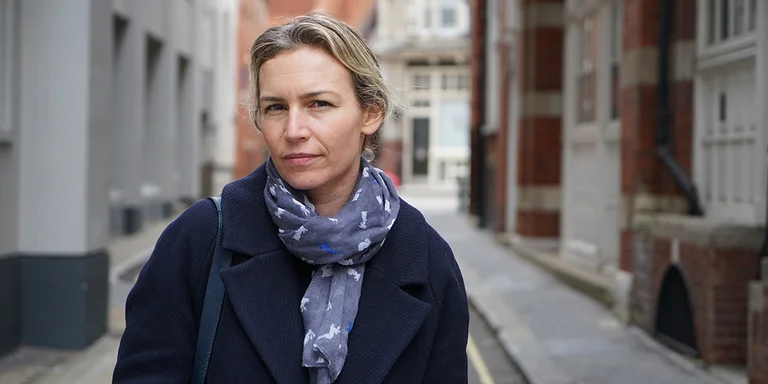
(2 years ago)It says: Lea Ypi EU Enlargement was one of the main points of the agenda of the European Political Community summit in Granada, Spain, held on 5 October. Lea Ypi writes that similar to an Albanian lap, Europe walks around in a vicious circle. When I was growing up, in Communist Albania in the late 1980s, [...]
It says: Lee Ypi
EU enlargement was one of the main points of the European Political Community summit in Granada, Spain, held on 5 October. Lea Ypi writes that similar to an Albanian lap, Europe walks around in a vicious circle.
When I was growing up, in communist Albania in the late 1980s, there wasn't much to do during the warm summer nights except for the lap. Giro (which originated in the Latin word girare And that of old Greek ? But there was something more about filming what these words can describe, it was a ritual of hope and respect, as if there was no delay in doing anything but rolling, as if amid a host of nonexistenceal alternative activities, the lap was the best at every opportunity.
What did the ride involve? In my hometown of Durres, on the Adriatic coast, people wore their finest clothes, and as soon as the sun set, they walked across the city center until they reached the sea. The description of where the end of the shoot was is a little bit deceptive. You almost make it sound like this last one had a purpose, like you were going somewhere, you were dating somebody, or it's finishing a job. It really didn't mean anything. The tour was a purpose in itself. It had its rules, its symbols, its rhythm. Not too fast (it would mean that you were going somewhere) and not too slow (it would create a crowd of people forcing everyone to stop).
In many ways walking was like the process of expanding EU- of. It continued endlessly in a vicious circle, and the question of where it's going is the only one that seems inappropriate to lay down. The more round and regularity and its mechanical monotonous was at once hopeless and hopeful, challenging and exhausting and delivered.
But there are other elements that make me think about Europe and these youthful walks. In Durres, come in. spin It was like making an imaginary tour of European history. Each eye usually passed before a number of destroyed archaeological ruins, where broken columns remembered the ancient days when the city was called Epidmnos, a name that the Romans later changed, after which there was something with a curse on it.
The exiled Olygarks of Epidaminos appear prominently in the Peloponnese War written by Tukidis, one of the main texts of European civilization and one of the first lessons of power and realism in the international sphere. They also appear in Aristotle's “Politika” as an example of the degeneration of oligarchic rule: the rich turn against the poor, the poor fight against control by the rich, the birth of the bulls. Power, wealth, reality: If all this sounds familiar, it is because Europe's cultural heritage is made up of universal values, but also universal violations of values.
Values and Antivalues
Just beyond the archaeological ruins, it was a Roman amphitheater (or half of the amphitheatre, since the rest is still buried underground, in hopes that one day it can be resurrected from EU funds). It is the largest amphitheatre in the Balkans, built by Emperor Traianus in the second century AD. Although, to be exact, Traianus only ordered construction; the stones were placed by unnamed slaves. Not only values and antivalues exist together, but sometimes one is a prerequisite for the other.
Further on the walk, just behind the amphitheater were the city's Byzantine walls, erected after an earthquake by the eastern Emperor Anastassisius Diorus, born and raised himself in Durres. And on the other side of the wall, it was the Venetian tower, from the time Durres was known as the Durazzo Dukat, a colony of the Republic of Venice recovered from the Normans, later contested by the Axhius, Serbs and Hungarians, before the conflict was resolved crucially with the expansion of the Ottoman Empire. Of which, surprisingly, there are only a few traces: an old mosque, turned into a youth center during the violent embrace of atheism by Communists, some houses, some shops.
When the Cold War ended, everything changed. The ride got longer. It took people beyond archaeological ruins, beyond city walls, across the sea, to various parts of Europe, to the European Union. European soldiers, once mobilized to invade foreign lands, now patrolled its external borders. European institutions were impressed by the question of whether these new Europeans, aspiring, were the same as the old, successful. Did they deserve to come? Did they have good reason to travel? For what reasons could they move? Were their values compatible with European values? *
Albania and Europe
When asked if Albania deserves to be part of Europe, I think about my walk through Durres and it makes me smile. It's been hard to get out of Europe in the last thousand years. And good and evil. But the question is significant about the attitude of those who present it, equated the ideals of Europe with the reality of EU institutions, Brussels with universal emancipation, the enlargement process with a course of obstruction imposed by member states, successful and meritier states of Europe for (at best) their disabled aspiring counterparts, (at worst) and corrupt.
In October 2022, during an official visit to Tirana following the opening of membership negotiations, Albanians calmed down when they heard EU commissioner Ursula von der Leyeen to declare during a press conference: “Albania has done its homework”. Here you are, all the EU confrontations and all the inconveniences of the enlargement process in a metaphor.
This metaphor supports the simplest wording of a distorted relationship - not the relationship between equals but that of students with the teacher, of those who have the wisdom to teach, of sticks, and carrots, of sanctions, and of rewards. Can “really be learned” freedom and democracy? And are these kinds of lessons that current EU states are capable of?
At least candidate countries have homework to do. What about the EU? Its values are known: human rights, human dignity, rule of law, equality, freedom, democracy, respect for minorities. They are taught with so much passion to candidate states and are so eagerly embraced in the speeches of leaders before membership that they would turn into even the most steadfast Cynics. The reality is more complicated.
It cannot be legalised for human rights while cutting funds for humanitarian projects (as Italy has recently requested). Human dignity cannot be preached as people are allowed to drown in the Mediterranean. The rule of law cannot be praised as attacks on courts (such as Poland and Hungary) are systematically orchestrated.
The sad truth is that for all these issues, ideals are far from reality, and the EU agenda, if not defined, then crawls from the extreme right. Left, liberal, green, center, simply take comfort in the fact that it's not as bad as it might be in reality: it's as bad as the resistance it faces.
The image that the EU traditionally designed on the principled, secure candidate states is the opposite of what it looks like inside. Researchers previously debated its lack of domestic democracy, the fundamental issue now has become the EU's survival.
But external enlargement issues and internal reform are not as separate as they appear. As right-wing parties win elections in one member state after another, and while left-wing parties increasingly make them parrot, the project is essentially shaken. What kind of EU will emerge from the current crisis? With all we know, it may be what Zeitgeist reflects: politically authoritarian, culturally essentialist, exclusive to cruelty.
EU Survival
What does it mean, under current circumstances, the debate over enlargement as if we were in a normal political time? What is the purpose after the status quo: the content of the deadlines, the comparison between the Western Balkans and Ukraine cases, setting goals and implementing priorities? The EU has never been this hopeless before. Of course, the focus should be, not on what he can learn to expand, but on what he can learn to survive.
This would require a new approach to enlargement and integration, analyzing them, not as two problems, but as one. It requires that it interact with candidate countries not as subordinates, but as partners, not passive subjects, but as equal actors.
For decades now, the enlargement process has been trying to improve democracy in candidate countries, but it has also impoverished it. On the one hand, the integration process has kept hope alive, within the EU and abroad, given citizens a goal -- a vision of the future between the total collapse of trust in ideology. On the other hand, while the EU encouraged embracing abstract principles, it reduced the space for principle exchange.
The EU encouraged rule of law, but distracted attention from structural criticism. If all social diseases are now blamed “corruption” of local elites (as if only outside the EU this corruption can be found), this is due to the hegemony of the EU enlargement drive. The conclusion was that there are no bad rules, only bad people. The result is that people in the region can only imagine politicians (all politicians) as thieves.
Of course, something like that now happens in the EU. This simply illustrates how many times have changed. The process of external enlargement cannot remain immune to what is going on inside. Those who resist the current EU, who have been lured to the right, do not resist it because it seems trendy, or very cosmopolitan. Very simply and for many reasons I would add that they resist because they do not feel represented.
It is this representation vacuum that is filled out from the extreme right, turning it into a question either: “ju” or “ata”, or “Europe” or <6> State”, or “minant” or “The EU's problem is not that it is transnational, but that it is not transnational enough, that it is transnational only to elite. The notion that we are all equal in making laws that are required to obey (or, EU regulations that we should comply with) is so false in a world with structural economic divisions and political divisions, that it is surprising and unfortunate that only a summoning call has been made for the right.
Democratic Reform
In the Republic of Plato, democracy is likened to a political trade. People enjoy so much freedom that they can choose any form of government as the foundation of their political community, the rule of the people (democracy), rule by the wealthy (Oligarchia), rule by the fittest (aristocracy), and when democracy weakens, rule by tyrants.
It is well - known that Plato was not a Democrat, and his words should be taken as a warning. In the case of national states, the nominal presence of sovereignty gives the illusion of popular control, politics becomes once again the space of freedom. EU institutions can only push ahead with politics. And as good policies circulate: a European climate agreement, a common policy for migration and (when things go well) a scheme for progressive taxation, as we have recently seen, good reforms are threatened by bad politics.
The EU has never been more sensitive than today by the fluctuating policy of member states (Brex was just the first warning). So, creating good policies, including good expansion policies, is not enough. Good policies cannot protect themselves, they need human intervention. The real change in the EU requires the construction of a movement that extends across Europe that advoys for inclusive and radically illegal policies, a group of institutions and rules that practice the freedom and equality they preach.
Problem with Expand The EU's external reform cannot be separated from its internal reform. But we will not make progress if we remain blocked in debate over which of the countries will be joined first, which is the most likely date of enlargement, who will be second, who will come next. What is needed is a decisive political action and the clarity that characterised EU founders: a new economic vision exceeding the limits of capitalism and institutions capable of granting citizens genuine democratic representation. In February, a new transnational economic model combined with a new transnational political model.
Europe is at a crucial turning point. It will either be grown from the right, which will destroy it inside, or move in a new direction, which sets forward not what it can teach but what it can learn about the ideal for survival.
Europe's Tour
At the end of my tour in Durres, I arrived in an area known to older generations as Volga (by the name of a hotel inspired by the Soviet Union) and to us children like Resistance, or the area of Resistance, that was named after a Communist monument commemorating Albanian resistance against fascist aggression during World War II.
The monument consisted of a series of sticky ladders (that children used as slippery ones) to lead to a socialist sculpture of an unknown soldier. His gaze was fixed on the Adriatic Sea and had something wandering, almost melancholic in his expression. But his hands were straight up, carrying a gun pointed at Italy on the other side. It was a plastic image of desire and violence.
However, no one noticed it, and the people in Durres passed around the monument as if they were in a procession absorbed by their daily troubles, looking stealthily and rarely stopping to see it. This also concerns the EU. An endless procession about the past. We never stop, never look up and don't think. It lies there like an old bronze statue, with its most important lessons hidden even distinct.