a day ago
West approach to Vuciqi risks destabilise region
Periskopi(3 years ago)
(3 years ago)- By Christian Edwards- When Russia invaded Ukraine, the United States and the European Union accelerated their turn towards Serbia. Instead of dealing with the conflicting demands of constituent states of a fragmented Balkans, Western capitals focused most of their efforts on a particular goal. Their policies had two [...]
-From Christian Edwards-
When Russia invaded Ukraine, the United States and the European Union accelerated their turn towards Serbia. Instead of dealing with the conflicting demands of constituent states of a fragmented Balkans, Western capitals focused most of their efforts on a particular goal.
Their policies had two goals. First, put Serbia in the western fold, away from Russia. Second, to allow their respective administrations to focus fully on supporting Ukraine.
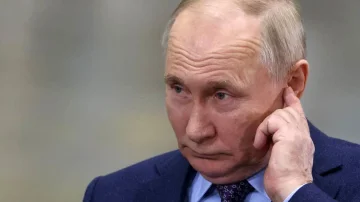
Traditionally one of Moscow's closest allies in Europe, Belgrade has long tried to breach the border between its historic ties with Russia and a possible future of closer European integration. Western diplomats have sought to withdraw Serbian President Aleksandar Vucic from the orbit of his Russian counterpart, President Vladimir Putin, pledging a faster path towards EU membership, as well as warning with isolation.
But, 18 months later, some observers say the actual approach has all been “carrot” without a stick, and as a result it is not reaching its goals.
Serbia has refused to participate in all rounds of EU sanctions against Putin. And Serbia has continued to pursue its own interests in the region with declining accountability, prompting conflicts abroad to turn attention away from internal discontent, confident it will not be reproved in the West.
The effects of this behaviour have mostly been felt in Kosovo, which achieved independence from Serbia in 2008, following the bloody Balkan wars of the 1990s. But Belgrade and many ethnic Serbs in northern Kosovo still refuse to recognise its sovereignty, straining relations between neighbours.
“A Russian land horse”
Western governments have long treated Serbia as the necessary Balkan voice, sometimes at the expense of more periphery players, some observers say.
Their belief is that Serbia is the Balkan state, as they see it. Serbia is what, if you can approach and hold by your side, whatever the meaning of this will be easier”, CNN Yasmin Mujanovic, a policyologist specialising in the Western Balkans, told.
While successive American administrations have been trying to extract Vucic and his Serbian Progressive Party (SNS) “from the cold”, these “efforts have become especially uncipa” since the start of the war in Ukraine, Mujanovic said, and have not achieved US goals.
“They seem to believe they are drawing Serbia closer to the EU and NATO and to Western thought and away from Russia. But this is not something reflected on the ground,” says Alicia Kearns, British deputy and the chairman of the elected Parliamentary Foreign Affairs Commission.
Vucic has long maintained a comfortable relationship with his Russian counterpart, Putin. Speaking after a meeting of the National Security Council in February, Vucic argued his decision not to sanction Russia, because it was “the only country that had not imposed sanctions against us in the 1990s”.
“They supported our territorial integrity in the United Nations”, he added, referring to Russia's refusal to recognise Kosovo's independence.
Serbia lost control of Kosovo following a 1999 NATO shelling campaign that ended the massacre of ethnic Albanians who constitute more than 90% of Kosovo's population by Serb forces.
Despite EU-backed efforts towards energy transition, Serbia remains highly dependent on Russia, as it has sold most of its shares to its Russian state-owned oil company Gazprom.
The result is that, despite Serbia's stated hopes of joining the EU, Vucic has continued to walk on a thin rope between Moscow and Western powers. Although he has joined the UN resolution condemning Russia's invasion in Ukraine, Serbia's leader has shown little will to join Western sanctions.
In April, the Serbian government denied reports that it sold weapons and ammunition to Ukraine after a Pentagon document was issued claiming otherwise. Serbia said at the time it maintained its neutrality policy, though some Western officials received the reports as proof that their policy was functioning.
Some analysts told CNN that Serbia has had to do little to receive praise from American and European officials, and that Vucic in reality has left a trail of long-standing promises.
When his re-election took place [Vucci in 2020], everyone told us, just wait until after the elections, you'll see that it will suddenly become very Western-oriented and Europe”, Kearns says. “Didn't happen. ”
We were told that he would join sanctions and show that he really is on our side. It didn't happen. We were told he would not get closer to Russia. He signed a security agreement with Putin in September. Every now and then, he laughs in front of the West. And when I ask Western officials, why are you so determined to let Vucic play with you?
Serbia's foreign minister said at the time that the deal with Russia laid out plans for consultations on a number of activities, but did not include security policy, Reuters reported.
Kearns has been one of the few Western figures that has publicly criticised Serbia. But this has come at a cost. After speaking to CNN, Vucic issued an open threat to her during a speech on state television, claiming that “if the government of Great Britain is not ready to react to” to its criticism of Serbia, “ne will be forced to react”.
Given such conduct, many ask whether the entire Serbian integration project is applicable, under its current government.
“Claiming we'll be able to bring, thanks to some miracle Serbia to the EU, with this kind of regime, you're practically putting another Russian land horse into the EU, as we have today in the form of Hungarian Prime Minister Viktor Orban,” tells CNN Majda Ruge, an expert for the Balkans at the European Council for Foreign Relations.
“Yes, you can influence enlargement, but you will certainly not neutralise the Russian influence in the region you will simply import it into the EU”.
In a statement to CNN, Serbia's ambassador to the United States denied Western support for Belgrade was fuelling tensions in the Balkans. “actually, US and European support for Serbia is based on the fact that these diplomats acknowledge that Serbia is playing an important role today in promoting stability in the Balkans”, Marko Duric said.
Serbia is deeply committed to becoming a member of the European Union and has voted for the UN resolution condemning Russian actions in Ukraine and supporting its territorial integrity and sovereignty, and has repeatedly sent different kinds of assistance. ”
Kosovo and rule of law
The effects of the smooth West's approach to Belgrade feel stronger in Kosovo, which has been dependent on Western support since the declaration of independence. While more than 100 countries recognise its sovereignty, Serbia does not recognise it, viewing it as a breakaway state. Efforts to normalise relations between the two countries under US and EU supervision have been tense and sometimes violent.
Tension rose especially after elections for mayors in Kosovo's four northern municipalities in May. These choices often go smoothly: About 90% of the population in this region are ethnic Serbs, and thus, under ordinary circumstances, they choose ethnic Serbs for mayors.
But these were not common circumstances. In November, mayors from the Belgrade-backed Serbian List party, which dominated four municipalities, resigned simultaneously. They were followed by police officers, administrative personnel and ethnic Serb judges in the region.
Their resignations prompted new elections, to be held in December. The Serbian list said it would not participate in the elections, as Serbs in the region boycotted them, with the full support of Vucic. But in view of tensions, Kosovo agreed to postpone the elections until April a decision that was praised by Five, an informal group that includes the US, Great Britain, France, Germany and Italy.
With no participation of Kosovo Serbs, ethnic Albanian candidates competed without rivals. Election officials said only about 1,500 people voted in all four municipalities a turnout of only 3.5%. Some mayors were elected by less than 100 votes.
But while the elections were no representative at all, for Kosovo Prime Minister Albin Kurti, the issue already involved the rule of law itself.
We have four mayors whose legitimacy is low. Yet, there is no one who is more legitimate than they are. We must have a legal state. We are a democratic republic”, Kurti told CNN in May.
However, the prime minister's stance has been criticised as harsh and uncommpromis. His allies charged him with entering the mayors' offices on May 26th.
The United States told Kurt and here he is at fault. They told him not to place the mayors in municipal buildings. And here Kurt ignored the specific directive,” said Edward Joseph, a foreign policy professor at Johns Hopkins University who has served for many years in the Balkans, including NATO.
A Pristina government official told CNN they did not want to submit “to official government buildings to protesters. The mayors of the municipalities entered their offices... Serbia had urged Serbs to boycott the elections. Now they wanted no one to enter those buildings. But then the question is: If mayors aren't supposed to enter the building, who should enter?”
But while Kurt may have taken an uncoordinated action, the answer to that was not inevitable. The worst of violence did not come on the day when mayors entered their offices, but three days later, in the town of Zvecani when the mayor was neither in the building.
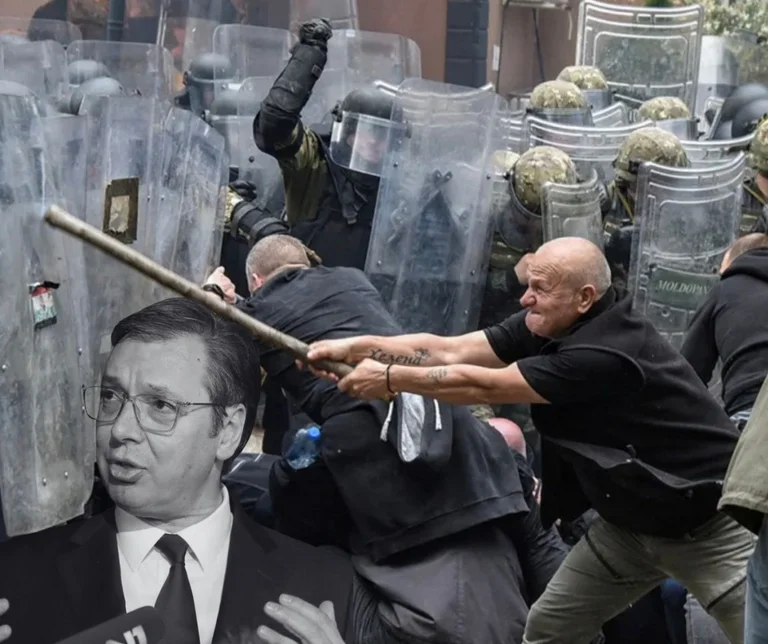
Violence was extreme. Dozens of NATO peacekeepers were injured after they were attacked by ethnic Serbs. Some injuries were severe: Three Hungarian soldiers were shot; one of them had a leg cut.
Kurti told CNN that these were not peaceful “projectors”, but a “milicist fascist” known to operate north of Kosovo, “who are paid and ordered by Belgrade”.
Others agree with Kurt. Kearns told CNN that British troops stationed in Kosovo as part of KFOR, the NATO Force in Kosovo, “listened to grenades on the doorstep of people if they refused to support Serbian militia”. Kearns said British troops also told him they had found “des of weapons hidden in churches and ambulances from the Serb militia in northern Kosovo”, though KFOR said in July that it had found no evidence of that claim.
Despite that, most diplomatic reactions have focused on Kurt's actions, for which Kosovo has paid a heavy price. Since elections, Kosovo has not been invited to joint military exercises with the US, has been excluded from European infrastructure projects and hit with sanctions that the Kosovo Business Alliance says can cost its $500m-euro economy (550m euros), by the end of this year.
Kearns criticised the unbalanized “response from the West, saying it ignored the real cause of trouble. “The start of the crisis was the Serbian government's external intervention in Kosovo's internal affairs, when it told Kosovo Serbs not to vote in local elections. This is intervention from outside”, she said.
Kurti has tried to declare Kosovo's sovereignty against the twin forces of foreign intervention and organised violence, and according to Mujanovic, the US and the EU have responded: “no. This is not appropriate under such circumstances. ”
“Zelensky of the Balkans”
Given Kosovo's dependence on Western support, some fear Kurt's incompatibility is frustrating his allies and weakening the country. Some are calling for a complete change of attitude.
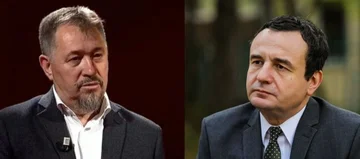
“He is trying to be Zelensky of the Balkans”, Shqirim Arifi, chairman of the southern Serbian region of Presevo, told CNN. “He is using rhetorically and populistly the argument of the rule of law. He wants to be Zelensky of Albanians. ”
Presevo Valley in Serbia represents the other side of northern Kosovo. While Kosovo's north is populated mainly with ethnic Serbs in a predominantly Albanian country, Presevo Valley is populated mainly with ethnic Albanians in a predominantly Serb country.
The best way to improve the situation, Arifi said, is for Kurt to do as Western allies require: Work to create “Asociation of Serbian municipalities” (ASM) north of Kosovo.
Kurti is accused of obstructing implementation of the establishment of self-government municipalities for Serbs, as envisioned in the 2013 Brussels Agreement aimed at normalising relations between Balkan neighbours. Under the agreement, Serbia could create the ESM in northern Kosovo, which would function under Kosovo's legal system, with Kosovo police remaining the only law enforcement authority.
A decade later, these municipalities have not been created, allowing disputes over the degree of autonomy of Kosovo Serbs to stir up.
But there is doubt whether this solution now being pushed by the US and the EU will alleviate tensions.
“Believe me, it won't be the best choice,” told CNN Dusan, a Serb living in the Leposavic municipality. “Perhaps, in the first two months will be a relief. Maybe we'll think about it. ”
But it would be a false dawn. “From the economic aspect, our life will not improve, but it will be worse”, he said, as residents will have to start paying for services and taxes currently covered by the Kosovo government. CNN is hiding Dusan's real name, as he feared his comments could affect his life.
There are also concerns that the ASM could foster more geopolitical tensions.
“We don't know what these municipalities will be,” said Kearns. “Would it simply be for local municipalities to be responsible for their water, electricity and taxes? Or is it going to be a new Republika Srpska? The reality is I don't think anyone wants another Republika Srpska”.
Republika Srpska, one of the two entities consisting of Bosnia and Herzegovina, declared independence in 1992 and was officially recognised under the 1995 Dayton Agreement. In recent months, its pro-Russian President Milorad Dodik has tried to clear the way for her secession from Bosnia.
In June, Republika Srpska lawmakers voted for the suspension of decisions by the Bosnian Constitutional Court in a movement described by experts as “legal secession” and a serious violation of the Dayton Agreement. The US condemned the move, saying it threatened Bosnia's sovereignty.
“People in Pristina and Kurti have made it very clear that in autonomous municipalities they see the new Republika Srpska. And they don't see in that model a solution for Kosovo. They see a new version, a new generation of crisis for Kosovo, and ultimately the region as a whole”, Mujanovic said.
Serbia's envoy to Washington, Duric, insisted in his statement to CNN that Belgrade was committed to a peaceful relationship with Kosovo. Serbia is also actively working to avoid escalating tensions with Kosovo often in co-operation with the US and the EU, and is committed to ensuring that Southeast Europe remains peaceful”, he said.
Wrong horse?
Throughout the last months of tensions, the US and EU have repeatedly reiterated their commitment to the cause of Vuciqi's behaviour on their side. But Serbia has acted with increased neglect, representing what Kearns called “a failure of preventative diplomacy”.
A harmful episode came to Ohrid, in northern Macedonia in March, when, after months of US and EU-mediated negotiations, Serbia and Kosovo finally accepted a bilateral agreement aimed at normalising relations between the two countries. But as this was warned as a breakthrough, Vucic left negotiations without signing the document, claiming in a televised speech that he was unable to do it: “I have a painful pain in my right hand... that pain is expected to continue for four years. ”
Another came when Serbian authorities arrested three Kosovo police officers who claimed to have introduced “into the territory of central Serbia” and prepared to commit “an act of terrorism”. But Kosovo insisted that the officers were “kidnapped” within Kosovo's borders, and that Serbia had committed and “act aggression”.
The US and EU were slow to react to this incident. KFOR, the NATO Force in Kosovo, issued a statement 48 hours after officers were reported missing. The US issued a statement three days later, claiming the arrests were conducted with “false”.
Joseph told CNN that the Serbian narrative of events was difficult to believe and that the formation of the US statement suggested that their officials were not eating it as well. “If the US were really insecure if the Kosovo police were in Serbia, then why use such a classic term [as “false”], which prevents the competence and judgment of the Serbian court?”
Yet Serbia was not punished for the incident. The release of officers was secured two weeks later, not by Western allies, but by Hungarian Prime Minister Orban.
After such episodes, Joseph told CNN that access “we do not see a bad” against the Vuciqi regime may have begun to crack.
The question here is: Who in the Beden administration still believes Vucic is a partner?, he said, noting the recent sanction of Aleksandar Vulin, Serbia's intelligent service director, as evidence that the Benden administration “is no longer captive to fear and illusion of Vucic”.
But it is still unclear whether this translates into a policy change.
Vucic, meanwhile, has increased the deck. In response to Vulin's sanction, Vucic banned arms exports from Serbia for 30 days, claiming that “everything must be prepared in case of aggression against the Republic of Serbia”.
He basically says we're going to go into conflict, we have to stop all arms exports now, because we need it for our national security. He's threatening a real war. I've never seen it clear before”, Ruge said from ECFR.
And the message of the president has been accepted by several Serbian citizens. In the Red Star Belgrade football match last month, Serbian nationalist fans held a banner written “when the army returns to Kosovo”. Vuciq participated in the match, according to local media.
The “is clear who is still the Balkan concern”, former Kosovo Foreign Minister Melza Haradinaj told CNN. Time will prove that this investment to calm Serbia will be wasted. / CNN world.al