 a day ago
Who does Albin Kurti work for?
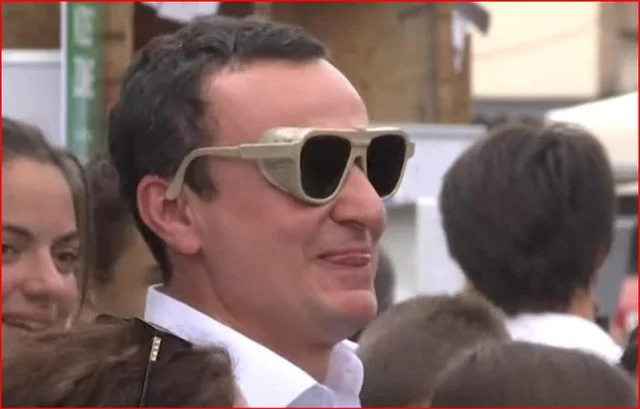
Periskopi(3 years ago)
(3 years ago)By Stephano Marcelll, we can also say that we (usually wrote) that Prime Minister Albin Kurti is either a fool or works in the interest of someone other than his country. But we're just modest journalists and we don't tend to give ourselves credit. Whoever [...]
By Stephano Marcellli
We can also say that we have said (usually, we have written) that Prime Minister Albin Kurti is either a fool or works in the interest of someone other than his country.
But we're just modest journalists and we don't tend to give ourselves credit.
Whoever knows Kurt swears he's not a fool at all.
Therefore, to interpret directly his behaviour, which, as KFOR mission commander “claimed, threatened to promote the start of a new war in the Balkans”, remains only the second hypothesis: for whom would the prime minister of Pristina work then?
Like many of his European colleagues occupied by sovereign populism, the person in question answers that he works for his people and that he intends to preserve the consensus that brought him to government.
And despite the accusations and serious threats Kurt has received in recent hours from representatives of the major Western powers as well as the most authoritarian media, it seems that the people, or much of them, are with the leader. He's even labeled a heroic patriot.
But it's not necessarily that people know their own interests rationally...
As Washington's delegate for the Escobar Balkans, Gabriel Escobar, well explained, if Kurti continues to bite his hand offering him bread, he risks losing large western funds and also the prospect of joining NATO and the EU.
Visa liberalisation can also be revised. Not to mention the possibility of Kosovo joining international organisations and being recognised by other countries.
This, in addition to the fact that Kosovo risks becoming the first problem for Balkan stability by removing the primat of hated Serbs.
Would those results be desirable to Kosovo citizens?
So it's obvious that Kurt doesn't work in the interest of his country and his people.
At these hours, disturbing rumors are circulated between Belgrade and Pristina, as well as in international diplomatic circles, under which Kosovo's prime minister is linked to pro-Russian circles of the Serbian camera.
Environmentals used by extremist nationalists to boost tension with Kosovo and try to destabilise the region.
This would explain the continuing stance as a barrier to the agreement with Belgrade, and also the already open distance of the Pristina government from pro-European and pro-European nationalism.
If so, Kurt would be playing a very dangerous game for both himself and his country.









