a day ago
The association is accepted if you meet these four principles
Periskopi(3 years ago)
(3 years ago)It says Agon Maliqi: Yesterday I was among the guests from civil society at the meeting organised by the US Embassy in Pristina on Association. While meeting rules (Chatham House) do not allow the positions that others have held there to be published, this rule does not prevent me from sharing it with [...]
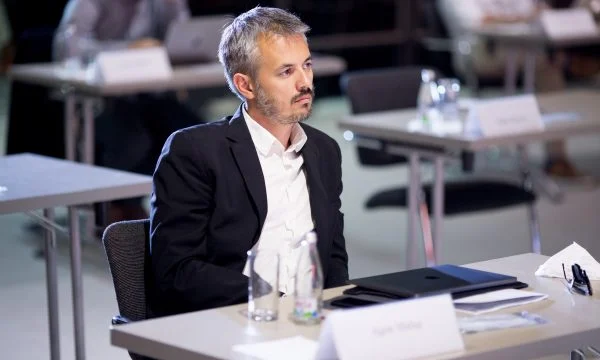
Yesterday I was among the guests from civil society at the meeting organised by the US Embassy in Pristina on Association. While the rules of the meeting (Chatham House) do not allow the positions that others have held there to be published, this rule does not prevent me from sharing with you the decision I held, which because of the seriousness of the matter and the desire to be correctly understood, I read in the form of a prepared speech. I'm doing this for the sake of transparency, the need to fight prejudice and conspiracy speculation about what civil society's role is on these issues, but also the need to have biased debate about this subject which usually starts and ends with political banalizations and personal attacks. Political representatives may find it more difficult to be free to express themselves on this subject, since they have the responsibility of another nature. But we who are not political do not have to speak freely, especially when attitudes held there are the same as those held in public.
P.S. At the beginning of the talk, I also had a part in highlighting the non-acceptability of any idea that the government, which is the only one with a mandate to speak and decide on behalf of Kosovo, should be overlooked. But after coming to a meeting with many government officials, I didn't see that part as reasonable.
January 31, 2023 Pristina
Dear attenders,
My perspective on this issue comes from that part of civil society that works in the field of democratic rights, which wants to see peace and co-operation in the region, as well as to see Kosovo's Euro-Atlantic perspective unblocked.
Any discussion about association should have a common understanding of both truths:
1 ) First, the association is an international and local legal obligation Kosovo must begin to fulfil. But it is also important to note that this is an obligation Kosovo has undertaken in terms of certain political assumptions and guarantees on the part of Kosovo partners that Kosovo's international position will be dislocated. Therefore, these two obligations (one of Kosovo, the other allies) are interdependent, cannot separate from each other, and would unlock each other.
2. Second, everything Kosovo has signed so far does not force it to do anything contrary to its Constitution as defined in the 2015 agreement and as confirmed by the Constitutional Court's ruling.
If between Kosovo and partners there are mutual compliance on these two truths, then it seems to be the case then Kosovo should not be afraid to start the process of establishing association and undo some of the political myths related to it.
Asociacon would have to be acceptable if he fulfilled four principles.
1. The first principle is that this cannot be a new level of executive power, but only a facilitator and supporter of existing municipal and central functions. Services that currently function informally such as health and education would have to be integrated into existing municipal and central frames. Other services, such as social benefits or pensions, Serbia would be free to give to its citizens, as Serbs have dual citizenship. The association may have freedom to do with its activities in the soft “sectors such as culture or humanitarian work, but should have no power over the “heavy” sectors as security.
2. The second principle is that association should reflect the multiethnic and unitary premises of the state that exist at the central level. The Association Status must implement the same rules that exist at the central level in the Constitution for the protection of non-US communities. For example, the Association structures (including local countries) should have guaranteed representation for non-communal communities from these municipalities, while in the country taking care of vital issues should need double majority (2/3) of non-communal communities living in these municipalities.
3. The third principle is that association should not be partially concentrated in the north, but should be extended throughout Kosovo. This would produce substantial balances between local governance and unitary nature of the state, while serving primarily the interests of all Kosovo Serbs rather than Belgrade.
4. The fourth principle is that endurance of association depends on the spirit of good neighbourly relations. For this reason, a similar level of municipal co-operation and relief should be allowed between Kosovo and the Albanian community in the Presevo Valley, especially in areas such as education, culture and the economy.
If these principles are not met, therefore, if the association is provided as the new level of governance, as some of the Serbian List are asking; if it does not reflect the same multiethnic principles as those of the Constitution; if it is concentrated in the north; if there is no mutual respect for minority rights in the region, then we will face a situation where the need for a fifth principle will arise.
There is an impression in Kosovo that the association will become a Republika Srpska. What risks producing a Republika Srpska in Kosovo are not the powers of association as such, what is their combination of rights derived from the Ahtisaari Pack. The latter offered Kosovo Serbs the right to veto most of the population and simultaneously high level of municipal decentralisation. If a new level of government is added to this, it would mean that the Serb minority in Kosovo would also live completely independent, and that there would be veto power over the majority! This is not only a racist design of the state, but would produce an dysfunctional state, make interethnic relations even more toxic, and destabilise peace in the region even more.
Any kind of requirement directed towards Kosovo to overcome the Constitution and the principles mentioned here would imply acceptance on the part of the international community that the Ahtisaian model of resolving minority rights has failed.
Which brings me to principle five. If Kosovo Serbs seek a model of ethnic corruption and self-government, then it gives Kosovo the right to seek amendments to the rights of non-most communities at the central level, the removal of minority veto power, guaranteed representation at the central level, but also the general multiethnic nature of the state (sybola, bilingual, etc). This road leads to a whole other way of resolving minority rights and a new state model, despite the other implications that this brings. Hence, it may be a way to avoid better.