 a day ago
40 years ago an international study conference put Kosovo on map
Periskopi(3 years ago)
(3 years ago)When politics was still silent about Kosovo, Albanians of America mobilised the academic world, the laws and academic discussions, preceded drafting the arguments and political petitions that would be used in the next two decades in the Kosovo lobe by Rubén Avxhiu, the 1981 events, made a remarkable impression on some of the leading intellectual figures [...]
From Reuben Avjiu
The events of 1981 left an outstanding impression on some of the main intellectual figures of the Albanian community in the United States, not only because the Albanian people's protests were forced and produced no positive results, especially because of the ease with which they were ignored by international politics and forgotten by the world media. A year later it seemed that they had never happened.
Kosovo was not recognised in Washington and the main European and world capitals. The press was ignorant and inconsiderate. While the academic world had only rare studies and books, often reflective of Serbian views and quaduldotory.
The American Albanians had not yet discovered the modern lobbie they would engage in starting in the second half of the decade. Under these conditions, a number of Albanians engaged in American universities decided to start the war right there. After long conversations, an international conference on Kosovo was decided to be organised so that it would be serious and academic.
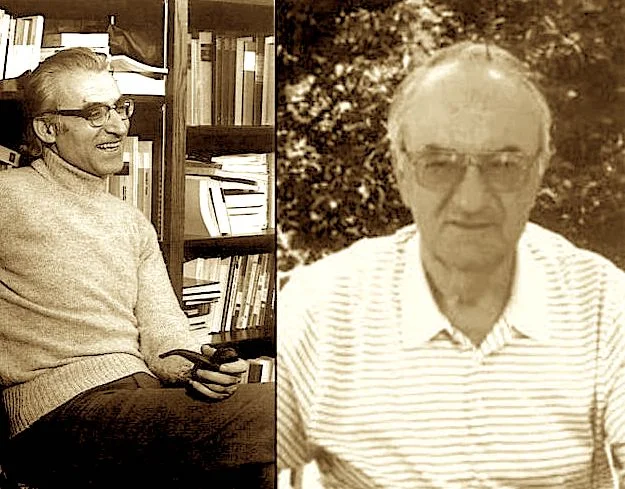
Two figures were placed at the top of the effort as co-director of the initiative: Prof. Sami Repishh and Prof. face Pipa.
Among the Albanians who could come close was Prof. Peter Priest, Prof. Nicolaus Pano, and others. But the most important thing was to approach nonAlbanian professors, especially Harvard University and other prestigious schools.
Initiators were confident that if Kosovo's cause became known in the academic world sooner or later, the impact would also extend to the media, strategic institutions, politics, and governments.
This initiative could not rely solely on intellectual power and connections at the academy. Community engagement, material, and financial assistance were also needed.
About Repisti and Pipa professors gathered an Organising Commission that would enable everything. Members of the Commission were Dr. Jani Dilo, Feyzi Domni (M.D.), Gjek Gjonlekaj, Agim Karagjozi, Peter R. Priest and Zef Shllaku. Stephanie Cosmo, a student at Columbia University, served as a secretary of organization. Ladies Diana Repishti and Fehime Pipa was the main volunteer daily assistants before and during the conference.
The initiative responded and contributed not only personal but also institutional Martin Camaj of Germany, Anton Logorec of London, Dr. Elez Biberaj and Prof. Safete-Juka from the U.S. and so on.
The number of those who contributed financially was “, prof shows years later. Repisti, “with modest but generous sums. I remember here the late Abdullah Kaloshi who voluntarily took over the collection of considerable aid”.
Even the Bitics brothers have been of great help, says Prof. The rapper, which served refreshing drinks and snacks and later dinner in the popular restaurant “Toscana”.
The conference was held on November 6, 1982, in the famous hall “Aeolian Hall”, which was at the time part of the great university Center for Doctors and Masters of the New York City Public University.
The conference's theme was Kosovo's “The issue: historical considerations and prospects for the future”.
The conference's success has been warned since its sponsors' list: The Office of the International Programmes (University of Minnesota), the Albanology Institute of the University of Munich (Germany), the Albanian Language and Literature Institute of the University of Palermo (Italy), the French and Italian Department (University of Minnesota), the Association of Albanian Studies in the United States, the PanAlbanian Federation of America V ARA, and the Albanian Center of New York.
For most of this writing data, I'm grateful to Prof. Sami Repish, who described the conference in writing and memory during the years that followed.
The big hall was rarely filled up, even because of Albanian-Americans not only from New York, but from all over the United States. Most important was the presence of renowned American, English, German, French scholars, and so on. They even included an Australian.
Prof. Repisti (Adelphy University) also carried the Conference's Word of Opening with a greeting and thanks to participants, with a summary of its goals, and with an articulation of national and human hope, so that from that hall the way to resolving the Kosovo issue would start.
Underlining the academic and scientific nature of the conference, he expressed in a sense:
We are gathered here, not to judge, but to clarify”.
The Paradise hearing included speeches on the historical and cultural aspects of Kosovo. She headed for Prof. Albert Lloyd (Harward University), world famous for his studies of epic balloons inherited orally in the centuries, with particular attention to the Albanian Age.
The afternoon session focused on the political, economic, constitutional and legal topics of Kosovo and was directed by Prof. face Pipa.
In vacation between the two sessions, the public had the opportunity to visit an exhibition of albanological publications in different languages as well as some books of historical and literary nature in Albanian.
Below the list of speeches saved by Prof. Repisti:
Prof. Safete-Juka (Lafayetite College, Pennsylvania) relying on recent archaeological discoveries, noted Kosovo's dardan-Albanian continuity and focused on Albanian-Slall relations. It concluded that Albanians in Yugoslavia have been victimised by Serbs, but have not responded with the same currency. They have respected the culture and religion of Serbs. He also used the example often mentioned today to protect Serbian religious monuments from Albanian families during the Ottoman occupation
Prof. Alain Ducellier (Université de Toulouse-Le Mirail, France) spoke on the origin and failure of the Albanian medieval state. He defended that since old times traditions and Ilio-Albanian continuity have been preserved in a Balkan area stretching from Kosovo and Macedonia to the Adriatic coast. The reason for the non-reformation of a strong Albanian state, according to him has been the intrigues of the Greek-Byzantine, Venetian, Ragusian and Turkish divisions. They provoked divisions among Albanians for their interests.
Profe's appearance. Peter Bartl (Ludwig-Maximilians-Universität Müncehen, German) focused on Kosovo in light of church reports, especially on the links of the Albanian Catholic population with the Skopje and Tivar Archbishop.
Prof. Gerhard Grimm (Ludwig-Maximilians-Universität München, Germany) focused on Kosovo's ethnographic maps. Only a map of 1739 shows Kosovo ethnicity under the Turkish empire. Most of the later maps are manipulated for political reasons, and present Kosovo as part of Montenegro or Serbia.
Prof. Nicholas C. Pano (University of Western Illinois) addressed the Kosovo political aunt “in Albanian politics and diplomacy from 1912-1939x1>. He stressed the Albanian League of Prizren's great importance as crucial inspiration for later events and political vision of Albanians, as well as analysed the role Kosovo has played in the political life of the Albanian state until 1939.
Prof. Jens Reuter (Südost-Institut, Muenchen, Germany) legalised the serious problem of bypassing Kosovo girls from the education system in Kosovo. The government's overall discrimination of Kosovo students and professors has been of serious consequences to society in Kosovo. This has exasperated interethnic relations but reinforced the national sense of Albanians.
Prof. Martin Camaj (Ludwig-Maximilians-Universität München, Germany) legalised on the topic “dialectology in Kosovo” He defended the analysis that today's gegnity in Kosovo tends to simplify Albanian fossilism, a process that is being hampered by the single “ge”, while morphine and syntax are being damaged by Serb and Macedonian imposing. This development risks eliminating Kosovo's dialect.
Prof. Albert Lloyd (Harward University) spoke on the collection of raspod songs gathered in Bosnia and Albania. In Novi Pazar, he was acquainted with Albanian rhapsods singing Albanian and Serbian songs, and presented his conclusions for changing forms and formulas of oral epic when they switch from nation to nation.
Prof. face Pipa (University of Minnesota) also spoke of epos differences in the Balkans. His theme was the “Albanian songmakers in Serbian-Croatian: the epic border cycle (krajishnik=kressnik)”. He presented an analysis of different themes on the origin of the Albanian creed cycle. Prof. Pipa was of the opinion that the cycle containing mythology is older and precedes that of Bosnian songs.
In the afternoon Sean's list of speeches:
Prof. Adi Schnytzer (University of Griffith, Australia) offered a scientific comparison between Albania's economy and Kosovo, underlining different economic systems developed by regimes on both sides of the border. He concluded that Albania, although independent, is no longer economically developed than Kosovo.
Prof. Peter R. The priest (University of California, San Diego) spoke of the prospects and problems of the Kosovo economy. He investigated the economic causes of the 1981 demonstrations in Kosovo. The priest listed Democratic measures that have delayed the country's economic development and highlighted the huge economic damage that high illiteracy causes in Kosovo.
Prof. Paul Schup (University of Virginia) addressed Kosovo's political system. Experts on Yugoslav issues, he made a historic view of Kosovo's situation, and defined the period 1944-1961 as the period of police control. He stressed that if Kosovo had been declared <x0 federal republic” in 1946, the “terror of that period would have been avoided”. But, he said the 1974 constitution has given Albanians a high degree of self-government, though unable to satisfy their ambition now seeking a full-fledged republic. He was not optimistic about this federal change.
Dr. Sami Repishti (Adelphi University) spoke on the Constitutional Changes of the Yugoslav Federation. He noted the discrimination committed to Yugoslavia's Albanians compared to other ethnic groups. He also stressed the nature of constitutional status in Kosovo that had shape but not substance.
Dr. Elez Biberaj (Columbia University) spoke about the causes of the Kosovo crisis and Yugoslav efforts to stabilise the political situation in the country. He counted the discrimination measures that have angered the Albanian population. The 1981 demonstrations are a result of this anger, he declared.
Scholar Anton Logorec ( BBC- London, UK, described the difficult path of Albanians in Yugoslavia from 1912 to 1982. The suffered and abuses that have angered the Albanian population and reiterated that 1981 demonstrations are the result of continued Serb and Yugoslav oppression.
Prof. Robert Charles (Union College and Columbia University) acknowledged that ethnic disputes in Yugoslavia cannot be erased with economic and cultural molds. Kosovo “The Kosovo crisis is the latest show and perhaps the most serious of the ethnic division in Yugoslavia after World War II. This leads Yugoslavia towards a general crisis of its” system. Prophetic words recall what happened in the years that followed.
Prof. Francis Dessart (Director, Centre of European Studies, Brussels, Blagic) stressed that the isolation of an ethnic group creates dependence, a situation ending in victimisation and a cultural and political imperialism towards the group. The Kosovo problem is a call to the awareness of international solidarity for the protection and victory of human rights.
Dr. Patrick F. R. Artieceen (University of Bradford, UK) spoke on the Kosovo problem and the future of Yugoslav-Albanian relations in the Balkan perspective. He said the Kosovo crisis undermines these relations and could cause other complications in the Balkans.
Researcher Branka Magash (University of Bradford, UK) presented the Yugoslav view of the Kosovo problem. She said that the treatment of Kosovars from Tito's Yugoslavia is aimed at their full integration. In time, she said, Kosovo could become a republic, but Kosovars' hope cannot be justified.
Prof. Mihajlo Mihajlov (University of Virginia) addressed the topic of what will be done with Kosovo if Yugoslavia is democratised. He showed contacts with former Albanian political prisoners in the Belgrade prison (where he had spent seven years) and stressed the discrimination of Albanians by prison organs. He was pessimistic about resolving the Kosovo problem as long as Yugoslavia remains undemocratic. In case of democratisation, he said, Kosovars will seek joining Albania.
The next co-ordinator of this historic organisation, Prof. face Pipa. This staunch anti-communist, ahead of a hall dominated by professors and students from the academy where maytism has often dominated, offered them an almost genius expression: “The Kosovars are Yugoslav proleagues”.
The conference's “objective was to analyse Kosovo's situation in a academic and scientific manner and without prejudice, because only in this way is it served understanding between interested people and world peace”.
The Serbian-Croatian immigration press and the Albanian newspaper “Sunelli” appreciated the event. The laws of that conference continued to be used in the years that followed, even in 1994, the Columbia University Publishing House (Colubia University Press) published them in a volume “Studies of Kosovo”, with editors Arshi Pipa and Sami Repishh.
The Yugoslav press of time denounced and hated this important academic event. While the communist press in Albania, although claiming to defend Kosovo's cause, he kept silent and completely ignored this conference.
Today, 40 years later, when efforts at similar seminars end up in limited Albanian activities, empty halls, or more speakers than listeners, I say we have much to learn from the example of this conference that preceded major events of the era, undoubtedly affecting them.









