a day ago
Ministerial illusions of renewable energy
Periskopi(4 years ago)
(4 years ago)How will Kosovo in the next three years achieve capacity of up to 500 megavats of renewable energy, adding solar power capacities when still no concrete work to achieve that goal has not started? Mehmet GATA Now, when the energy crisis has swept the world, even [...]
Mehmet GATA
Now, when, at an alarming scale, energy crisis has swept across the world, even the economically powerful and highly developed countries, in our republic the consequences of permanent mistakes by authorities and institutions in building new electromagnetic capacities, in the necessary recovery of existing thermal power plants, and in visions to build as fast and as much of its renewable energy capacity, whether by the wind or by the sun.
Kosovo, February and Albanian, with its fault in the first place, is today involved and severely engulfed by the energy crisis for lack of energy produced by local stabilizers and for lack of money to import super expensive energy even in these summer days. Kosovo has broken down and is somehow blocked in many developmental segments from the resurfaced crisis now in August, even though it has and continues to have all preconditions to have even new electro-environmental capacities, both coal and green energy capacities.
And, in this way, our Republic has already had two decades of favourable preconditions to have enough energy for its needs from its own capacities. But, from 2000 until now, our officials, competent to provide the electricity needed for the citizens of this country -- not day -- had no clear visions, or did not want to exploit these favors and the fortunate circumstances that nature has offered to Kosovo: The huge and endless coal reserves, said on the surface of the earth, but they did not perform any wise and effective action even to faster build any electromagnetic capacity to produce renewable energy.
And this way, Kosovo now, when the energy crisis has plagued the entire globe, has to apply the reduction regime even in the summer months. While even incorrigibly optimistics, they are no longer seeing variations at the end of the 148x0> tunnel, about the winter period, when continental Kosovo is familiar with extreme cold temperatures, unprecedented irritability, and days with no shortage of snow.
What will Kosovo winter do, then, when in summer months, in August heat, it is forced to leave its citizens in the dark for hours within the day?
The competent officials and the Ministry of Economy should say, in addition to promises that “is working hard to create conditions to get more electricity even in the winter season”, they have done virtually nothing, they have taken no concrete action to increase local production, whether with megavats of energy from huge thermal power plants, even for the start of some new renewable energy capacity, which takes less time, but with little financial means until it is finalised. In fact, the very ambitious goals set forth in the draft-Strategy energy 2022-2031 to have quite a lot of renewable energy within 3 years and until 2031 were a pleasant glad tidings in Kosovo's opinion and were imposed on the connoisseurs of energy developments that support these goals, but they also disseminate their stage, making the deadlines set for strategy and the realisation of them within these terms.
And now, when we're offering 2023, it turns out that the connoisseurs of energy developments were right when they were declared skeptical and they showed their fear that these energy targets have been quite unmatched and said Iluary. Because, the Kosovo Energy Strategy 2022-2031, however, was described with a dose of highly utopistic optimism regarding the strategic objectives of providing electricity for Kosovo's increased needs, and especially the security of the designated ambitious quotas of renewable energy.
In the energy, primary and strategic strategy, defuelisation and promotion of renewable energy remains. The economy minister, Artane Rizvanolli, has posted this dozens of times on the occasion of opening Public Consultancy for Energy Strategy 2022-2031.
According to Rizvanol, Kosovo in the next three years will achieve capacity of up to 500 megavats of renewable energy, adding solar power capacities.
For the first time, our energy strategy envisions extremely ambitious targets in terms of harnessing renewable energy sources. Over the next three years, it will be achieved for Kosovo to have production capacities of 500 megawatts of renewable energy. This will be done by increasing solar energy capacities, which means that in 2025 we will have twice as many of the renewable energy resources capacities as compared to those we had during 2021”, says the Strategy.
It has determined that by 2031 it will reach 1,400 megawatts from renewable energy capacities, building new wind and solar capacities.
Minister Artane Rizvanolli has on many occasions unveiled other visions to have as much and as quickly renewable energy Kosovo, relaxed by competent Kosovo decision-making institutions and technical analysis by a group of independent experts. Among other things, it has clarified that the integration of renewable energy sources into the network will be enabled thanks to batteries with capacity of at least 170 megawatts, or by creating 340 megawatts of spare power hours.
Also ambitious was the goal made public by the minister that “by 2031 aim at at at least 35 per cent of electricity consumption being generated by renewable sources, while pollution from thermal power plants will drop to at least 32 per cent”.
But if concrete jobs and actions are analysed to start at least some work to have the envisioned and promised megavats by the Ministry of Economy and its head, it is seen that in this period from January to the end of August, I would say no single action was made to have all these promised megavas so quickly.
Therefore, not in vain did connoisseurs of energy developments establish from the beginning the dilemmas of whether strategic objectives are real and feasible according to the draft Kosovo Energy Strategy 2022-2031, the objectives that focus primarily on designation and promotion of renewable energy?
And, more specifically, can Kosovo achieve capacity of up to 500 megavats of renewable energy, adding solar energy capacities, as provided in the draft energy strategy, or can Kosovo have 2025 twice as much energy as it has during 2021.
While, in the context of the Stategia targets projections, what are the possibilities (both financial and renewable energy sources) that by 2031 Kosovo reach 1,400 megawatts of renewable energy capacities, building new wind and solar capacities?
Many business partners of the country's Economic Bulletin, well-informed of the country's electromagnetic developments, but also committed for many years to working on the country's current production capacities, have stressed that it is impossible to say that within three years Kosovo will have 500 megawats of renewable energy, when it is known that no new project of pure energy is entirely ready to start with construction jobs, while it is not even known how to finance new energy capacities such as renewable and Kosovo will provide all the poor money for new energy upgrade.
According to them, 3 years is a very short term, and this deadline comes as a twinkling of eyes, while Kosovo is not building any new capacity, either with solar panels or wind-based energy production. It's not even in the opening phase of any such capacity, while only four months remain to launch 2023. Based on the performance of the country's up-to-date industrial construction facilities, an energy capacity based on wind, suppose, even if it started today to build now, it would hardly be finalised within three years.
Suppose the sun - based plants were to be built a little faster and would cost a lot cheaper. However, doing the necessary preliminary and feasibility projects for achillin's renewable energy capacities take time, and not to talk about realisation to finalise these projects, which not rarely by non-line deadline projections, but in few cases, we have been in endless despair. Meanwhile, since publicising Kosovo Energy Strategy targets 2022-2031, I told no institutional activity about implementing any project that would produce renewable power envisioned as target (500 megavat within three years of renewable energy) has not been undertaken. At least, no concrete work has been made public about the start of the construction of targets for 500 megawatts within 3 years.
Now there are only visions and promises of slightly more precise objectives. The truth is, besides the project, warned three to four months ago with the appointment “Solar4 Kosova”, which is not fully detailed, if it will be calculated as capacity for energy capacity 2022-2031, for meeting strategic goals for solar energy and making public several months ago by KEK executive director, that KEK plans to build 100 megavat solar capacity on the surface of the Kosovo thermal power depot, and the integration potential of renewable energy resources on grids that would be enabled by batteries in the capacity of at least 170 , or 340xh of electrical power reserves, not yet heard the most concrete project of its natural energy and cost, if it is in effectable.
Failure to fulfill the draft-stratement promises means continuing the lack of electricity, prolonging the state of crisis in the country's electromagnetic system and, of course, spending large amounts of public money to import expensive electricity. That's a simple account. Therefore, official goals and promises of energy must be fulfilled. There is, practically, no alternative.
Urgently, the long-term procedures required so far must be cut short to begin new electrical capacity alternative, either solar or wind-based. And, according to experts, however much Kosovo does not have the best conditions to have renewable energy efficiency and potential, there are a lot of conditions and real possibilities for having not a few solar panels and wind energy parks to produce valuable amounts of electricity for its needs.
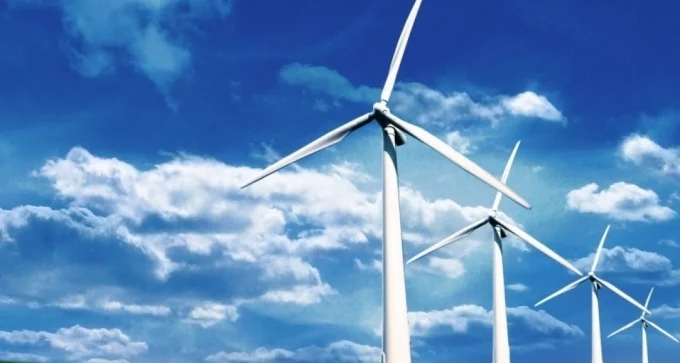
So far, as it is known, a total of two capacities have been built in Kosovo, worth mentioning renewable energy -- the Bigora Shara wind-based energy park with 27 turbines and a total capacity of 105 megawatts-hours and Kitka in the region of Gjilan with a capacity of about 36 megawatts/h.
After extensive tests and measurements, it is estimated that except for two power capabilities of wind energy parks, new wind power parks can also be built in Chichavica, Zatriq, Budakova, and in Kryzica, countries identified for opportunities to build new wind power parks. It is estimated that now in all these countries identified for the possibility of the construction of wind turbines and unidentified sites precisely but that give abundant and convincing signals for the possibility of installing wind turbines can be achieved about a thousand megavats of electricity from the wind. However, the network has to calculate half of these megawatts, since we cannot produce in us these capacities because of the lack of winds and wind - blowing nature. This is the current situation in terms of production capacities and potentials to produce more renewable energy.
Reaching the goals and fulfillment of the official promises, you know, is not without challenges, real difficulties, but also without other problems that we often know we can create ourselves, but there is no other way. Kosovo should have electricity, which should be provided by those in charge of the job. There's no time to waste.
Kosovo needs electricity, but it also has the potential and resources of nature to have that energy. And these resources, as we're being conditioned by the massive electromagnetic crisis that has swept the country, should be sent back without any time. /Economic Bouletin