an hour ago
Association cures for Kosovo state functionality
Periskopi(4 years ago)
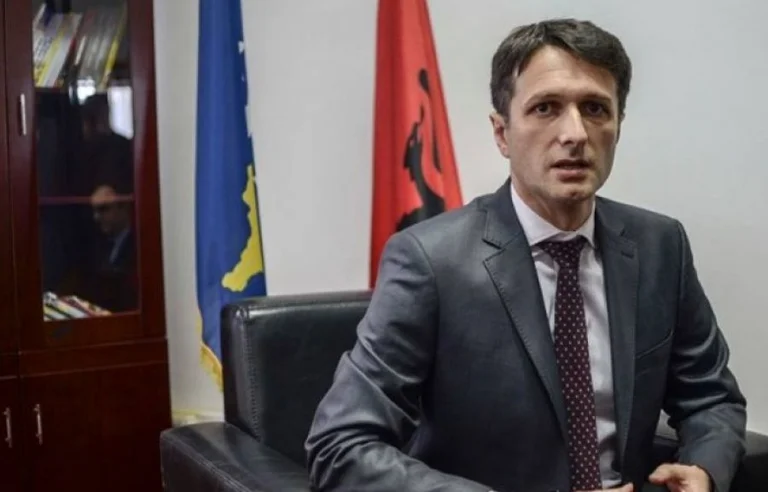
(4 years ago)It says: Valon Murati argues that association, which has no executive competence and is in line with the constitution, is not harmful, at least said is naive. Any gathering of Serb municipalities under an umbrella, with assembly and mayor and their exercise of numerous responsibilities like [...]
It says: Valon Murati
The reasons that the association, which has no executive competence and is in line with the constitution, is not harmful, at least said is naive. Any gathering of Serb municipalities under an umbrella, with the assembly and mayor, and their exercise of numerous responsibilities that they have as municipalities, would imply their own sufficient expansion of legal responsibilities, and especially the expansion of the political action of this mechanism as the representative of Serbs in Kosovo, respectively, under the circumstances we are in, Serbia in Kosovo. Such a mechanism would begin to make his life outside his legal and constitutional competencies. No international guarantee can prevent either the effort to autonomous territorial action of this mechanism or prevent continued political and judicial conflict between Kosovo institutions and this ongoing mechanism.
Kosovo's difficult position in terms of association agreement
Kosovo is not in any easy position as regards the 2013 Association Agreement, which it signed and approved in the Kosovo Assembly. There is a reconciliation within the Kosovo political garrison, as well as a part of civil society, analysts and experts that the agreement for association should start to be implemented. This is said to be easy without analyzing the consequences that an association with non-executive competencies can have for Kosovo. Normally, at first glance this attitude seems principled because when insisted on this path it is considered that Kosovo has already taken these obligations through the 2013 and 2015 agreements. And after all, no matter what the experts in current power stated when they were in opposition that the Constitutional Court in 2015 buried the association, it actually stated that it should be implemented by the remarks it made. Of course, all insist that implementation of association should be based on the Constitution of Kosovo, meaning that, in turn, it will not be harmful if it is. On the other hand sometimes it is hinted that the expression of the will to implement association should also be used as the charter of our diplomacy with which we would put Serbia in a difficult negotiating position. But, indeed, all are aware that even in the most optimistic version, implementing association is a quality job, and that even previous governments since that, Mustafa, have been trying to draft the association statute, but that this process has been boycotted by Serbian political representatives in Kosovo. Being a hard-fortensible project with major implications for the functionality of the state of Kosovo, and jeopardising with such projects both the stability of Kosovo, even with the American ammin, the transition to what could be called the B plan for resolving problems between Kosovo and Serbia, to that of redefining borders. Unfortunately for the country's fate, this project was demonstrated in public opinion by not granting civic opportunity to a normal and civilized debate about it and was subsequently rejected by most of the political scene. So today all of them reason, and it seems to be on the surface that they are right that Kosovo doesn't have a lot of roads, as pressure for implementing association will weigh heavily on Kosovo. In fact, Kosovo, in this direction really will be under pressure, because besides the dry slogans that our constitution is our constitution, uttered by governments and the opposition from now 11 years, they have not revealed any other option on the table.
Is the solution a liberal disk?
There is also an approach that is not dominant in our political drive, which we would call a liberal discurs based on nonethnic but civic solutions. This would imply that we have problems with Kosovo Serbs, that Serbia recognises us (or doesn't exist) and that the problem should be solved in that relationship. Besides the fact that the Constitution of Kosovo in its character recognises ethnic identities and empowers them (especially that Serb), Kosovo essentially the problem and the conflict has not ended with Serbia, which continues not to recognise Kosovo and to throw stone and wood into its citizenship consolidation. Serbs in Kosovo, despite our efforts, under these circumstances are unlikely to secede from Belgrade's influence, especially not Serbs in the north of the country, who also have ethnic homosexuality in a territory that also has territorial continuity with Serbia. Moreover, we cannot be selfish and deal only with Kosovo, but we are obliged to help Albanians in eastern Kosovo as well. So in this context, the Kosovo-Serbia problem is an Albanian-Serbian problem. We cannot tackle the problem with Serbs in Kosovo without Serbia's influence. And it is also unfair for us to deal as we are now dealing with, and how many years only with Serbs in Kosovo and not with discriminated Albanians in eastern Kosovo. The civic and liberal concept takes full meaning after resolving problems between Kosovo and Serbia. As long as this problem remains open, ethnic tensions will remain high and I see no possibility that such solutions will be implemented in Kosovo, much less in Serbia.
An Association Cures
The association project comes with numerous traps, whether the variant that can be drafted and implemented in accordance with the constitution (which in itself due to privileges to the Serb community gives up on Serbia in Kosovo and enables it to destabilise and defunct Kosovo), whether with executive competence. This project also raises a number of questions we need to ask ourselves but also international partners. Does Serbia know us with the 2013/2015 association? Do relationships normalize with this association, and what does normalising relationships mean? Why should Serbia recognise us for a victory it has achieved in 2013? So far, from foreign diplomats, there is no clear answer to these questions. It is cited that Kosovo has the obligation to realise this agreement, but what it leaves to imply is that talks should continue until the final agreement. But talk about what? Endless technical and semi-political talks, that we would keep in status quo, in constant tension in the process of implementing association and in further damage to functionality due to association, which would not be the end of Serbia's demands? What we gain: visa liberalisation, the Council of Europe, U n NESCO, Interpol? Are these enough, for our functionality, or even a carrot more to push the country from one crisis to another. Will the Serbian request for northern autonomy and the insistence of our partners (who have often mentioned) on a status of the north as the South Tyrol, or the German Community in Belgium (which is not only cultural and linguistic but political)? Will Serbia recognise Kosovo after such solutions? I don't believe that Serbia will ever recognise Kosovo's independence at all, but it with this form of talks and in this time and geopolitical context (with a Russia occupied in the war in Ukraine with all the consequences of this war and the Serbian position in relation to it) will buy time to show constructiveness and move forward in European integrations. This road with these projects, including association with non-executive competencies and without recognition from Serbia, having not been a populist solution at all, I do not believe it is accepted by Prime Minister Kurti. It has been established in politics on rejection of all options, using in its path towards power not only rejection of these options but also the non-nationalist populist method to gain citizens' sympathy, but never offering any rational and functional solutions to the country. So although it appears recently open to implementing some technical agreements with Serbia, it is essentially buying time and sympathy in the international arena to say the great No-ma for any agreement that is not populist. And in no option is there a populist agreement with Serbia. There may be agreements that Kosovo makes even more functional or such ones that make it functional. So such developments could pave the way again perhaps for political destabilisation, destabilisation, which could put us back on the path of frequent elections, poor governments in numbers and with problematic political legitimacy to realise any major agreement. So a possible option and unfortunately desired by most political scene is the continuation of this status quo in which they are specialists of political survival and political scene ownership.
Once again, on association with non-executive competencies.
The reasons that the association, which has no executive competence and is in line with the constitution, is not harmful, at least said is naive. Any gathering of Serb municipalities under an umbrella, with the assembly and mayor, and their exercise of numerous responsibilities that they have as municipalities, would imply their own sufficient expansion of legal responsibilities, and especially the expansion of the political action of this mechanism as the representative of Serbs in Kosovo, respectively, under the circumstances we are in, Serbia in Kosovo. Such a mechanism would begin to make his life outside his legal and constitutional competencies. No international guarantee can prevent either the effort to autonomous territorial action of this mechanism or prevent continued political and judicial conflict between Kosovo institutions and this ongoing mechanism. This could turn into an endless political and legal battle. International intervention may ease the conflict not to jeopardise security in Kosovo and regional security, but not also to resolve it as long as this constitutional framework exists. Even with this solution, Serbia can officially intervene as a constructive “, as it does from time to time in Bosnia and Herzegovina. Association in any option is just a prolongation of the final solution between Kosovo and Serbia, and will pave the way for a new form of status-quos In Kosovo, which will produce the same political crises that we have -- the same political logic in government, the same populism, the same lack of economic, educational and developmental perspectives. Continued damage to the country's image and continued lack of foreign investment could be the accompanying problems of such a situation
What should be the purpose of the negotiations?
In this vicious circle of debates that we have made as a constant society now and how many years of talks, it is said the goal of these talks should be mutual recognition, eufemism for the recognition of Kosovo by Serbia and that would be followed by Kosovo's membership in international organisations like the UN, recognition by five EU member states that would open the door to institutional report with the EU and potential for NATO membership, etc. If the above, which as goals are important, are the sole objectives, do we risk accepting all possible compromises on behalf of Serbia and international organizations to undermine sovereignty and internal functionality enough to lose the meaning of independence? Bosnia and Herzegovina is a recognised state by Serbia and also a member of the UN, but what is its functionality? Let's not talk about other states, members of the UN, but treated like Vizard (in the past as one Failed) like Somalia, South Sudan, Syria, Afghanistan, and so on. We want a state, in which again will Serbia's intervention be continuous, only now through Kosovo's additional constitutional and legal mechanisms? Even Ahtisaari's own Pack, which was a major compromise on behalf of independence, but also recognition by Serbia, which brought independence but without recognition of Serbia and which has been reverbered in Kosovo's constitutional and legal system, has also established the foundations of the dysfunction of our institutions. Now add this association, be it without, be it executively competent. I was adding an autonomy model to the north! What would be the meaning of UN membership or recognition from Serbia? Such solutions would make us very tired and turn us into a country with constant political tensions and lack of optimism about the future. According to my conviction, the main goal of the talks would have to be to increase the functionality of the state of Kosovo in its entire territory and security for our republic and its citizens. The recognition by both Serbia and the five EU member states, UN accession, etc., would have to be the product of such an agreement, not its goals.
The road ahead
There is no doubt that Kosovo cannot continue to reject options and not offer any of its projects, because then we will really come under pressure to realise signed agreements, but also those that may come as part of international pressures. Our government and political parties, position and opposition, must give up their concrete positions and realise the importance of the situation to act with courage, determination, creativity and political offensive. We do not need manipulative politicians who win elections with populist agendas, but citizens who solve us and future generations problems with Serbia. The situation in the country's north is not a problem of organised crime, nor of a specific group of Serbs manipulated by Belgrade. Both are symptoms of the fundamental problem -- that in northern Kosovo the legitimacy of the state of Kosovo is opposed by the Serb population, turning it into a deep political problem. As in any case of political crisis, organised crime finds the opportunity to operate because of general circumstances, natural often co-existing and cooperating with politics. But deep political problems are not solved by police, nor by military, especially not in these domestic and international circumstances in which Kosovo is. In these circumstances, there are only political solutions. They are naive who think that Kosovo can firmly put its legitimacy in that part. There is no state that does it without the reconciliation of the local population. What such a situation can produce is continued instability, dangerous tensions of unrest as we recently saw, exploited depending on the circumstances at times from Serbia, from Russia and from both times. The first aims to prove how failed Kosovo independence is, the second aims to create political instability in geopolitical regions under the influence of the north-Atlantic alliance. However, I am one of those who I think that classical warfare in these circumstances cannot be, nor can any open attack on Serbia. That would be Serbia's suicide and she doesn't make that mistake. Here is KFOR, NATO and the US, respectively, which protect not only Kosovo but also its geopolitical and geostrategic interests. I am talking about the north of Kosovo, while for the rest of Kosovo, we, Kosovo institutions, our people, and the willingness to protect the freedom won by much effort. But what should be the road ahead? There is no doubt that the easy road ahead we have, but we have never been in a better position like Kosovo and as Albanians to insist on resolving problems with Serbia. First it takes changing the approach of the talks: not technical talks, nor partial political talks, but political talks on the essence of problems that would lead to the final agreement. On what principle would these talks have to be held? Political reciprocity as the negotiating centre -- what is required for Kosovo's north should be applied to eastern Kosovo as well. And that principle is used to overcome the pressure for association. Association for Serbs in Kosovo, association for Albanians in eastern Kosovo. The autonomy for the north, autonomy for eastern Kosovo. Even that could be true of the civil solution version: a completely citizen state in Kosovo, a citizen state in Serbia. In this regard, political reciprocity in all options is not only the right principle, but also the only righteous one, who places parties in equal positions. What should be the final solution? Redefined borders between Kosovo and Serbia as the only solution that Kosovo makes functional. Such a solution, not preventing the creation of association, but creating the possibility for constitutional changes to remove the blocking privileges for Serbs and maintaining only minority rights, which would fully functional Kosovo. Also with this solution, eastern Kosovo would join Kosovo, carrying out a national, state and human obligation we all have towards that part of the nation. All in the end this solution opens up even the possibility to discuss and design the process of joining Kosovo and Albania if there is popular and political will for that. I am not naive to think that this solution is easy. It's very difficult, but I don't see a choice. Realizing that the mention of borders may once seem traumatic, the right path is for us to start immediately deciding at the negotiating table of eastern Kosovo and solving problems there through the implementation of reciprocity with Kosovo's north. Otherwise, if we continue to talk only about solutions within Kosovo, all solutions only for it, whether the rest of it Type statusWhether the association in all its variants, or even any autonomy for the north, will get us so tired of the long-term plan that when we seek to return to redefinition, we risk no longer having Albanians in eastern Kosovo and having Serbian concrete at the Iber River.