3 minutes ago
Is the transition to Ukraine part of the US strategy?
Periskopi(4 years ago)
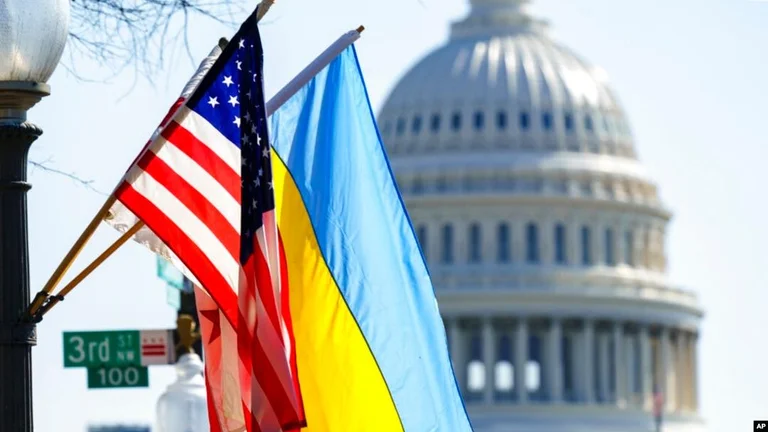
(4 years ago)In the spring of Russia's war on Ukraine, Washington seems to be being pursued by the ghosts of history. The US Congress has passed the Lend-Lease Act for the Protection of Democracy of Ukraine to send aid to Ukraine -- the same as Franklin Ruzwelet- according to the Lend-Lease Act- to the British Empire, China and Greece in March of the year [...]
The amount of money being monitored in Washington is endorse -- a total of $47 billion, the equivalent of a third that Ukraine's pre-war GDP. If approved by Congress, at the top of other Western aid, it would mean that we are funding nothing less than a total war.
Lend-Lease was a wartime intervention. Most of the distributed goods were weapons. Monti's army in the Northern African desert fought with Sherman Lend-Lease tanks. After 1942, major Soviet counterattacks were carried out by Lend-Lease trucks.
What made it so extraordinary is that by the time the Lend-Lease programme was launched in March 1941, the US was not at war. Lend-Lease was the crucial moment in which the United States, while not being a fighter, fled neutrality. It forced judges to come with a new term to describe the status of non-war. In broader terms, this marked the United States' emergency as a hegemon country that continues to last for good or for bad.
However, the story is complex- scratching the surface, and vagueities multiply. What does calling Lend-Lens really mean for leading US policy?
Evidently, the narractiva is stable in the promise that a good fight against an evil regime will be won by a generous sponsorship of the United States. But, in order to complete the narrator's bow, you have to keep pushing the clock forward from Lend-Lease on Mars to the Atlantic rally in August 1942 and until December in Pearl Harbor and the United States entered the war. The donation of aid to China and the British Empire, Lend-Lease, was a crucial step in turning the war that was originally a divided Japanese war against China and a German war in Europe in a world war.
If the U.S. Congress is currently launching a new Lend-Lease programme, the question of whether the crossing is part of the plan should be considered.
Both supporters and critics of President Roosevelt have always insisted that provoking a war with Nazi Germany was the hidden legend of Lend-Lease. Most historians today would argue that the president's intentions were even more unclear. Even after Pearl Harbor, it was not clear that Roosevelt could find a majority to declare war against Germany. Just as Brendan Simms and Charlie Laderman show in their book Hitler's American Basti, an extraordinary reconstruction of the fatal week after Pearl Harbor, the immediate response to Japan's attacks was the suspension of Lend-Lease shipments; London and Moscow were terrified. It was not Franklin Roosevelt, but Hitler who saved the alliance by declaring war on the United States in the afternoon of December 11th.
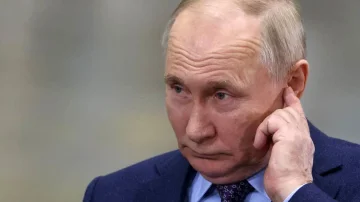
So, like today, they're our entagonists who have remained with the solution if they escape from an economic confrontation in a military confrontation. So, like today, the motives of these antagonists are unknown. After imposing sanctions on Russia's Central Bank on 28 February, Putin highlighted his nuclear patience. If Biden signs a giant Lend-Lease-style package, who can show that the Russian president will react? Other questions also arise: Would weapons be donated to Ukraine just to evacuate Putin's army? Or will we equip Kiev to attack Russia itself?
In 1941, the main Anglo-American vision was to raise an unprecedented strategic bomber campaign to mark losses to German cities and the deportation of its population. With conventional bombs, that was a tremendous blow. But part of the Anglo-American partnership ʹquid pro quo was the Tizard mission, through which the British know how, including the deployment of nuclear weapons, had been transferred to the United States. Behind the sweet narrator for a good war won by the arsenal of democracy, the launch of an apocalypse world war is hidden.
That was the anguish that conveyed to Roosevelt's opponents in America in 1941. They expressed disappointment that the US had entered a second terrible conflict and the militarism of world order. This was not a marginal view. As version 2022 The Lend-Lease Act was unanimously passed by the Senate, in 1941 a third of the Senate had voted against.
Roosevelt knew the American public was not ready for war. And he hoped the Lend-Lease Act would enable him to avoid announcing it. This was the senate Churchill used when he appealed to the United States in 1941 not to get into war, but to donate Britain and its kingdom the “tools and we will do the work”. But the generosity and scale of Lend-Lease and the commitment involved made it more clear that the US was paying others to fight in its name.
That's exactly her position today. The United States and its allies for many good reasons are choosing to support a party in a war in which they will not be directly involved. We do this like Roosevelt, with one eye on the heroic resistance of those who are standing against the attack and another look at geopolitical balance. If Russia has chosen to destroy itself to the ends of Ukraine, if Ukraine is willing to fight, let this happen.
If this is the plan and Putin allows us to adapt to the plan, that clearly makes sense on the sides of this plan. It's such a cold-blooded calculator that has so little speculation that we can wear it with half-remember World War II stories, in which the happy outcome is without the need to expose sacrifices. /The Guardian/
♪ Sokol Berisha, Periscopi
Adam Trooze is history professor at Columbia University.