 a day ago
Germany's Moral Bank
Periskopi(4 years ago)
(4 years ago)After a delayed preparations, Germany finally took up the decision to send heavy weapons to Ukraine. But the anti-missile tanks that Germany is offering are outdated and lack of ammunition. The manufacturer has only about 23,000 of them available. Germany's Defence Ministry has announced [...]
After a delayed preparations, Germany finally took up the decision to send heavy weapons to Ukraine. But the anti-missile tanks that Germany is offering are outdated and lack of ammunition. The manufacturer has only about 23,000 of them available. Germany's Defence Ministry has announced it will search for reserve ammunition in countries like Jordan, Brazil and Qatar. As Russia destroys its neighbour, killing, torturing and raping its civilians, Germany has remained mired in confusion.
Both countries have rich military traditions, leading as totalitarian empire in the 20th century. Their roads were divided after Hitler's defeat, but the countries continued to act symmetrically. In particular, while Germany gave up imperialism, faith in one Sonderweg (special report) has preserved its roots in history.
This belief, born from Germany's imperial position between autocratic Russia and the liberal-democratic West, has enabled the rise of all dangerous and irresponsible foreign policy positions since the 19th century.Drang nach Osten '% (Rove east) and vision Mitteleuropa (German Central European Freedom) to Hitler's search for Lebensraum ( Vital Space) and on Ostpolic (The alignment with East Germany and the Soviet Union) of West German Chancellor Willy Brandt. Interestingly, Ukraine was often at the heart of these strategies.
In this context, to describe post-war Germany as “is to choose a more tolerant term. Others would credit Germany's foreign policy stance not as much as a drop out of militarism as a greed, opportunism and cynicism in the part of its business leaders and politicians. After all, among the most powerful supporters for sending heavy weapons to Ukraine are the alleged Green-peaceers.
Why can Germany not treat Ukraine the same way that other Western European countries treat Ukraine?
The refusal to send weapons to conflict zones equates the aggressor with the victim. For weeks, German makers, refusing to accept this, blocked other NATO countries to send weapons to Ukraine.
Why have Ukrainians accepted more weapons from Estonia (to total $341m) than Germany's (U.S. total $184 million), a state that has a 100 - ton economy? Even in terms of financial and humanitarian aid, Germany's support has been disappointing. What happened to the <x0 years ago?
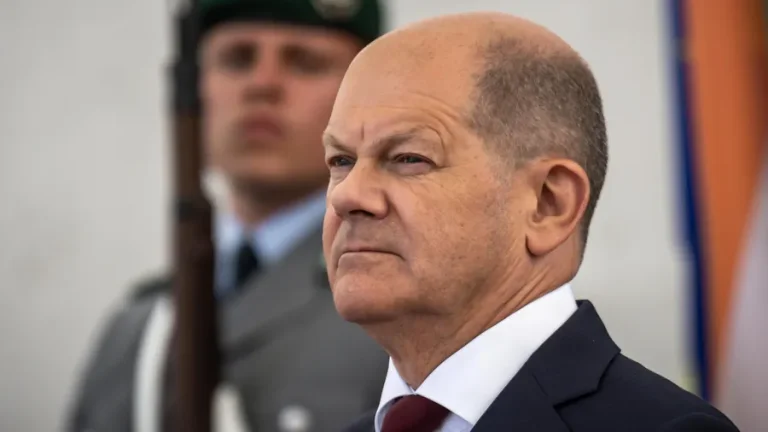
The statements and decisions of German Chancellor Olaf Scholz, since the beginning of the war, have been nothing but unthinkable. Think of the following collection of Thomas Theiner, a film director with headquarters in Kiev, and a former Italian military officer who is working on a documentary about Scholz's attitudes.
By the end of February, Scholz had requested a list from the German defence industry for available weapons but had removed all the key weapons Ukraine demanded before sending the list to the Ukrainian ambassador.
When the media had discovered the original list, Scholz had claimed that guns removed from the list needed more time until they were sent.
The defence industry had denied these claims, but Scholz had found a new reason: Ukraine's armed forces could not be trained for their use within time. However, German defense experts also denied this statement, stressing that Ukrainians could learn the use of weapons within 2 or 3 weeks, just as they have learned the use of Australian, Canadian, American, and French weapons.
Scholz then entered an even deeper pit claiming that it would have to have NATO approve of sending weapons. When NATO officials and Germany's own generals denied that claim, Scholz tried to argue that no other NATO country or EU member was sending heavy weapons to Ukraine. Upon hearing this reasoning, officials from the US, from the United Kingdom, Australia, Poland, Czechia, Slovakia, Romania, Turkey, Italy, Finland, Denmark, Romania and the Netherlands unveiled the entire list of heavy arms they were sending to Ukraine.
As reported Theiner, Scholz then announced a supply of weapons worth 2 billion euros, but German deputies soon discovered that the government was actually hosting only one billion euros, and that this assistance would not be ready for 2-3 months. After the United States, France, Poland, Romania, Japan, Italy, and the United Kingdom confronted the German Chancellor, he again reasoned that Ukraine could accept 1 billion euros without delay and that it could order whatever it wants from its available weapons list. However, Ukraine's ambassador to Berlin then revealed that Scholz had removed all the articles Ukraine really wanted off the list. Scholz had then warned that countries providing Ukraine with combat equipment would be opened by a nuclear attack from Russia. The invasion process is still continuing.
Neither Scholz nor his internal critics seem to understand the impact his convincing failure in countries like Poland and Chekhia, and not mention Ukraine. We in Central and Eastern Europe have been reminded that we live between the two countries that both want to follow their own unique course. This is no speculation that Germany today is like Russia, or that Scholz is like Vladimir Putin. Rather, the problem is that Germany's pacifism is encouraging militarism. Refusing to oppose the aggressor, Germany has launched a surprising degree of moral desensibly.
As such, Germany is heading towards a historic burial humiliation for which it will spend years if not decades seeking forgiveness and improvement. But no one will believe that this is a sincere regret, especially not Eastern Europe, which is Germany's biggest economic partner. Poland's principal foreign policy principle is the so-called Giedroyc doctrine: Poland will not be independent without an independent Ukraine. This principle was formulated when postwar Poland cleared its imperialist illusions and accepted its eastern borders without Vilnius and Lviv.
Until Germany starts acting like its allies, a major breach in Europe is inevitable. Ukrainians will lose all faith in Germany, and the rest of Central and Eastern Europe will have taught them to be always suspicious of German motives, regardless of who is in power. /Periscopi/
SIwomir Sierakowski is a Polish journalist, founder of the Krytyka Politiczna movement, and is a member of the German Council for Foreign Relations.









