a day ago
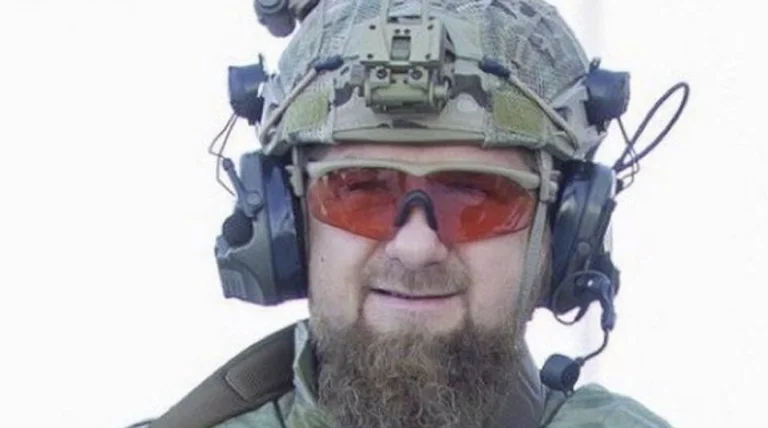
Why does Putin need Ramzan Cadyrov on the battlefield?
Periskopi(4 years ago)
(4 years ago)Russia is suffering losses in Ukraine because there are no general commanders in the field to make decisions, said American officials studying the war in five weeks, writes The New York Times. This may explain why Moscow has problems with progress and why Ukraine's resistance is higher than expected, they say [...]
Russia is suffering losses in Ukraine because there are no general commanders in the field to make decisions, said American officials studying the war in five weeks, writes The New York Times.
This may explain why Moscow has problems with progress and why Ukraine's resistance is higher than expected, officials say.
The absence of a unified military leadership in Ukraine meant that Russian air, land and sea units were out of sync. Their separate military campaigns had poor logistics, low morals and between 7,000 and 15,000 victims, senior American officials and independent analysts said.
This also led to the death of at least seven Russian generals, after high-ranking officers were forced to go to the front line to solve the tactical problems that Western armies would leave younger officers.
A senior American official said NATO and the intelligence community had been waiting for weeks for a Russian military commander to appear. However, that did not happen, so Western officials concluded that people who make battle-field decisions are far from war in Moscow: Defence Minister Sergei Shoigu, General Valery Gerasimov, Chief of General Staff of the Russian Federation Armed Forces, even President Vladimir Putin himself.
On Wednesday, officials from the Biden administration spoke of intelligence indicating Putin's advisers misinterpreted Russia's military problems in Ukraine.
There have also been increased tensions between Putin and Shoig, who was among his closest associates in the Kremlin.
Russian officials have dismissed such assessments by the American intelligence community, saying such a misunderstanding of the situation could have “bad consequences”.
However, it is difficult to carry out a military campaign from a distance of 800 miles [800 km], American military officials responded. Moscow, they added, has created a military vehicle that is unable to adapt quickly and overcome Ukraine's resistance.
“Who would be so crazy?”
Another US official said the Russian soldiers, who were taught not to make any moves without clear instructions from their superiors, remained frustrated on the battlefield, while Putin, Shoigu and Gerassimov continue to draft strategies that have nothing to do with the real situation on the ground.
This approach means Moscow gives orders to generals on the ground who then pass it on to soldiers who are told to follow those orders regardless of the situation on the ground.
This reflects on the mistakes being made,” said General Wesley K. Clark, who served as senior general of NATO during the Kosovo war.
Last week, Ukrainian forces blew up the Russian warship Orsk, which was anchored in southern Ukraine. Describing the incident, General Clark asked: “Who would be crazy enough to land at a port without securing the area first?
The fact that the Russian strategists who sent Orsk to the port did not think of the possible danger indicates that no one is considering decisions coming from above, officials say.
The problem is far from the battlefield.
Military analysts say the complex chain of events, which begins with a weak command structure in Moscow, has led to the death of Russian generals.
“I don't see any consistent organisation that you would expect in view of months of training and perhaps an even longer period of invasion planning,” said General David H. Petraus, a former commander of US military operations in Iraq and Afghanistan.
At the US war command structure, a four-star field commander would coordinate and sync all forces in the air, land and sea, as well as special operations and cyber operations. The campaign would have a major goal with operations that would support that purpose.
In the case of the death of several Russian generals, the problem arose far from the battlefield, when Moscow did not respond as soon as Ukraine invaded Russian communications, analysts say.
Putin's insincere description of the Russian Army mission may have damaged the entire campaign, as the Russian president initially publicly said it was a limited military operation.
Propagandistic War
General Clark recalled a lecture for Ukrainian generals in Kiev in 2016, when they were explained what a “resuscitation is after action” carried out by the American Army. He told them that after the battle the American forces took part in, the “all gather and see what happened”.
Connolly must admit the commander's mistakes. He says: Perhaps I have waited long to give orders and so on”, Clark explains.
After being interrogated, Ukrainians told him that they would not succeed, he added.
They said we were taught in the Soviet system that information should be kept and that we lie to each other”, he recalls.
Putin's decision to send Chechen leader Ramzan Cadyrov to the besieged Marioupoli this week despite the fact that the city has not yet fallen, indicates that the Russian president continues to believe the biggest battle is informative, says Andrei Soldatov, a Russian security expert.
Cadyrov “is not a true military commander”, he says, adding that this shows Putin still believes propaganda is the most important here.
Need additional forces
Russian officials are now sending signals that Putin may be reducing his war ambitions and focusing on the eastern region of Donbas, though military analysts say that it remains to be seen whether it will mean a significant change or a maneuver to draw attention to another attack.
The Russian Army has already deployed more than half of its combat forces, including more elite units. Moscow is now seeking reinforcements outside Russia, including Georgia, as well as mercenaries from the private Wagner group.
Putin also signed a decree calling for 134,000 recruits.
“They do not seem to have a clear concept of the size of forces that will be needed to defeat Ukraine's regular and territorial forces in urban areas and to retain what they have destroyed or conquered,” said Jeffrey J. Schloesser, a retired US two-star general who led American forces to eastern Afghanistan.
The “for this will need hundreds or thousands of Russian or other soldiers”.