 a day ago
Putin's war: How did the world change for a month?
Periskopi(4 years ago)
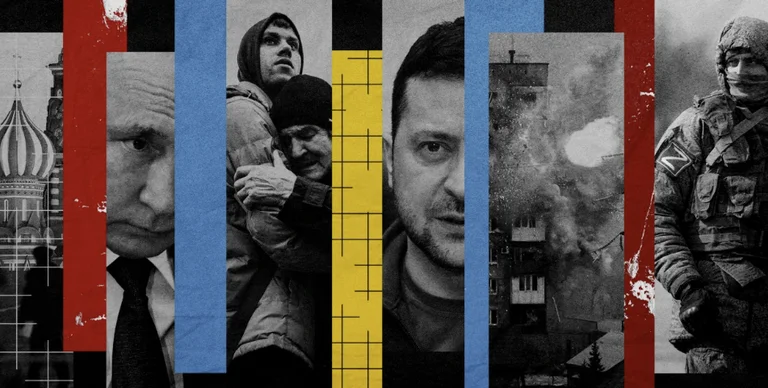
(4 years ago)A month ago, Russian President Vladimir Putin, in a televised address, announced that he is occupying Ukraine and threatened the West that any attempt to intervene in conflict could lead to nuclear weapons use, writes NBCNews, records Periscope. Four weeks since then, Russian forces have also launched air strikes, surrounded cities [...]
A month ago, Russian President Vladimir Putin, in a televised address, announced that he is conquering Ukraine and threatened the West that any attempt to intervene in conflict could lead to the use of nuclear weapons, writes NBCNews, this is Periscope.
Four weeks since then, Russian forces have also begun air strikes, surrounded cities, and forced millions of people to flee as a result of the worst violence Europe has seen in decades.
The conflict has restored the geopolitical map, extending the divide between Moscow and the West, as has the Cold War. And it has already raised fears of a global economic and food crisis.
The invasion was envisioned for months by Western Intelligence agencies and social media analysts, but while the effects of this conflict have been shaking the world, perhaps the biggest surprise has been the Russian Army campaign, which is widely described as a failure until now.
This is in contrast with Ukraine's defensive determination, supported by dozens of allies, including the United States and inspired by the figure by Ukrainian President Volodymyr Zelensky.
The month-long war has set the biggest foreign policy challenge so far for US President Joe Biden, who had hoped to focus on China, but instead he arrived in Europe today to participate in the extraordinary NATO Summit.
Beden has been tasked with working with Washington's allies against the Kremlin, but without promoting a direct confrontation with nuclear weapons.
Western weapons, most of which came from Washington, have been vital in helping Ukraine resist Russian advancement.
However, many experts say a victory for any party is difficult and cost- costing -- increasing the possibility that the conflict can now slip into an even more violent and exhausting phase.
The war has turned back ghosts that Europe had hoped were in the past.
Tanks are again seen in the land of a sovereign democracy; civilians are separated from their loved ones on train stations as they leave the bombing; and an Ottoman has used historic fantasy to justify a brutal land robbery.
The numbers are too striking for a conflict that is 30 days old.
Close to 10 million people near a quarter of Ukraine's population have left their homes, according to the United Nations, some have moved inland or are refugees in neighboring countries, such as Poland and Moldova.
Russia has not published up-to-date numbers of its losses, but an official NATO told about The NBC estimates that between 7 thousand and 15 thousand Russian soldiers were killed during four weeks of fighting. Adding the number of injured Russian soldiers, caught or missing, the number could go up to 30,000 or 400,000, the official said.
Ukraine was destroyed by war. Northern towns like Kharkiv are sunk. Marioupol in the south is still surrounded.
United Nations officials have confirmed 2,500 civilians killed or injured, but they point out that the total number is probably much higher.
Many experts in the West agree that such a ruthless attack was not in Russia's original plan, but one resulted from poor planning and execution by its army.
After annexing the Crime and supporting separatists in eastern Ukraine in 2014, Putin wanted a quick victory, according to experts analyzing Putin's military movements and public statements. They believe Putin was meant to quickly invade the cities of Ukraine, remove the government and install a pro-Russian government.
After five days, it was clear that it would not happen, according to experts.
Instead, Ukraine caused great losses to Russian forces unprepared for long and severe fighting.
In response to the difficulties, Putin headed towards plan B, which experts estimate as proven and tested: bombing of civilians.
Russia's “Brutality has surprised me”, said Hanna Sheleest, director of the Ukrainian Presim Institute, which lives in the southern city of Odessa.
“This is not side damage; this is intentional damage”.
The Kremlin refuses this and says the campaign is going well. But he also denies it's war, calling it a special military operation aimed at overthrowing the Ukrainian government, non-Nazi, and avoiding a genocide against Russian-both ethnicities.
Some view Moscow's entry into peace talks with Kiev as evidence that it is trying to seek an exit from the failure of its military goal.
Meanwhile, the war has shocked the West by the torture in which many connoisseur believe it had fallen. The United States, Europe and other allies have hit Moscow with a series of sanctions and boycotts that have hit its economy and isolated the Kremlin from global order.
Zelensky has become a hero in Europe and not only, broadcasting daily videos from inside Kiev, even though the capital is under air strike.
To get out of it, Putin has responded by doubling the oppressive regime he has been building for 23 years.
His authorities have closed independent media, arrested protesters and threatened prison for up to 15 years to anyone using the word war. This has not prevented Russian currency from destroying and people in panic to buy food products on the market, according to videos published on social networks and verified by NBC.
Putin's eager followers are alarmed by what they see -- an excited and frustrated president -- totally unlike the KGB official that researchers were used to seeing. Still, with superiority in people and weapons, the Russian leader is not showing signs of withdrawal or reduction in violence, many connoisseurs believe.
“We are seeing Russian troops trying to regroup and there is no feeling that Russia can leave. Their rhetoric has not changed - it's even tougher than it was since”. / Alexander Smith/NBC: Periscopi









