2 hours ago
That is why Putin benefits far more from bluff than from the war against Ukraine
Periskopi(4 years ago)
(4 years ago)By Ivan Krastev “York Times” In the last weeks of World War I, a German general sent a telegram to his Austrian allies, thus summing up the situation. “The situation is serious, but not catastrophic. A few hours later, the Austrians ' response arrived:“This is catastrophic, but not serious!” Of course, this is a joke, but that sums up most [...]
“York Times”
In the last weeks of World War I, a German general sent a telegram to his Austrian allies, thus summing up the situation. “The situation is serious, but not catastrophic. A few hours later, Austrians ' response arrived:“The situation here is catastrophic but not serious!”
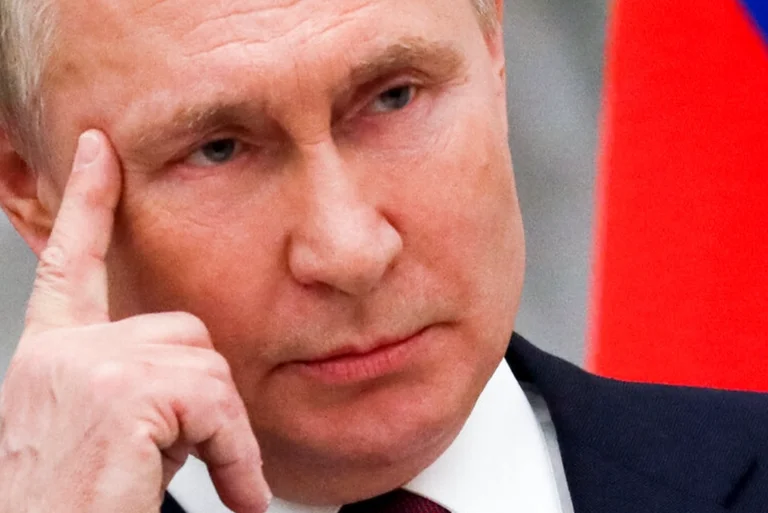
Of course, this is a joke, but it well sums up the current dispute between America and Europe regarding the situation in Ukraine. For the United States and President Joe Biden, who formally approved a delocation of American troops in Eastern Europe on Wednesday, a Russian invasion led by President Vladimir Putin is a realistic “option”.
For Europe, not so much. A senior German diplomat summed up this dyvergence in short:“The US thinks Putin will launch a full-scale war on Ukraine. Meanwhile, Europeans think he's playing blog”.
Perhaps this dispute is imminent. After all, for a European-Western public, war on a large scale is generally as unimaginable as an alien invasion.
The numerous peace decades in Western Europe, combined with deep dependence on the continent by Russia's oil and gas, urge European officials to assume that aggressive Russian movements must be a custom of the Kremlin.
But the European tendency to have a milder approach with Russia right now does not explain why, after initial alarm, Ukrainian officials seem to already share their view.
Ukraine's president, Volodymyr Zelensky, downplayed last week's immediate threat of war, claiming the situation was dangerous, but unclear”. For a country threatened by 130,000 Russian troops at the border, this is an amazing assessment. What's behind him?
The answer is surprising, even paradoxical. Europeans and Ukrainians are skeptical of a major Russian invasion in Ukraine, not because they have a better view of Vladimir Putin than their American counterparts. Rather, it is because they view it as worse.
War, they argue, is not the Kremlin's basic game. On the contrary, the main game is based on a large set of tactics designed to destabilise the West. For Europe, the threat of war may result in more devastating than war itself.
America and Europe are not divided over what the Russian president wants to achieve. Despite speculation about his motives, many things are already clear: Kremlin wants a symbolic break from the 1990s, burying the international order after the Cold War.
The latter should take the form of a new European security architecture, which recognizes the Russian sphere of influence in post-Soviet space, and rejects the universality of Western values. Instead of rebuilding the Soviet Union, the goal is to restore what Putin considers historic Russia.
This message has been conveyed to both Washington and Brussels. Meanwhile, on both sides of the Atlantic there is a general agreement that whatever it does next, the Kremlin will not stand still. So Russia will not quietly withdraw.
But while Americans tend to believe Putin needs a hot fight in Ukraine to fulfill his great ambitions, Europeans, and apparently Ukrainians believe that a hybrid strategy involving military presence at the border, the use of energy supplies, and cyber attacks would serve better.
And this approach is based on some logical reasoning. A Russian encouragement to Ukraine could save current European order. NATO would have no choice but to respond decisively, imposing severe sanctions on Russia, and acting in unity.
By escalating the conflict, Vladimir Putin could unite his opponents. On the contrary, braking can have the opposite effect: without an invasion, maximum pressure policy could end up breaking it up and paralysing it. NATO.
To see how this can happen, we just look at Germany. Before the crisis, Germany was America's closest ally in Europe. But in the meantime she boasted that she had a special relationship with Moscow and that she was the most important partner in Eastern and Central Europe.
While today some officials in Washington have questioned this country's readiness to face Russia, Berlin's relations with Moscow are rapidly worsening, and many European-Ingola are concerned by Germany's apparent reluctance to support the Allies.
Germany's difficulties are an example of what can happen if Putin continues his threats, but without moving to an actual invasion. And more importantly, Germany has not changed, but the world it operates in.
Its “Possition is that of a train that stands still, even after the railway station is on fire”- told me Bojan Pancevski, correspondent of the “The Wall Street Journal” for Germany. Today, the geopolitical force is not determined by the economic power that a state possesses, but by the amount of pain you can endure.
Unlike the time of the Cold War, the enemy is not someone who is behind the Iron God, but someone with whom you trade, from whom you get gas, and to whom you export high-tech goods. Meek power has given way to flexibility.
And this is a problem for Europe. If Putin's success is determined by the ability of Western societies to cope with the pressure of high energy prices, mismanagement and political instability over the long term, then he has enough reason to hope.
As things stand, Europe is obviously unprepared for these challenges. Correcting this situation, through investments in military capacities, energy diversification and social cohesion, should be the main focus of the continent.
Europeans have the right to believe that the Russian invasion of Ukraine is not inevitable. It may even be correct to say that it is not the most likely scenario. But we cannot deceive ourselves that we can overcome the test of endurance. If you invite a bear to dance, it's not you who decides when the dance ends, but the bear”- says a Russian proverb.
Note: Ivan Krastev, is a permanent member of the Human Science Institute in Vienna, and international policy expert.