a day ago
Putin has the United States where he wants it.
Periskopi(4 years ago)
(4 years ago)We knew it would happen. “George, you need to understand that Ukraine is not even a state. Part of its territory is in Eastern Europe, and most of it has been given to us”. These were Russian President Vladimir Putin's ominous words to homoloh George W. Bush in Bucharest, Romania in one [...]
We knew it would happen.
“George, you need to understand that Ukraine is not even a state. Part of its territory is in Eastern Europe, and most of it has been given to us”.
These were Russian President Vladimir Putin's ominous words to homoloh George W. Bush in Bucharest, Romania, at a NATO summit in April 2008.
Putin was angry.
NATO had just announced that Ukraine and Georgia would eventually join the alliance. It was a compromise formula to ease the concerns of European allies, a clear promise to join the bloc, but not a specific timetable for membership.
At the time, I was a national intelligence officer for Russia and Eurasia, part of a team informing Bush. We warned him Putin would consider steps to draw Ukraine and Georgia closer NATO as a provocative movement likely to provoke a pre-emptive Russian military action.
But warnings were not taken into account after all.
Within four months, Russia invaded Georgia in August 2008. Ukraine received Russia's message loud and clear. He delayed NATO membership for the next few years.
In 2014, however, Ukraine wanted to sign an association agreement with the European Union, thinking that this could be a safer route to the West.
Moscow hit again, accusing Ukraine of looking for a back door for NATO, for annexing the Ukraine Crime Peninsula and for the start of a continuing media fight in the southeastern region of Donbas, Ukraine.
Western silent responses to the 2008 and 2014 conquests thrilled Putin.
This time around, Putin's goal is greater than closing NATO's “open” to Ukraine and receiving more territories. He wants to expel the United States of America from Europe.
As he could put it: “Goodbye America. Don't let the door hit you on exit”.
Like I have seen over two decades of Putin's observation and analysis of his movements, his actions are deliberate and his choice at this moment to lay hands on Ukraine and Europe is very deliberate.
He has a personal obsession with history and anniversary. December 2021 marked the 30th anniversary of the collapse of the Soviet Union, when Russia lost its dominant position in Europe.
Putin wants to give the United States a taste of the same bitter medicine that Russia had to swallow in the 1990s. He believes that currently, the United States is in the same trouble as Russia after the Soviet fall: severely weakened in and pulled abroad.
He also thinks NATO is nothing more than an extension of the US. Russian officials and commentators routinely deny any independent strategic agency or opinion for other NATO members.
So when it comes to the alliance, all Moscow movements are directed against Washington.
In the 1990s, the US and NATO forced Russia to withdraw Soviet Army remains from their bases in Eastern Europe, Germany and the Baltic states.
Putin wants the US to suffer in a similar way.
From Russia's point of view, the inner suffering of America after four years of President Donald Trump's catastrophic presidency, as well as the divisions he created with US allies and then the quick withdrawal of America from Afghanistan signal weakness.
If Russia puts enough pressure on him, Putin hopes he can reach a new security agreement with NATO and Europe to avoid an endless conflict and then it will be America's turn to leave, taking its troops and missiles with him.
Ukraine is also the target of Russia and the United States. Over the past few months, Putin has plunged the Benden administration into endless tactical games that put the United States in defense.
Russia moves forces to the borders of Ukraine, begins war games and increases internal comments.
In the last official documents, it demanded iron guarantees that Ukraine will never become a NATO member, that NATO withdraw from positions taken after 1997, and also that America withdraw its forces and weapons, including nuclear missiles.
Russian representatives claim Moscow “does not need peace at any cost” in Europe. Even some Russian politicians suggest the possibility of a pre-emptive attack on NATO's targets to ensure that we know they are serious and that we must meet Moscow's requirements.
American officials, for weeks, have gathered to understand official documents with Russia's demands and conflicting comments, have thought about how to prevent Putin in Ukraine and have tried to talk about the deadline.
All the time, Putin and his representatives have added their statements. The Kremlin officials have not only challenged the legitimacy of the American position in Europe, they have raised questions about America's bases in Japan and its role in the Asia and Pacific region.
They have also said they can send hypersonic missiles to the back door of America in Cuba and Venezuela to revive what the Russians call the 1960s Caribbean crisis.
Putin is a master of austerity.
It produces a crisis in such a way that it can win no matter what another person does. Threats and promises are basically one and the same thing.
Putin can invade Ukraine again, or leave things where they are and simply consolidate the territory Russia effectively controls in Crime and Donba.
It can stir up trouble in Japan and send hypersonic missiles to Cuba and Venezuela, whether things go well in Europe.
Putin plays a longer, strategic game and knows how to dominate the tactical crash.
He has the United States where he wants to be. His stance and threats have set the agenda in European security debates and have attracted full attention.
Unlike President Biden, Putin should not worry about mid-term elections or opposition from his party or the opposition.
Putin doesn't care about the bad press or the poor polls. He is not part of a political party and has oppressed the Russian opposition.
The Kremlin has largely closed the local and independent press. Putin is ready for re-election in 2024, but his only possible opponent, Alexei Navajo, is locked in a criminal colony outside Moscow.
So Putin can do whatever he wants. Except for poor health, the U.S. will have to fight with him for the years to come.
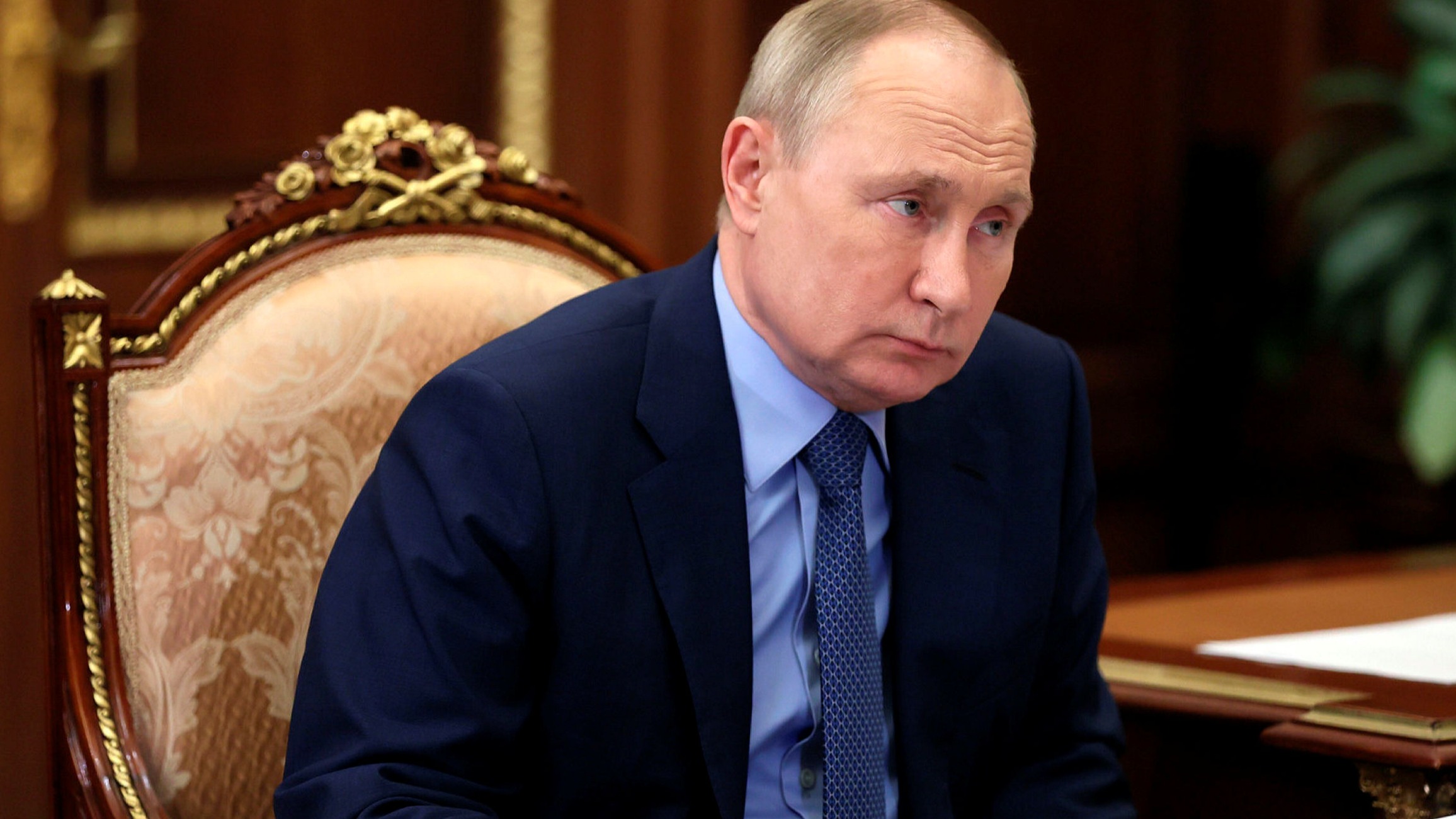
For now, all signs show Putin will close the United States in an endless tactical game, take on more parts from Ukraine and exploit all friction and breaches in NATO and the European Union.
Quitting the current crisis requires action, not reaction. The US must form diplomatic responses and engage Russia under Western conditions, not just Moscow.
Of course, Russia has some legitimate security concerns, and European security agreements can certainly do with new thought and renovation after 30 years.
Washington and Moscow have much to discuss on conventional and nuclear forces, as well as on cyberfields and other fronts.
But a further Russian invasion of Ukraine, the dissolution and neutrality of Ukraine cannot be an issue for US-Russia negotiations, nor an article in European security.
After all, the US must show Putin that he will face global resistance and his aggression will jeopardise Russia's political and economic relations across Europe.
Unlike Putin's 2008 premiere that Ukraine “is not a real state”, Ukraine has been a full member of the United Nations organisation since 1991.
Another Russian attack would challenge the entire UN system and jeopardise agreements that have guaranteed the sovereignty of states since World War II.
The US and their allies, and Ukraine itself, should take this matter to the UN and place it before the General Assembly as well as the Security Council.
Even if Russia blocks a resolution, Ukraine's future deserves a global response. The US must raise concerns in other regional institutions as well.
Why is Russia trying to bring its differences to Europe in Asia and the Western Hemisphere? What does Ukraine have to do with Japan, or Cuba and Venezuela?
Beden has promised that Russia “will pay a heavy price” if any Russian troops cross the borders of Ukraine. If Putin invades Ukraine without any punitive action from the West and the rest of the international community, beyond financial sanctions, he would have set a precedent for future actions by other countries.
Now, Putin has included additional US financial sanctions in his calculations. But he assumes that some NATO allies will hesitate to follow the example of these sanctions and other countries will look to the other side.
UN censorship, widespread and vocal international opposition and countries outside Europe taking action to attract their relations with Russia could give him a pause.
Forming a united front with European allies and gathering broader support should be America's longest game.
Otherwise, it can truly mark the beginning of the end of America's military presence in Europe.
It says Fiona Hill Hill was an intelligence officer for Russian and Eurasian affairs for President George W. Bush and Barack Obama served at the National Security Council under Donald Trump's administration.
Taken from the “The New York Times”