5 minutes ago
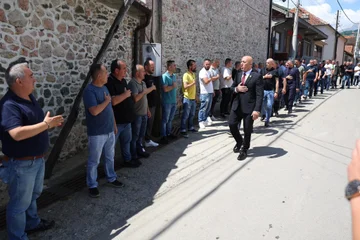
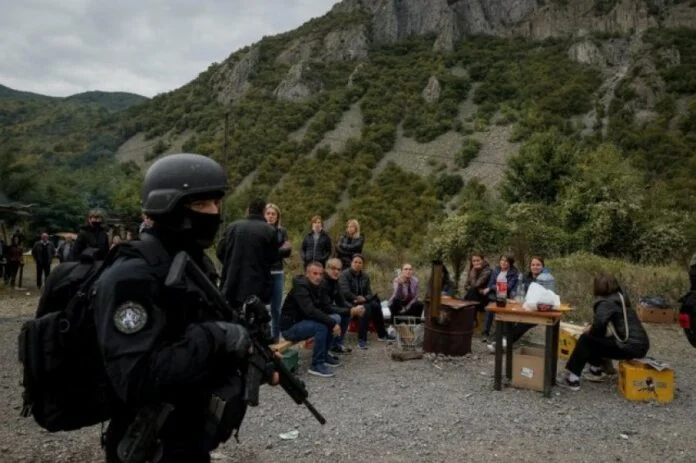
REL: Kosovo Serbs are being forced to stay at the barricades in Jarinje, remember Veselinovici in 2011
Periskopi(5 years ago)
(5 years ago)Some employees of Serbian institutions operating in Kosovo have confirmed to Radio Free Europe (in Serbian language) that they are “obliged” to participate in blocking the Jarinje and Brnjak border crossings. They claim that local authorities are asking them to do so, but they insisted that their identity be not [...]
Also, as protests continue at these border points, most hotel facilities in four municipalities in northern Kosovo are closing.
As confirmed RELThe goal of this measure is to get as many people to the barricades in Leposaviq, where the Jarinje crossing is located, or at Zubin Potok, whose territory lies the Brnjak border crossing.
However, even restaurant owners in northern Kosovo have not wanted to reveal their identity, Telegrafi broadcast.
The Jarinje and Brnjak crossroads, but also the roads leading to them, have been blocked for four six of the local Serbs, due to Kosovo authorities' decision to reciprocity of license plates with Serbia.
We stress that this is not the first time Serbs place barricades in northern Kosovo. They were created for the first time in protest in 2011 so that Kosovo does not exercise power in the north.
In 2011, KFOR identified Zvonko Veselinovic as the person who organised the establishment of barricades and riots in that part of Kosovo.
Zvonko Veselinovic, a businessman from Kosovo's north, along with Serbian List Deputy Chairman Milan Radojic, is linked to several criminal acts against which several procedures have been conducted before judicial authorities in Serbia.
An indictment arose against Veselinovic and Radoic in 2011, accusing them of misusing 32 Hopo Alpria Leasing trucks, which coincided with Belgrade's decision to start a dialogue with Pristina and calling on Serbs from northern Kosovo to remove the barricades. Both were acquitted in 2016.