5 hours ago
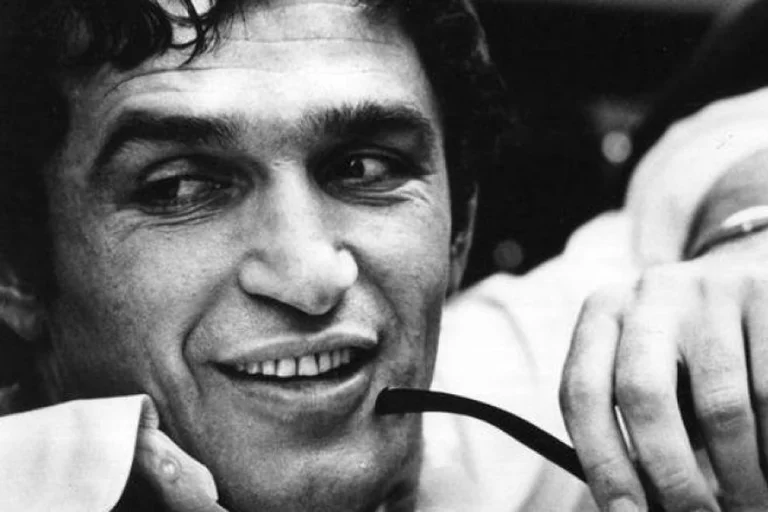
IN MEMORIAM ) The second coffee hostage!
Periskopi(5 years ago)
(5 years ago)(In memory of Bekim Fehmiu) It was a sunny day in late spring 2008 when we came out as usual to coffee “Metropolo” at the Palace of Youth that we used to say “At Agron” because of the owner, or “The Gjakova” due to the bleeding waiter. We newspaper colleagues went out for morning coffee [...]
(In memory of Bekim Fehmiu)
It was a sunny day in late spring 2008 when we came out as usual to coffee “Metropolo” at the Palace of Youth that we used to say “At Agron” because of the owner, or “The Gjakova” due to the bleeding waiter. Our newspaper colleagues went out for morning coffee every day after the editorial meeting held at 9: 30 a.m. That day, as we were discussing as usual, I hear, two tables behind me, a voice that wasn't common. A voice I thought I knew. I looked back and saw an elderly man accompany him a little younger than he was. The older man with the sound that sounded familiar was fighting with Gjakova, who had harassed him for writing in the Serbian language in the Marlboro “ “” cigarette package.
Why do you have these drinks, where the coffee comes from, the sugar, and all that you have here at the bar?
Looking at him, he turned to me too:
So that's the “, I answer it, more to let myself see who it was.
I ask my colleagues if they knew him, but nobody recognized him. When I told them it was Bekim Fehmiu, they started suspiciously telling me.
After he noticed that we were watching him, the old man with whom we had already been notified asked if he could join us at the table because his companion was just getting up to leave after his own business. We welcomed it with pleasure. After all, he was trying to sit down with us a man who had touched Hollywood. A man who had played many famous names of world cinematography.
I haven't seen many of his movies since then. I had even seen a little. I had seen it several times in Albanian Television, and I had also seen it in an Italian serial film at the beginning of the years of dealt with “for always Julia”. At the end of one of the episodes, I had seen Bekim Fehmiu's name, which was part of the movie, but by the end, I had come to know who he was. He was nothing like Ulysses at “Odysseu”, because he was older. Even less like Snow at “The feather collector, who I saw after his death, but I had read about this film and the role of Bekim Fehmiu. Even though I did not first recognize his face after years of leaving the screen, I recognized his voice. I remember from a recital of it years ago at the Tirana Convention Palace on the “Show, the more I want Albania” where, right there, he recited a den of Fan Noley's poetry for the flag. He recited those verses after asking the Albanian public never heard Bekim Fehmiu play Albanian on stage or in the movie. It was seen as missing this part, as the Albanian public and art in general lack a film or a performance of Bekim in Albanian. As we missed the table that joined us that day and asked us about our names, work, and where we were from. He didn't like that we were journalists, so he reacted immediately, threatening us “so we wouldn't photograph him. We didn't have smartphones back then, but we had a digital camera. But who dared to try to take pictures of a man who had a evasive mood when he spoke? A quieter time, and a very excited one. Even nervous. But we too did not insist on photography. Perhaps even because deep inside we had that prejudice that, despite being a world star, there was ultimately an actor who had left Kosovo on the road through Belgrade.
Prejudice against him certainly quickly pushed us away with conversations in that two - hour brown. A proud man. Not arrogant, but proud. A man who took note in every word he uttered. Probably because of the ringing tone. It also attracted the attention of the passing people. Of course, someone knew him, and someone looked at his way of talking out and doing it with his hands. We were loud every time we went out for coffee, but that day we heard more.
As all of them got his attention, someone appeared who caught his attention. A group of Roma musicians passed from cafe to café, and Bekim waved them. Hajt sing the Roma anthem, told them, after placing a 10 euro bill on one of them on the forehead. They began a melody, but Bekim reacted by denying by hand. She called him near the clarinetist and sang a piece of the song to “Zheem, Jelem”. This song, he said, is a Roma anthem. The musicians started and the blessing seemed to be back in time. Feeling this song body and soul, he stood up and wanted to slam the glass for the table, to break it like in the movie “The feathermakers, who gave him the fame. I reacted quickly and stopped him from doing so. I may have sinned that I didn't let him feel to the end like Bora, in front of an Albanian public, like we were around the table and others who looked around him. I did not let him play that scene in Pristina, which he later did not want to comment on in addition to expressing his deep sympathy for the Roma community and then kept silent for a while.
He didn't talk about the movie, but he talked about everything else. He asked us where we were from. Each alone. We could not be impressed with his geographical knowledge of any Kosovo municipality. He even spoke up when I said I was from Drenica. The town from Drenica. Which place do I ask you for? “I'm from Skenderaj” I tell him, thinking I don't know where Loussha is. When I told him about my village after its insistence, he told me that he knew where Lausha was, that he was in that section and began to mention the names of surrounding villages. I was surprised, but I was glad Bekim Fehmiu was so close and familiar with Kosovo, though he stayed away from it. A man who had touched the tops of world art, who had played alongside many famous names of world cinematography, despite a seemingly arrogant and disappointing, in essence, when speaking of Kosovo spoke softly and his voice changed.
There were mixed feelings when we harassed him with questions why he did not come to Kosovo to contribute to the development of theatre and film here. He had a lot to say, but he didn't. He talked a little about it, but he said a lot. He made it clear that they did not want him here. He did not want his contribution to the scene in Kosovo. But who didn't? Nobody mentioned it by name. Even when we mentioned some, he spoke only good words about them both as humans and as artists.
He told us how he had stylishly refused to play Josip Broz Tito's role. He said he had proposed to a Croatian actor, saying he looked more like Tito and that he as an Albanian had no Tito characteristics. However, the role of Tito was played by Richard Burton in 1970, two years after Bekim Fehmiu's refusal to play that role.
Many of our questions were answered carefully. Especially since he suspected that we could write about it in the newspaper. As for the picture and the writing, he insisted that we not write. He didn't beg us, but he threatened us “And we obeyed. We respected his request. We kept our first cup of coffee and our conversation with Bekim Fehmiu. We did not write about that two - hour meeting after which we too left after our jobs. We left the famous actor alone. We never even went to Kino “ABC”, where he invited us to meet him every day for coffee and other conversations as long as he stayed in Pristina. He evidently needed companionship. He needed the people of Kosovo. But we left him alone, as his guide left him two hours ago. Just as his friends and colleagues had probably left him, (so he asked us several times to go to Kino “Even now, when he is gone, those friends and colleagues remember him and praise him. Like me and my colleagues since then didn't find time for a second coffee with the artist.
Two years later, late spring, Bekim Fehmiu, just as we all left him, fled this world in which he never seemed completely complete. And we're stuck with her forever.