13 hours ago
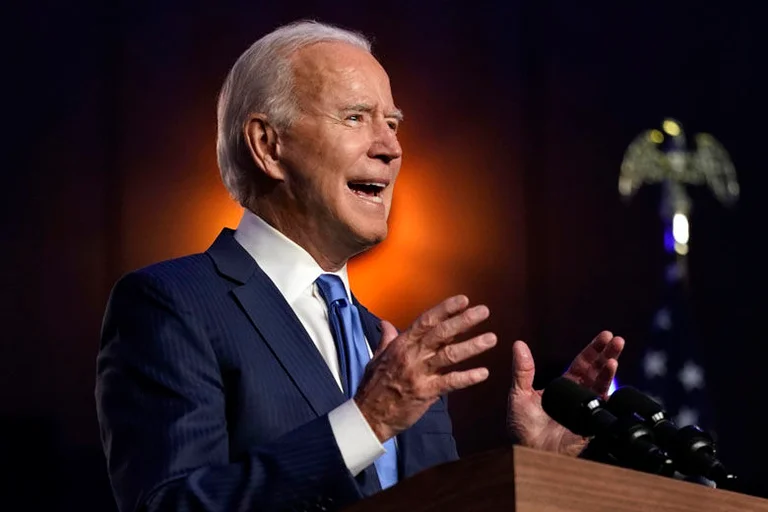
Joe Biden is coming to Europe to recruit soldiers for the new Cold War.
Periskopi(5 years ago)
(5 years ago)The following article is written by The Guardian and translated by Periscope. Joe Biden is going through the Atlantic this week to wave trust. After four years of Donald Trump's presidency, European leaders are grateful for the simple fact that the president of America is someone who believes in democracy and understands diplomacy. Trump [...]
Joe Biden is going through the Atlantic this week to wave trust. After four years of Donald Trump's presidency, European leaders are grateful for the simple fact that the president of America is someone who believes in democracy and understands diplomacy.
The Trump did not grasp the concept of historical coalition, nor that of strategic partnership or shared interests. He saw multilateral institutions as conspiracy against the power of America, which America couldn't distinguish from his ego. He listened to the Europeans as they spoke of regular international order and law as the contemptible vaults of barren nations.
Biden's stated goal is to confirm that order. In an article published in The Washington Poson the eve of his trip, the president speaks of the dedication of “compounding” and stable “” for transatlantic relations based on “joint democratic values”.
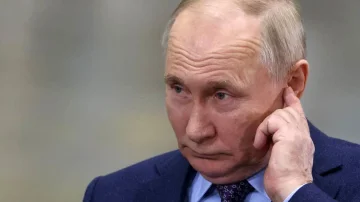
The route begins in Cornwall [Cornwall] with the gathering of G7 leaders. It then continues in Brussels at the NATO rally, plus meetings with the Council presidents, respectively. Beden aims to orchestrate a wave of Western solidarity as music that corrects the mood before the final halt in Geneva, where he will sit with Vladimir Putin. On that front, stable and relaxed ties will serve as progress following Donald Trump's study with the Kremlin's strong.
The return to the scene of the Cold War choreography would suit Putin by befriending his claim that Russia is still a superpower. In reality, Washington [Washington] sees Moscow as a declining force that compensates for its molten influence by hitting where it can, by causing evil and by sowing divisions. Putin is seen as a nuisance, not a rival.
This is contrary to the way China is viewed by a current and eastern superpower that Biden intends on the revival of the alliance of Western democracies. In that respect, rejecting Trump's rhetoric can lead to dead ends. Sounds to European ears like the new administration at the White House hopes to turn the time back into a quieter and less combatary era. In reality, Biden is coming to Europe to gather them together in the race for global primacy with Beijing.
With Europe in this context, Beden also intends Britain. Boris Johnson can imagine himself as world leader with continental sttatures, but the American president will not complete that fantasy.
Biden does not look well at Brexet, for he thinks of it as a meaningless sabotage of European unity. The White House prefers Britain as the pro-American voice to exert influence within the EU. Since that function was lost, Brex's only useful thing is to make it easier for Britain to embrace economic and strategic vasalism towards America. This also means getting into line with China.
European nations must not pause for long in choosing between Washington and Beijing. It is easy to be dissatisfied with the global American pride and put hypocrisy in the spirit of its claim to be a fan of political freedom. But the alternative is a totalitarian expansionist state that undermines against democracy and is eventually involved in genocide against Muslim waters.
If China were a poorer country, Biden's mission would be easier. But the economic gap between the Italian superpowers is narrowing. As far as residential cash is concerned, America is better off, but China is exceeding gross national production. With this gravity comes the technological potential that also leads to military advancements that are losing the Pentagon sleep.
During the Cold War, the Kremlin maintained a creditable military rivalry with the West but was not a long-term economic racer. The review of the economic model seemed to prove that freedom and political prosperity came as part of a package. There could not be companies without markets, and markets without fair rules, and enforceable rules without democracy. The hybrid model of the Chinese Communist Party of authoritarian capitalism seems to be deestimating that theory.
When the G7 was conceived in the '70s, combined U.S. membership, Canada, Britain, France, Germany, Italy and Japan comfortablely recognized the share of global wealth. There was a natural link of liberal democratic institutions and economic success. Today, these seven nations share GDP below 40% of the total world. The West is still rich, but it is no longer the super league that everyone envys.
Chinese money is giving Europe commercial incentives that can compete with big-minded rhetoric of democratic values. China is Germany's largest export market. The EU's smaller members have welcomed Chinese investments in infrastructure and business, though concerns about the political and security of these countries are growing. The major trade agreement between Brussels and Beijing signed last year [for Washington's shock] is currently frozen due to European criticism of China's human rights abuses.
But EU governments are simply not feeling the US emergency level to contain China. Geography is a factor of the U.S. has a peaceful coast and strategic commitment in Taiwan, where Britain and France, despite sea captalill, are just a little more than spectators. There is also a conceptual difference. As one diplomat said, Europe doesn't like what China does, the United States doesn't like what China is. The U.S. idea can be replaced as the supreme global power within this century, and it's existentially terrifying for Washington.
Fenomen Trump compounds that nightmare for the current administration of the White House. It was an experience like that when you're nearing death for the constitutional order of America; an allusion to the mortality of the political and economic model that seemed immortal in the early 21st century. The American president is calling on Western leaders to show force in solidarity because the prospect of division, decline and discreditment of democracy is more real than ever in his five-decade career in Washington.
During that time, Biden has been able to cope patiently with diplomacy and prudent understanding. That style has given him the most appreciative audience in Europe, but the president's good conduct should not be mistaken for mildness; modest style is in the service of a stronger message. He's not flying the Atlantic to sink into homesickness for the alliances that won the First Cold War. He's playing drums to recruit allies for the Second Cold War.