9 hours ago
A story with Americans, Russians and Albanians
Periskopi(5 years ago)
(5 years ago)(Examples: Valmir Elez) Until the end of World War II, the American attitude was clear: Win the war and return home. But a crisis that had begun to arise before the end of this war would change the course of world history. In the summer of 1946, the Soviets revived attacks on Turkey in [...]
(Examples: Valmir Elezi)
Until the end of World War II, the American attitude was clear: Winning war and returning home. But a crisis that had begun to arise before the end of this war would change the course of world history.
In the summer of 1946, the Soviets revived attacks on Turkey in several ways: propaganda accusing him of co-operating with Nazi Germany, criticism against Ankara of abandoning the Kemalist route, as well as focusing military troops on the Soviet-Turkish border. So the goal was to discredit the Turkish government in the eyes of Western opinion, to force it to negotiate agreements with the Soviet Union, especially on the issue of straits. One of the goals was to build bases in Dardanelle and Bosphorus, such as two gates between the Black Sea and the Mediterranean. The leader of the Kremlin, Stalin, viewed them as a matter of prestige.
In a secret telegram of that time for Undersecretary of State Dean Acheson expressed the conviction that: “the time has come when we decide that we must resist with all the means that any Soviet aggression” is available. Acheson was convinced that words and actions would bring obedience to the Soviet Union. In order to discourage the Kremlin, the president took it upon himself to apply it, Harry Truman.
In addition to the support and declaration of US aid to Turkey, a historic moment was also marked: permanent deployment in October 1946 of American warships in the Mediterranean. This was also the beginning of a permanent American military engagement around Europe and the moment of the creation of the 6th American Navy in the Mediterranean. Not only that, but this was the moment of withdrawing the Soviets from their demands, as it was for calling a summit to review the Montreal Convention (1936) that gave Turkey great power in controlling the straits.
This fleet, for decades ago, circled Europe and at one point became an integral part of Albanian history.
The aircraft carrier named 26th Amrican president was also in its composition. Nearly six decades after the Turkish “cris”, the US Army directed the NATO bombing campaign against Serbia, and planes were also launched from the “Theodestore Roosevelt”. So a military alliance of the most powerful states was helping a small country that was not even a member of it.
Years later, rivalry has returned and is observed in the Western Balkans. Russia is present at many events around us. So when we talk about the increasing Russian influence, we should not see it only at the borders of countries with which this federation is geographically limited and once part of the Soviet Union. It extends even farther, with a view to preventing Western plans for political expansion and military alliances. These purposes are not particularly hidden in our region.
Serbia is Russia's century-old ally, and in addition to continued political support in the international arena, military support has been intensified in recent years, which is seen with concern by other states in the region. Even half of the Federation of Bosnia and Herzegovina -- Republika Srpska -- as one of its two entities -- requires Russian support. Russia has been staying close to Republika Srpska leaders who have consistently voiced their objections with Western officials.
In the Western Balkans, uncoordinated in the EU, Albanians appear to be the only ones showing clear pro-Western orientation in foreign policy. This is not only for the two states -- Albania and Kosovo -- but also for their expansion in other states in this geographical region.
The final phase of dialogue is an opportunity for the European Union, which has experienced the recent expansion before a decade to show its borders and more its role in the Western Balkans. It can also serve as a recognition of the geopolitical role of Albanians in the region. So far this has not been observed, but these can only be achieved through the United States, which has an irreplaceable role for Albanians, our region and international relations. Surprisingly, the EU has not been reluctant to show openly that it prefers the leading role of this process not to be taken from the United States. In the absence of unity in the West, circumstances may arise that benefit Russian efforts around us.
The final agreement between Kosovo and Serbia should not only be seen as a two countries' agreement, but it extends almost all over the Western Balkans and affects old rivals. Looks like it's time for a new American commitment.
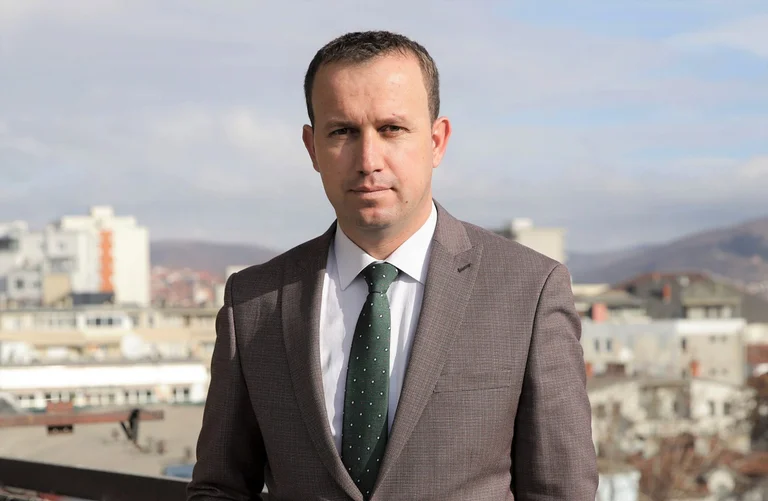
- The author has finished Master's Studies in International Relations at the University of Tirana.