41 minutes ago
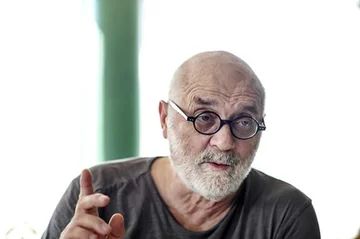
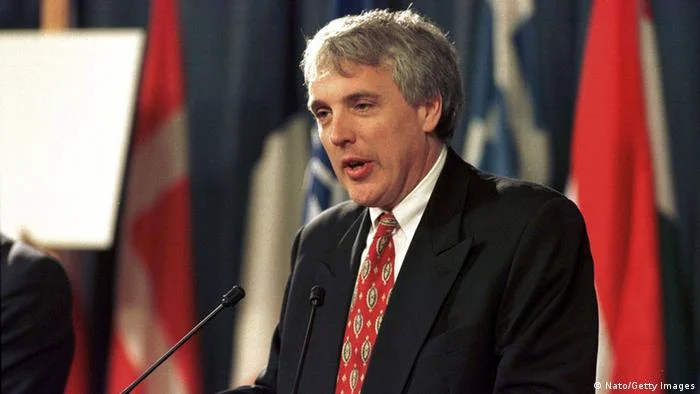
Jamie Shea: NATO in Kosovo, until Serbia recognises Kosovo independence
Periskopi(5 years ago)
(5 years ago)Former spokeswoman NATO, in Kosovo war time, Jamie Shea, in an interview for RTKLive, said NATO's military presence in Kosovo is still necessary in Kosovo. “I believe NATO military presence/ KFOR is still needed in Kosovo. The first reason is completely pragmatic. While NATO and many states [...]
Former spokeswoman NATO, in Kosovo war time, Jamie Shea, in an interview for RTKLive, said NATO's military presence in Kosovo is still necessary in Kosovo.
“I believe NATO military presence/ KFOR is still needed in Kosovo. The first reason is completely pragmatic. While NATO and many states contributing military troops will be present in Kosovo, they will have Kosovo on their diplomatic radar screens. Secretary - General NATO and the defence and foreign ministers of NATO countries will visit Pristina periodically. They will be interested in Kosovo and maintain contacts with the political leadership. They will have a keen interest in Pristina-Belgrade negotiations and Kosovo's security in the region in the future. This applies especially to the United States and to those allies who are not members of the EU and who are subsequently not formally related to the Pristina-Belgrade dialogue. This widespread international involvement is in the best interests of Kosovo”, he said.
He stressed that if it were part of the Kosovo leadership, it would focus first and foremost on building the capabilities of the Kosovo Security Force and their ability to undertake diverse security tasks, improving their equipment as well as training and exercise.
The full interview of former NATO spokeswoman in the time of the Kosovo war, Jamie Shea:
RTKLive: 22 years after the air campaign against Serbia's military targets, which ended the war and resulted in the deployment of NATO troops to Kosovo, do you think the international military presence is still necessary to maintain peace?
Jamie Shea: Yes, I believe the NATO military presence/ KFOR is still needed in Kosovo.
The first reason is completely pragmatic. While NATO and many states contributing military troops will be present in Kosovo, they will have Kosovo on their diplomatic radar screens. Secretary - General NATO and the defence and foreign ministers of NATO countries will visit Pristina periodically. They will be interested in Kosovo and maintain contacts with the political leadership. They will have a keen interest in Pristina-Belgrade negotiations and Kosovo's security in the region in the future. This applies especially to the United States and to those allies who are not members of the EU and who are subsequently not formally related to the Pristina-Belgrade dialogue. This widespread international involvement is in Kosovo's best interests.
This first element is related to the second reason. The political and security situation between Serbia and Kosovo is still fragile. I don't see that there will be any new conflicts, but KFOR's continued presence exercises an effect of domestication and allows no unilateral or extremist act. It helps Pristina and Belgrade to stay focused on diplomatic path. It also gives security to all of Kosovo's people that they have a secure future within the country. I believe KFOR-ir should stay in Kosovo until Serbia formally recognises Kosovo independent and sovereign state and until relations are fully normal. I have said before, I don't think Serbia should join the EU before recognising Kosovo and supporting its EU candidacy.
The third and final reason is that KFOR helps shape and train the Kosovo Security Force (FSK). They develop partnership agreements between NATO and Pristina. Getting closer The KSF closer to NATO standards helps to integrate Kosovo into Euro-Atlantic structures. I hope that soon Kosovo will be full-fledged participants in NATO's Partnership for Peace and have full access to all the collaborative tools and activities this mechanism offers.
RTKLive: The Kosovo Assembly has voted to change Kosovo's Security Force mandate from an emergency organisation to transform into the Armed Forces in the full sense of the word. Secretary - General NATO, Mr. Stoltenberg has said late that the <x0ved (to change the mandate) has been taken contrary to the NATO Council's suggestion and that NATO will continue supporting and development of the KSF only under the original mandate, meaning, as an emergency organisation”. Do you think Kosovo should have its Army?
Jamie Shea: If I were part of the Kosovo leadership, I would focus first of all on building the capacities of the Kosovo Security Force and their ability to undertake diverse security tasks, improving their equipment as well as training and exercise. NATO is the key partner in this regard. At this stage, I would not worry about labels or symbols like Kosovo's “Army”, especially because Mondays do not help in terms of ensuring essential assistance to Kosovo by transatlantic allies. First let's see how we can maximize the KSF's development in the existing mandate and do as much as possible co-operation with NATO. The labels are less important than: Is the KSF capable of protecting the safety of all Kosovo citizens in the face of current challenges, such as the Codavi-19, natural disasters and sustainability of the most important infrastructure? A very welcome development is an KSF unit will be sent to Kuwait, where it will serve on an international peacekeeping mission. This kind of international co-operation should be priority, as it will provide the KSF with a valuable experience. So let's focus on making the KSF capable of internal security, as KFOR is there to keep security from abroad.
RTKLive: More than two decades since the war ended and 13 years after Kosovo's declaration of independence has not yet been reached, even though the two states are negotiating with EU assistance and mediation. Meanwhile, there has been an effort by the US administration to speed up the process of mutual recognition. Do you think there will be agreements between the two states in the near future?
Jamie Shea: I think that reconciliation between Greece and Northern Macedonia (this second one now within NATO) or Israel's recent recognitions by four Arab and Muslim countries prove that even the most complicated disputes can suddenly melt. Therefore, yes, sooner or later there will be an agreement between Pristina and Belgrade. Kosovo is an independent state and Serbia knows that. So what's the alternative? An agreement is in high interest for both countries and strategics for political stability and economic development in the Western Balkans. A large part of this base has already been laid out in the EU-brokered Pristina-Belgrade dialogue, as well as the agreement negotiated by the Trump administration. US-EU co-ordination will be of particular importance, and the Benden administration is filled with experts for the Balkans who are familiar with the Kosovo case and are willing to work with Brussels to resolve it. The external framework is essential, but what we need is leaders in Serbia and Kosovo who are willing to make deals and have the political courage to sell it to their electorate. This usually means compromise on both sides and willingness to put the state's interest before that of its own popularity.
RTKLive: In the February 14th national elections, Vetevendosje led by Albin Kurti won nearly half of the seats in the Assembly. Kurti does not consider negotiations with Serbia a priority for his government. Several years ago Vetevendosje also criticised NATO's intervention in the former Yugoslavia. How do you see this slide of Kosovo voters towards left-wing politics?
Jamie Shea: My interpretation of the recent elections in Kosovo is that there was a protest vote against political parties that have dominated Kosovo's policy since independence. Voters came to the nose of corruption and economic inequality. They wanted change within the house and not a radical reorient of Kosovo's foreign and security policy. We have recently seen in several European countries how frustrated voters have supported the leaders and populist parties, and in this respect even Kosovo does not. After taking power, however, these populist parties did not do well, nor did they find real solutions to domestic problems. But I will not prejudge and wish good work for the new prime minister and his government. He knows government is something other than electoral campaigns. He will be praised for what he does in Kosovo's best, once he is in power. I personally believe that Kosovo needs a period of calm, competent governance, building coalitions for internal reform, constructive actions with neighbours of state and step-by-step integration into Euro-Atlantic structures. New government must prove that it is a reliable partner NATO and the EU and that Kosovo will implement all pledges coming out of the Pristina-Belgrade dialogue. There is no reason to say that a left-wing government cannot be successful. Was he not the leader of a radical left-wing party in Greece, Prime Minister Cipras, who reached a historic agreement with Northern Macedonia?