13 hours ago
Beden fought for justice in the Balkans, he must do it again
Periskopi(5 years ago)
(5 years ago)It says: Ivan Sascha Sheehan at the Munich Security Conference held last month, President Joe Biden assured European allies that America has returned. Our interests will not always be joined... But, we have a broad, common and good base”, German Chancellor Angela Merkel warned. Her statement means one [...]
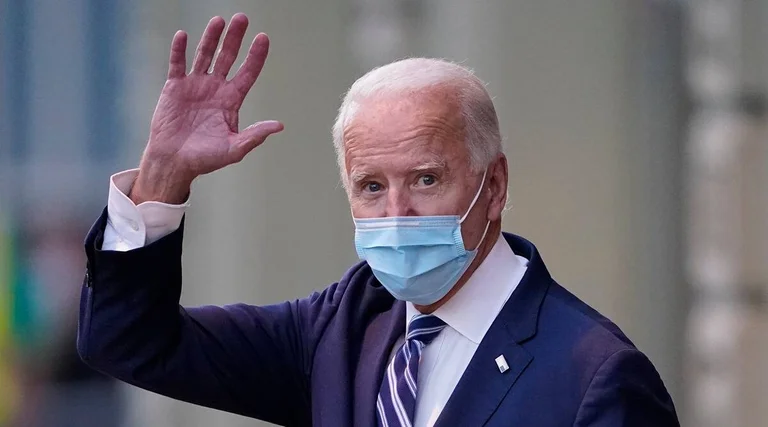
At the Munich Security Conference held last month, President Joe Biden assured European allies that America has returned.
Our interests will not always be joined... But, we have a broad, common and good base”, German Chancellor Angela Merkel warned.
Her statement implies a remarkable and easily lost truth at the friendly meeting: tensions in transatlantic relations had taken place well ahead of former President Donald Trump.
That's natural. Interests differ. But in the Western Balkans, these changes have grown into something contradictory and unstable.
For more than a decade, the United States has contracted its development policy in the region in the European Union. As America guaranteed Kosovo's security, Europe cared for justice and the rule of law. Now, despite both funding, EU policy is actively working against American (and Kosovo's) interests. Beden must again commit to overhauling a policy that has turned into fraudulent politics.
How this happened, there are two ways.
First, the EU installed the European Union's Mission for Law Rule (EULEX) in Kosovo, the largest intergovernmental civilian mission in the world, to lead the country's courts and police systems. Second, it financed Kosovo's Specialised Chambers, a national court established under national laws to try those accused of war crimes during the wars of independence.
However, it was to be founded at The Hague in the home of the International Criminal Tribunal and the International Court of Justice. Today, the only Kosovars sitting on it are those facing a trial -- judges, prosecutors and relief personnel were and are all international.
Under Europe's supervision, guides and funders have become masters and controllers. Institutions, designed to build confidence in governance and accountability between local citizens and government, have been converted into little more than vehicles to advance European policy goals, which clearly differ from American ones.
This is well explained by the break-up of last summer's agreement on normalising relations between Serbia and Kosovo, an agreement that was America's main objective in the Western Balkans for more than a decade.
A meeting to sign an agreement brokered by Washington between the presidents of Serbia and Kosovo was scheduled for June. This meeting didn't happen.
Hours before Kosovo President Hashim Thaci was flying across the Atlantic, the Specialised Prosecutor at The Hague announced he had filed an indictment in court. The guerrilla leader, converted to a politician and three of his associates, would be tried for crimes against humanity during the 1990s conflict. So the Washington meeting had to be canceled.
The moment of announcement seemed more than random, especially since it was contrary to procedure.
The charges were supposed to be made public only after they were confirmed by a judge of the preliminary procedure (which only happened in November). The reason for violating the protocol, according to the prosecutor, was due to a secret <x0fuges” to undermine the tribunal by the president and Kosovo Assembly Speaker “to ensure that they do not face justice”, an apparent attempt to create an impression of guilt before the issue begins.
The EU did not like the Washington-brokered agreement because it was intended to pave the way for a controversial territorial exchange. Serbia and Kosovo were willing to discuss exchange of territory. The EU, however, was not interested. A European court aimed at managing justice for past crimes became a tool for politics in the present.
The other reality is that the EU does not like post-independence leadership. They have the right to maintain such a view. But, a court, supposedly Kosovar and independent, has become a tool to turn its views into work -- to clean up politicians with whom it disagrees.
The court has already plunged into scandal.
The head of Kosovo's Specialised Chambers, Judge Ekaterina Trendafilova, was caught breaking the court's own rules, secretly offering confidential information to EU sponsors and diplomats on the structure and procedure for future cases in court before defence lawyers were announced.
In another incident, the chief prosecutor allowed three confidential documents containing the identity of witnesses to be filtered out. The only objective conclusion is that it is not the Kosovo leadership who is undermining Kosovo's Specialised Chambers, but it is the leadership of the specialised Chambers itself that is undermining Kosovo.
Perhaps, as expected, Trendafilova has an inappropriate reputation.
She led the International Criminal Court's judgments, as well as many scandals, for Kenya's president, Uhuru Kenyatta, and for his then deputy William Ruto, who as such failed. By chance, information about EU funders and the flow of witness identity were the main factors contributing to these failures. Similarly, the court claimed it was mined by the Kenyan government, but it became clear that it was the opposite.
In the Kosovo court, the same as the ICC with Kenya before it, the main concern has become how to achieve sentences, even at the expense of justice. What started as an instrument to hold responsible for past crimes and, as a result, building the institution of justice in the country has passed through the mirror of sight.
Whether you withdraw billions of dollars from the court or withdraw them completely, President Biden must intervene to ensure court reform. The issue is not to change the outcome, but to ensure that the trials are administered in accordance with the principles of justice, and this has not yet been seen by Kosovars.
As senator and member of the ranking minority of the Senate's Foreign Relations Committee, Biden believed that justice was necessary during the Yugoslav wars.
During a trip to Bosnia in 1993, he met with Yugoslav leader Slobodan Milosevic, who had told him: “I think you are a bloody war criminal and you should be tried as such”
Thirty years later, as president of the United States, he must prevent the return of injustice to the Balkans.
Ivan Sascha Sheehan is Executive Director of the School of Public and International Affairs at the University of Baltimore