5 hours ago
A year later: How Coronervius Changed Sweden
Periskopi(5 years ago)
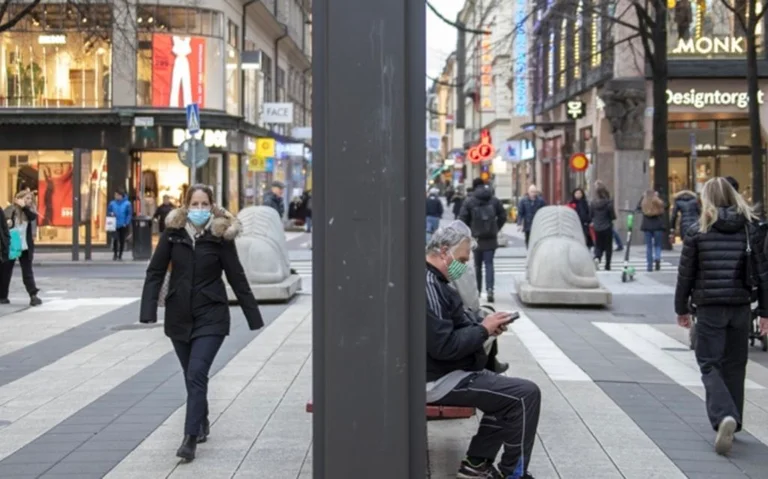
(5 years ago)From David Stavrou Stockholm- Hakan Franden, 61, lives in Stockholm and works as a guide for tourists. But these are not normal times, and tourists have been a very rare “” in Sweden since the pandemic of the new coronary erupted a year ago. “The pandemic certainly affected my professional life, since [...]
Stockholm- Hakan Franden, 61, lives in Stockholm and works as a guide for tourists. But these are not normal times, and tourists have been a very rare “” in Sweden since the pandemic of the new coronary erupted a year ago.
“Of course the pandemic influenced my professional life, as the world was isolated and the main tourist season closed before it began well” - he says. “in 2020, my wife and I had zero tourists, therefore we lost all of our income”- he adds.
But Franden and his wife did not give up. She took a course, and now she's working as a personal coach and instructor of Yoga, while Hakan started a party-work at the National Employment Agency that distributes food to needy families. He receives assistance for days that are not working.
It's true that when we talk about the victims of pandemic this has been a terrible year. But I personally had a good year. We bought bicycles, and we made them our main means of transportation. We re-discovered our city, in many cases with our children, grandchildren and grandchildren, and we had more time for ourselves and our family” -- he adds.
During the past year, few countries in the world attracted the attention of Sweden. The fact that she didn't set up roadblocks, imposed no quarantine, closed schools and didn't require wearing masks, made it the subject of thousands of reports and analysis in world media.
Some called Sweden “the global control group”, others said it was conducting “an experiment with people”. David-19 arrived in Sweden in January 2020, transported by a passenger from the Chinese city of Vuhan. However, there is doubt that the coronobius had appeared a month before official diagnosis, due to lack of testing.
Large-scale transmission of the virus began in March. On March 11, 2020, the day the World Health Organization declared it Coved-19 a global pandemic, the first coronary patient died in Stockholm. The Swedish health system resisted heavy overload and suffered no collapse thanks to major medical staff efforts, but also strong budgetary and logistical measures by the government and local authorities.
But the situation was quite different in senior homes. A government committee has discovered that Sweden failed to protect this population, citing poor negligence and management by the current government and its predecessors.
But during the first wave of pandemic, the Swedish strategy for preventing infection was unique. The authorities urged people who showed symptoms, and those in endangered groups to be responsible and stay at home. And everyone was asked to work at home if that was possible and to give up unnecessary travel.
Instead of the full testing, tracking, and quarantine system implemented in many countries, Swedes did tests of the coronary during the first phase only in hospitals and nursing homes.
Anders Tegnell, the country's chief epidemiologist, said at the time that Swedish politics was based on a high level of public confidence in authorities, and long-term thinking.
But despite that, the Suedez took a number of restrictive steps because of the virus. They went to online learning at universities and high schools, limited public gatherings, banned visits to hospitals and nursing homes, and imposed restrictions on food services in bars and restaurants.
During the summer, the situation in Sweden improved, and hospitals were evacuated. But that was temporary. In November 2020 a second wave of even more deadly than money began. Again there were dozens dead each day, and hospitals were overloaded. So authorities imposed restrictions on him: they limited the gatherings to only 8 people, banned the sale of alcohol after 8 p.m., and closed cinemas, museums and libraries.
Yet, the overall strategy did not change. The country's leaders continued to rely on public confidence in them, and avoided a general impasse. They left schools, restaurants, and shopping malls open. There was also no request to wear a mask on his face.
The Swedish people were recommended to keep one just in public transportation and in peak hours. Worldwide, people had the impression that as many countries were isolated and experiencing a severe economic crisis, business continued as usual in Sweden. But the reality was different.
I thought we'd work from home for just one month, and then we'd be back in the office. But after 10 months, I was in office only 1 day”- says Eric Numan, a 56-year-old art director from Stockholm. Numan says he no longer visits his parents, and meets very rarely with friends.
Although he does not fear much of the virus, he feels solid with others who are likely infected and concerned about the overloaded hospital system. Nobody controls me, and the police won't arrest me if I don't respect the recommendations. But when there's a crisis, I think most Swedes do what's necessary”- he says
Numan's 16-year-old daughter was infected by Ovid 19, she showed slight symptoms and was in quarantine for two weeks. When she meets her boyfriend now, they embrace as usual, and we adults are forbidden and we give each other a hand”- says Numan.
Sweden has several disadvantages regarding the current pandemic. 20 percent of the population is over 65 years old, the weather is cold, its borders are open to other countries, its population is very different from an ethnic point of view, and it is not accustomed to emergency situations.
But it also had priority: a quality health system, stable and well-financed government services, and many families with one person. Taking into account the strategy starting 1 year ago, it is difficult to assess the true effect of Swedish politics in relation to the levels of cases and mortality.
Compared to its Nordic neighbours Finland, Denmark and Norway mortality in Sweden has been very high. The country of 10 million people has suffered some 12,000 deaths - 1,444 dead for 1 million. In Denmark, Finland and Norway, the number of victims is 363, 121 and 104 respectively.
But compared with many other European countries, including those that established jams, closed schools, and shut down the economy, the mortality rate is modest. For example, in Britain, Spain, and Italy, the death toll from Covid-19 for 1 million inhabitants is 1,591, 1,254, and 1,473 respectively.
Some experts believe that avoiding jams has brought better results to Sweden in parameters that have not yet been measured - the rate of depression, excessive weight gain, addiction, violence, and various diseases - from diabetes to heart attacks and strokes. Swedish Health Minister Lena Hallengren, told “Haretz” last September that it was too early to judge Swedish politics, as it was a marathon, rather than a quick run.
But there is still numerous evidence of failures in Sweden's pandemic management. Swedish media have reported on cases where elderly residents have not seen any doctors and have not been taken to hospitals despite their serious condition. Also, asylum personnel were not equipped and untrained to face a pandemic.
Sweden's Public Health Agency has also been sharply criticised. Critics say that during the early days of the pandemic, the agency was self - satisfied and did not accurately assess the danger. Even with regard to vaccines, Sweden is delayed, even though this phenomenon is being observed throughout Europe.
So far, Sweden has vaccinated 256,978 people with the first dose and 28,279 with the second. So 3.13 and 0.34 percent of the population over 18. Although Swedish politicians generally supported the government during the past year, other voices have been heard over the past few weeks.
We must now react differently. If the government lacks the courage to lead, it must resign”- it told the Swedish daily“Aftonbladet”, Eba Bush, leader of the opposition Democratic Party. However, the ruling Social Democratic Party is leading the polls with 28.5 per cent in January, an increase of 2 points since November.
Taken with cuts from “Haretz” World.al