4 hours ago
Speak Up for Those Who Survive
Periskopi(5 years ago)
(5 years ago)On Human Rights Day and at the end of the “16 activism days” against gender-based violence, I wanted to write about a topic that matters to me. Worldwide, many women and men are victims of sexual violence related to conflict (CRSV), and many others [...]
On Human Rights Day and at the end of the “16 activism days” against gender-based violence, I wanted to write about a topic that matters to me. Worldwide, many women and men are victims of sexual violence related to conflict (CRSV), and many others are at risk of experiencing sexual abuse in certain conflicts. This is a crime committed against women, girls, men and boys, and is directly or indirectly related to conflict. This crime can be avoided and condemned under the International Law for Human Rights, according to International Humanitarian Law and International Criminal Law.
The United Kingdom is leading the world in dealing with violence against women and girls and we boast of support for CRSV victims worldwide. The commitment and prevention of conflict-related sexual violence is a priority issue for Secretary of Foreign Affairs Liz Trus, for our foreign policies, and for me personally. Recent events in Afghanistan and other conflict areas are strengthening the need for the widest extent of these commitments, and for us at the international level to expand our aim in fighting this crime. The response to the CRSV is everyone's responsibility, and the United Kingdom joins many other countries to address the issue, including Kosovo.
Our engagement in Kosovo has made the United Kingdom one of the most likely voters and supporters in issues of conflict-related sexual violence. With financing from the United Kingdom, through the Government Commission and the four local non-governmental organisations (OJQ), we have supported over 500 women and men. This support aims to improve the overall social and psychological well-being of survivors and their family, through the activities of raising awareness of the stigma, then supporting access to justice, rehabilitation services and supporting access to payment scheme programmes by the Kosovo government. We also support new research about the trauma followed by generations, which proves that it is possible for children to inherit trauma from survivors/of sexual violence committed during the conflict. These research will provide ʹfor implementers and policymakers with tools for prevention strategies and will make the difference in the lives of victims and their families.
Since our support initiatives in Kosovo in 2014, Local NGOs and the Government of Kosovo have achieved many results. Two survivors have spoken publicly through the world-renowned campaign, “become my voice”. Also, this year we have witnessed the first sentence pronounced by Kosovo courts for crimes of sexual violence related to conflict.
CRSV is not just a problem for women. In Kosovo and around the world, there are men and boys who are victims of conflict-related sexual violence, because this problem does not recognise genders and requires undiscerned support. Through this campaign, local NGOs have organised meetings with surviving men of this sexual violence. This happened for the first time in Kosovo.
The Kosovo government has formed a commission to secure payment scheme for survivors/i (currently more than 10,000 of those who survived are involved in the scheme, including men). Besides, it's been drafted Protocol for identification, investigation and treatment of cases of sexual violence during the warTo serve as a guide document for institutions involved in investigating CRSV cases.
Survivors still face many challenges, especially with stigma and access to justice. These are the main challenges they face because if individuals feel unable to talk about their experience, they cannot seek justice. NGOs and the Government of Kosovo are addressing this challenge, while the awareness campaign “becomes my voice” is an example of these efforts. NGOs are engaged with all communities in Kosovo to talk about sexual violence and to show society and survivors that there is support for them.
Fighting the stigma that survivors face is a difficult job, but one of the ways we can all contribute, in this respect, is to speak out. Survivors must know that experiencing sexual violence is not a crime. Society should be loud by publicly addressing this issue and showing understanding for them. We need to re-emphasize the fact that committing sexual violence is punishable by law and that experiencing it is no shame.
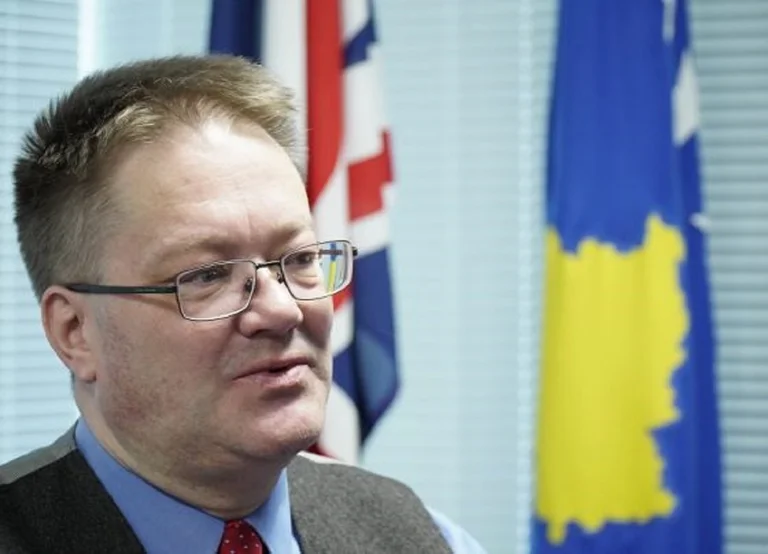
(Autori is the ambassador of Great Britain to Kosovo)