2 hours ago
With German support, Serbia has slipped into a dictatorship
Periskopi(5 years ago)
(5 years ago)Merkel was not very critical of Serbia's slide in a dictatorship. The new German government must commit to more democracy in the BP region, writes Southeast European expert Florian Bieber. During the past two weeks thousands of Serbs took to the streets, one Saturday after another, and blocked highways, bridges [...]
During the past two weeks, thousands of Serbs took to the streets, one Saturday after another, and blocked highways, bridges and heavy road checkpoints to protest a law that would facilitate expropriations. Background: International concert Rio Tinto seeks to establish a giant lithium mine in western Serbia with fatal environmental consequences. The concert is supported there by the regime of Serbian President Aleksandar Vuciq. The images of demonstrations in late November showed bodies in masks acting against demonstrators. Evidently, they were sent to him earlier by the government.
These images remind you of the time, when five years ago men disguised in machinery destroyed homes in downtown Belgrade to open up room for the new big project “Belgrade Waterfront”. Problems with funds, with lack of transparency in agreements with the United Emirates, have already distorted the Sava coast with those high buildings. Troops ready for violence also defended the portrait of former Bosnian-Serbian General Ratko Mladic, who was suddenly painted on a wall in Belgrade. The hooligans eliminated every attempt by Belgradens, colleagues there, and mine to dismiss the honor of being convicted criminal for war crimes. These young men dressed in “hoodi” are the ones who often shout in stadiums and have long been the support of the Vuciki regime.
prestigious projects, international support
Fear feels in Serbia. There are nearly no independent media in the country, critics ballet, and opposition accused of national treason. If I criticize the government in Serbia, I am named as the Albanian “lobiist”. In such a climate, not many dare to express their displeasure openly. Therefore, current environmental protests against the lithium project are so encouraging. They are important because they do not only develop in Belgrade, but also in smaller cities, where access to critical attitudes is more difficult.
At the same time it is fatal, that many Serbs believe -- and not so unjustly -- that Vuciq can rely on Western support, especially Germany's. Many suspect that former federal commander Angela Merkel supported the lithium mine. However, somewhere must be produced first subject for electrical vehicle batteries <x0made in German”. The Serbian president deals with such prestigious projects to provide international support.
Serbia's slide with German support
Just as nontransparently as the lithium project appears to be done with building the subway in Belgrade by a French consortium. Investors from China and the United Emirates with “deals” can own important factories and land in Belgrade. Russia, on the other hand, is allowed to dominate the energy sector. This game involves not only economic impact, environmental degradation and corruption but also the credibility of the European Union. Russia and China have no interest in democracy and the rule of law. But in Germany these should not be forgotten so quickly. In the meantime, you might not rightly say, that Serbia has slipped into a dictatorship. And that was done with German support. Angela Merkel always supported the Serbian president. So a few days before his election of president in April 2017, she hosted him at the Chancellor's office in Berlin. The meeting photos were rightly seen as candidate support.
Ten years of mediation, no solution
The new German government would now have the opportunity for a new beginning in German politics in the Western Balkans. Uncritical attitude toward the person and his rule encouraged Vuchy to scourge the media even further. Meanwhile, all major Serbian media are in line on the government line. Out of 168 municipalities in the country of the ruling party with its allies controls 161 euros, in addition to that, indiscriminately all state institutions.
Germany and the EU had the illusion for a long time that Vuciq is the ideal partner for a compromise with Kosovo. But even after 10 years of mediation The EU has not approached a solution. Instead, Vuchic has shown three years ago what he wants - border changes. He approached that goal dangerously, even thanks to the support of former president Donald Trump, several EU countries and former EU policy charged with foreign policy, Federica Moghrini. Fortunately, Merkel was not tempted by her conviction.
Germany is not considered an ally for more democracy
Despite this, Vuchic can live very well with the status quo. Keeping hope to an autism like him will one day come, and he will make a compromise for Kosovo is naive. Here it is important that the new foreign minister, Annalena Baerbock, take a more critical stance and thereby restore the trust of Serbian citizens to The EU. At a time that in protests in the past in Serbia and other Western Balkan countries I have always seen EU flags and pro-European messages, these now seem to be disappearing increasingly and the messages have disappeared.
Many view Germany and the EU as the guardians of the status quo, not as allies for more democracy. Even when European Commission President Ursula von der Leeyen on her visit to Belgrade two months ago praised government reforms, The EU became less reliable. After all, the afraid, critical stance of the EU and Germany harms people in Serbia, which increasingly feel left in the mud. It is therefore encouraging that the new German government coalition agreement requires that the rule of law be strengthened in the EU. This clarity can also help the process of integration of the Western Balkan region.
Nationalism Not Rewarded
The new German government must have not only more clarity but also the courage to set the frozen membership process in motion. The coalition agreement mentions the existing German and EU policy goals for the Western Balkans -- namely, a key to negotiations with Albania and Northern Macedonia -- currently blocked by Bulgaria, a visa liberalisation with Kosovo blocked by the Netherlands and France -- and dialogue between Serbia and Kosovo. All good intentions, but the question is, if the new German government is to invest enough political capital and energy to really move them forward.
The current approach would be fatal because nothing happens but well - meaning statements. On the one hand, Germany, along with EU countries, must act more clearly and energeticly on those members blocking the membership process. Especially the Bulgarian blockades requires a clear, united position of the other 26 member states. Bulgaria seeks from Northern Macedonia to recognise its history language as a variant of Bulgaria. This is nationalism that the EU must overcome instead of reward it.
An EU member state veto against starting membership talks on this basis is shameful for EU credibility. Germany must convince skeptics about visa liberalisation for Kosovo. There are partners in the EU and the US for such a clear line, but without Germany's active participation, success will not be achieved. The first test for the German government to show how the agreement for democracy and rule of law will win in life is the Western Balkans.
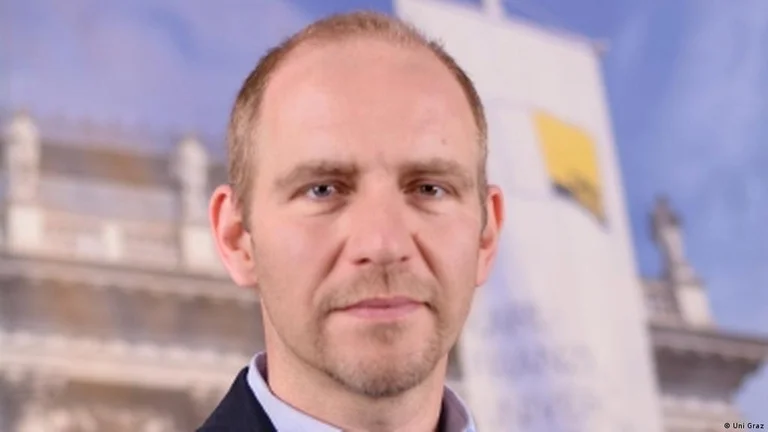
Florian Bieber is professor of history and politics at Karl-Franzen University in Graz. It coordinates “Balkans in Europe Policy Advisory Group” ( B EPAG, a policy consulting initiative that concerns democratisation and EU integration of the Western Balkans.