3 hours ago
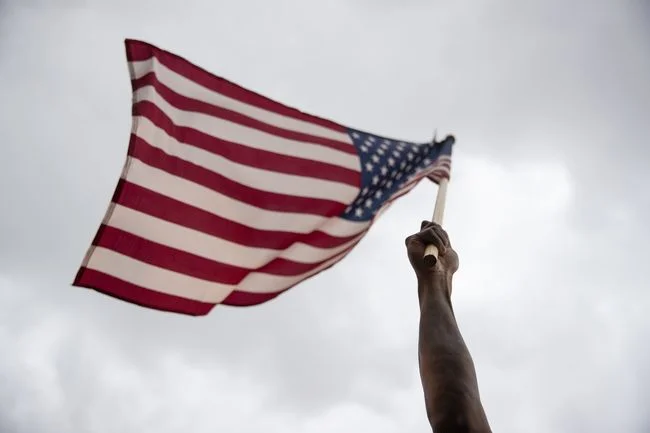
Everyone suffers when America turns its back and closes itself
Periskopi(5 years ago)
(5 years ago)From: Kurt Volker American foreign policy tends to move back and forth between an ambitious international leadership and isolationism in one form or another. The world's design seems to be a predetermined fate, and such positions are also currently found. Whether in Afghanistan, the Western Balkans, Eastern Europe, East Africa or other sites [...]
From: Kurt Volker
American foreign policy tends to move back and forth between an ambitious international leadership and isolationism in one form or another. The world's design seems to be a predetermined fate, and such positions are also currently found. Whether in Afghanistan, the Western Balkans, Eastern Europe, East Africa, or other hot spots, the void that America is leaving behind is making the world less secure and less democratic.
Between 50 years of American intervention in World War II in 1941 following the Japanese attack on Pearl Harbor, and until the collapse of the Soviet Union in 1991, the United States began an unprecedented period of sustainable international leadership, supported by the implied threat of force.
At that time, there was a two - part consensus in the United States that the United States and their allies were facing a existential threat from the Soviet Union. The leaders of both parties treated national security as a top priority, while convincing the American public to support the powerful US global leadership.
With the decline of this existential threat, Republican and Democrat political leaders tried increasingly to withdraw from global commitments in order to focus on internal issues. Since the 1992 presidential race, Bill Clinton has been campaigning with the slogan “It's the economy, fool!”
Although the war in Bosnia was a topic of the 1992 election campaign, President Clinton initially kept America from any kind of military engagement there, even when the Vance-Oween plan called military intervention necessary in 1993.
President George H. W. Bush tried to strengthen America's global leadership after the collapse of the Soviet Union. But the Somalia intervention he ordered in 1992, which led to the tragic event of “Black Hawk Down” when President Clinton had just taken office in 1993, disgusted Americans with the idea of interventions in foreign countries.
The United States did not react to the prevention of genocide in Rwanda in 1994. And it was only the 1995 massacre in Srebrenica, which re-announced global opinion and drew the United States into the Balkans to end ethnic cleansing.
Then President Clinton remained engaged on the international stage, and intervened more quickly in Kosovo to end a similar campaign of ethnic cleansing. President George W. Bush took up the post in 2001 with the pledge not to perform a <x0 state-building framework abroad”, reflecting again the desire to withdraw from the US's global action following international commitments in Bosnia and Kosovo.
But he grammatically changed his focus when the United States was attacked by al-Qaeda terrorists on September 11th 2001. With wars in Afghanistan and Iraq, the “Freedom Agency” and major steps towards NATO enlargement, George W. Bush also marked the last period of American stable engagement on the global scene.
By the middle of President Bush's second term, Americans were tired and very skeptical of continuing operations in Afghanistan and Iraq. Barack Obama based his 2008 presidential campaign on the promise of “ending the two <x1 wars (in Iraq and Afghanistan), promising “hopes and change” within the country.
It approved NATO's intervention in Libya in 2011 to prevent a humanitarian catastrophe from going to Moammar Gandhafi's troops, but withdrew American forces from combat operations after just a few weeks, allowing France and Great Britain to complete the task.
Without US leadership, NATO did not have the will to create a stabilisation mission of the situation, as happened in Bosnia, Kosovo, Afghanistan and Iraq. And this has left Libya mired in civil war after 10 years.
After the regime in Syria violated “The red bong1> that Barack Obama had decided using chemical weapons against his people, the president said America should not develop “civil wars of other peoples”, and refused to intervene against the Assad regime.
He also pulled the American Army out of Iraq in 2011, and then was forced to cancel that decision in 2014, when I'm Califat. SIS conquered large parts of the country. With his choice, President Donald Trump backed off the agenda of “The America of the Prior”.
He pledged that the United States would no longer allow their allies to benefit from their security umbrella without paying their due share of defence.
He also did not allow Europeans to take advantage of what Trump called an unfair trade. The version of Trump for American isolation was harsh and direct, but connected with the same tradition that had also prompted his three ancestors to distance themselves from the world, and to tend more to the nation's subx0> construction at home”.
President Joe Biden is continuing the same American tradition. By withdrawing from Afghanistan despite the consequences, committed to ending operations in Iraq and Syria, seeking a sustainable and predictable “relationship with Russia, despite its aggression in Ukraine and Georgia, as well as cyber attacks on the United States. By giving more priority to internal initiatives, such as. Social programmes and infrastructure spending on defence spending and foreign commitments, the United States is again moving towards a more insulating approach.
The Biden administration can rightly say it has strengthened US attention to China. But looking at all the other signals coming from the United States, China is by no means limited to its regional and global ambitions, and is convinced that its main rival on the global scene lacks the determination to deter Beijing.
China's communist leadership believes time is on its side. The lesson of history - like that after World War I or after the Cold War - is that whenever the United States is attracted by global engagement, other less benevolent actors enter the scene, overturning what has been the positive trends on global security and democracy.
This points to a major mistake in American foreign policy-making: belief that if the United States does not take an action, or are attracted by an international commitment, the rest of the world will continue to remain as it is.
That's not true. When America retires, the gap is almost immediately filled by others, who do not share the same aspirations as America for democratic values and concern for global security. So in the Western Balkans, we see a revival of Serbian nationalism threatening Montenegro's independence.
In the recent local elections in Georgia, we have seen many irregularities vote for the third time, making Georgian citizens very skeptical. Still occupying 20 percent of Georgia's territory, Russia continues to be involved in a low-intensity war in Ukraine, with no pressure or serious response from Europe, NATO or the United States.
As you can see in Bernard-Henry Lewis “'s recent documentary about seeing”, humanitarian disasters caused by human conflict continue to appear in Nigeria, Somalia, Afghanistan, Bangladesh, and many other countries worldwide.
It is no coincidence that the United States is either leaving or avoiding its presence in these countries. The consequence of this history lesson is that democracy and security deteriorate when the United States withdraws is that it causes so much suffering and damage in the world that it affects US interests and sensitivities, to the point that Washington will feel obliged to engage again, but at a higher cost. Consider three events: Pearl Harbor, Srebrenica and the September 11 attacks.
Instead of going through the cycles of ambitious leadership and closing itself, the interests of the United States itself as well as those of the world's lyrical people would serve much better than a sustainable approach, guided by values and strength in the affairs of the outside.
An American approach to leadership, constantly engaged in with allies, opposes opponents, and inspires populations suffering under authoritarian leaders, would send the world a strong and irreplaceable signal. Such action helps to establish a world that is a better environment for the United States, its allies and partners.
This approach will require concentration, resources and persistence. But it's a cheaper and more effective way than the fluctuations between internationalism and isolation that we've seen so far. Whether he is with President Beden today or with his successor years later, domestic and global demand for the American leadership remains high.
It is not too late to find a balance between sustainable, value-based internationalism, and the strength of America to help build a safer and better world in which the United States can advance.
Note: Kurt Volker is one of the leading experts on US foreign and national security policy, with about 30 years of experience. Among other things, he has been the US ambassador to NATO in the 2008-2009.