an hour ago
What is causing Europe's energy crisis?
Periskopi(5 years ago)
(5 years ago)Whether you live in continental Europe or Great Britain, natural gas that is heating your home this October is costing at least 5 times more than a year ago. The reasons are different: between them energy situations in the Netherlands, China's attempt to clean up its air, and the president's policies [...]
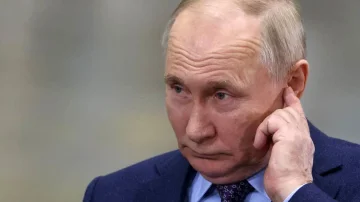
Whether you live in continental Europe or Great Britain, natural gas that is heating your home this October is costing at least 5 times more than a year ago. The reasons are different: among them energy situations in the Netherlands, China's attempt to clear its air, and Russian President Vladimir Putin's policies.
But the impact is clear. Record prices being paid by suppliers in Europe, and gas supply shortages across the continent have sparked fears of an energy crisis in case the weather is even colder than the normal winter season.
Families are already facing more inflated bills, while some energy-seeking industries have begun to slow production, damaging optimism about post-inference economic recovery.
And while some experts in the gas industry believe the price increase is a temporary phenomenon caused by economic shifts because of the coronary, many others believe it is highlighting a structural weakness of a continent, which has become highly dependent on imported gas.
Europe generally has two possibilities for additional gas supplies, as much depends on imports: from Russia it depends on natural liquid gas supplies”- says Tom Marzec-Manser of I CIS, a consulting company. “None of those sources have worked as Europe could hope during this”- he adds.
Moving on to cleaner energy like wind and sun has had the effect of increasing demand for gas, a product that has often been named by industry as a <x0 connecting” medium-term between the hydrocarbon age and that of renewable resources.
But the long-term objective of creating zero carbon emissions economies in the atmosphere in Britain and Europe has weakened investors' readiness to invest in developing fossil fuels supply lines, which they believe may have wear out after 30 years.
Meanwhile, Europe's gas supplies, low after decades of rapid growth, have declined by 30 percent in the last decade. Europe's efforts to be a global leader in the fight against climate change have affected wider market changes.
They have encouraged rapidly growing Asian economies to give up coal. So today countries like China and India are rivals to the same liquid gas supplies (LNG), while Europe itself relies on countries like the US and Qatar. Until recently the gas industry functioned almost entirely through traditional pipelines that kept competition under control.
The rapid growth of the LNG industry means that supplies of liquid gas have created something more similar to a global market similar to oil. “Each year China connects up to 15 million homes in its coastal cities with its liquid gas network. So this is how to add a demand each year to the size of the Netherlands and Belgium's”- says Hanning Gloystein from Eurasia Group.
So when it gets cold in China, the price of gas increases in Britain and Germany” - he stresses.
European governments, say unstable “prices” of gas reinforce the need to accelerate steps towards renewable energy. But there are serious concerns that problems can cause a response against renewable resources, however, if consumers start to believe that the price during the energetic transition will be too high.
“Some are trying to portray this as the first energy transition crisis. They're wrong. But if this approach becomes dominant, it could turn into an obstacle to policies that we have to adopt to achieve energy transition” - says Fatih Birol, head of the International Energy Agency, which advises governments and is financed mainly by OECD countries.
World oil consumption remains relatively stable throughout the year, with slight fluctuations between seasons. Meanwhile, the demand for gas is much larger every coming winter because of its role in heating houses. About 40 percent of Britain's total gas consumption goes directly to heating houses, mainly for a 5-6 month period.
The industry manages these cycles in different ways.
The main thing is to store the underground gas during the summer months when there is a low demand, which can then be used when time is cooled. The other is approach to fluctuating supplies that can be increased or reduced as needed.
But one of the major problems facing Great Britain and Europe is that the main sources of these supplies are not functioning as they used to, which creates conditions for more unstable gas prices. Europe's largest gas field, Groningen's in the Netherlands, was designed to be an important supplier.
But now Groningen has become a burden to the Dutch government. As its large reserves gradually decreased, small earthquakes occurred in the surrounding area, causing damage at home and businesses. As political pressure grew, the decision was made to begin closing it down.
So today the gas - bearing fields produce 75 percent less gas than in 2018. Great Britain faces a similar problem. It has far smaller storage capacities than most countries in Europe. The situation has deteriorated further following the closure of gas deposits in Roug, on the eastern coast of England, three years ago.
That decision reduced Great Britain's storage capacity from 15 to 5 days.
The good news for Europe is that it has more capacity to import liquid gas than any other region. But the bad news is that Asian gas demand has increased by 50 percent over the last decade, led by a 3-fold consumption rate in China that LNG loads have become much more difficult to secure in 2021.
But perhaps the most important factor in the entire crisis is Russia. Continental Europe gets more than 1/3 of its total gas supplies from “Gazprom”, Russian state company. This is a relationship that has developed over the decades.
But recently, not a few of the consequences of Moscow's annexation of Crime in 2014 has been damaged. Brussels initially pressured Russia to give up long-term contracts related to oil prices, a move that indirectly created a price system that was the most reflective of gas market dynamics.
However, the credibility of “Gazprom” has been questioned this year. A winter i
During 2020-2021, it means that gas deposits in both Russia and continental Europe are at low levels. And “Gazprom” has done little to help Europe supply gas, refusing to send additional supplies via Ukraine beyond what was provided with long-term contracts.
Ukraine and other countries in Eastern Europe have accused Russia of trying to use gas supplies as a weapon, in part to pressure Berlin to speed up with the approval of the controversial “NorR Stream 2”, which will bypass Ukraine to send gas supplies directly to Germany via the Baltic Sea.
Europe could face greater competition for gas supplies in the future. Russia started supplying China with gas via the “Power of Siberia” 2 years ago. Now “Gazprom” is studying the construction of “Power of Siberia 2”, which will connect fields in western Siberia with China by 2030. /The topic/