11 hours ago
The Dutch never loved Europe.
Periskopi(6 years ago)
(6 years ago)Last April, while Italian and Dutch politicians were taking offense at each other over the European substitute package for Covid-19, Corriere della Sera wrote that in the first days of European integration, young Italian diplomats who settled in Brussels were told to apply the following principle: “If you doubt, fuck [...]
Last April, while Italian and Dutch politicians were insulting each other in terms of the European substitute package for Covid-19, the newspaper Corriere della Sera wrote that in the early days of European integration, young Italian diplomats who settled in Brussels were told to apply the following principle: “If you suspect, fuck the Dutch.” There was even a version going through the ministry of Rome, Farnesina: “Let the Dutch speak first and take a diametrically contrary stance. ”
This is not just a fun annex. It is perhaps more true today than it was at the beginning of European communities: in many respects the Dutch are, again, more skeptical about European integration than the Italians.
Yes again. Today, many people who remember the Dutch as busy and enthusiastic Europeans are finding it hard to understand tough attitudes on Eurozone reforms or the Framework package coming from The Hague. But that's not new. During the first two decades of European integration, the Dutch had behaved similarly. They had already softened their stand after the entry of the United Kingdom in 1973.
If we look into recent history in detail, we can see that the Dutch feel better in Europe with the British inside. And that the problems they're finally facing are partly the result of the Brex.
After World War II, the Dutch had dreamed of a free transatlantic alliance focused on trade with the United Kingdom, the United States and others. In addition to Protestant culture, they have other in common with the British - love of the sea, a sober outlook for commercial life and readiness. Both parties are liberal, marine, and commercial nations that had once had extensive empires.
But the transatlantic alliance never materialised. Instead, in 1950 the Dutch heard (on the radio) that France and Germany had decided to form the European Community of Thunder and Steel, led by a popular authority. The Dutch had not been informed of Schuman's plan, which was officially launched on May 9, 1950: Paris and Berlin had correctly claimed they would oppose it. And yes, the Dutch government was unhappy that its two big neighbours, one last occupationist, had planned to unite political forces. The small, liberal, pragmatic country that was always facing the West feared that it would drown in the gross German legalist culture and hatent French etatism.
But Holland had little choice before him. The post-war economy was weak. After the loss of its colonies, this country had to earn its income closer to home. The first post-war trade agreement with Germany worked well. The Netherlands was already being made, economically speaking, a German province. In short, the Netherlands was not allowed to say no to Schuman's plan. Since France and Germany would not even ask, it was wiser to unite and dim that alliance from within.
And this has been done by the Dutch since then, on a different scale. It's their fancy Pavlovian European response.
From the first day, The Hague had a mission - to join the United Kingdom in the alliance. In 1973, after a host of French vetoers, they finally succeeded. For the Dutch, the United Kingdom's entry finally brought political and cultural meaning to the continent's economic reality. The Dutch have always been Anglophiles. They have opened multinational companies like Shell and United Kingdom. They speak more English than German or French.
With the British inside, the Dutch finally felt at home in mainland Europe, and became more confident. The two states fought, and won, many liberal battles together for the single market and for many expansions, for example. This is the time when the Dutch lost a little bit of their adventure from political integration, dancing in Schengen, in monetary union and in much else. From the mid-70s to the mid-1990s, rudely, they could also be described as Euro-entusives.
But the British left. Although the Dutch proposed a full political union for the Maastricht Treaty today, London refused to join Schengen, the euro or judicial co-operation. The British wanted an internal market. They became outsiders.
This is when the Dutch ambition in Europe resurfaced, and Euroscepticism rose. It's partly directed against The EU itself, but mainly against many Dutch governments who could not explain why this country was sitting in the heart of European integration. In school, Dutch children learn nothing about the EU, its purpose and its history. Comings who want to gain Dutch citizenship must pass a test in which they should be able to respond to how the Dutch celebrate their birthday, but in the text book accompanying the test Europe is mentioned twice: like a market. Most Dutch citizens, when asked about the EU, cannot make the difference between the Council and the Commission.
For an open and exporting country that depends on European networks, this is a very embarrassing situation. The president of the central bank of the Netherlands, Klaas Knot, recently said that thanks to the EU, each Dutch home received 6 thousand to 10,000 euros more per year. Quot is not a eurofil. But he realizes that more European integration is weak in today's mercantiistic world where powerful power prevails. Knott called on party leaders to discuss this more before parliamentary elections to be held early next year.
Europe's debate, however, is difficult for a country that still likes to look west. Former British Prime Minister David Cameron's installation of “power and assistance from Brussels was popular in the Netherlands. Most Dutch love domestic trade and are positive for EU membership, but most reject the political aspects of European integration. European defence, a common foreign policy, or European taxes make them nervous. Their first phrase is to challenge these things.
The central question in the Netherlands is therefore existential: What are they doing in the heart of Europe? The most honest answer is, of course, something like that: We're there because Germany and France are there to avoid more wars, and we thought it was unwise if we didn't join. This is very complicated for most politicians. So they stick to the economic é “The EU is the market” thereby ignoring the political origin and character of European integration. That's why in Europe now the main challenges are political, the Dutch act as accountants. When Italy needed solidarity, the Dutch responded by counting beans.
This reflection only strengthened because of the Brex and the fanatic pain it caused. Brexsi weakened the liberal and northern voice in Brussels. It strengthened power both Germany and France and southern Europe.
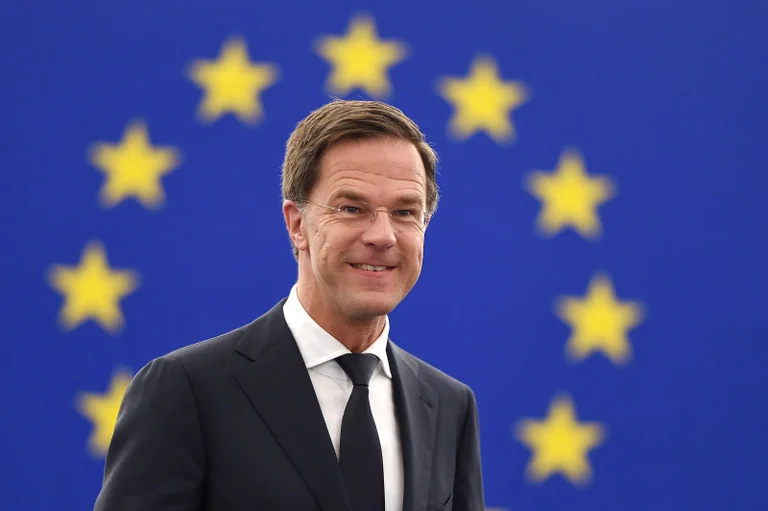
Dutch Prime Minister Mark Rutte has been traumatized by Britain's departure. He knows this can happen in his country, too. Rutte's liberal-conservative VVD party is the largest in the Netherlands. But the right-right Eurosceptic, PVV, led by Geert Wilders, is second. Another far-right party, the Democratic Forum, is also lighting up the anti-European initiative. Mr. Rutte is determined to avoid the departure of the Dutch. It would destroy a country participating in every possible European programme.
But the more Rutte wants to avoid political debate over Europe, the more the opposition abandons the issue. In this regard, he is in the same situation as David Cameron before the Brex referendum: he is failing to firmly and convincingly protect the continuation of being a member of the EU. But there is also a difference between the two: the Dutch prime minister does not withdraw from Brussels. Rather, it is actively forming new alliances across the continent. He has realized that Brexie has changed the political game in Europe.
The UK has often amplified positions in Brussels. Now, if the Dutch want to be heard, they must have new allies. Dutch diplomats and civil servants are going to European capitals listening, trying to make deals. The shape of these alliances depends on the issue. In some respects, the Dutch are approaching Germany. They are getting closer to France as well, on the issue of a common market and even trade. Spain and Austria have also joined the picture. For financial and economic reasons, the Dutch formed a new Hanseatic account that pressures Germany not to do too much concessions to France. The fact that the group partly consists of several Nordic states outside the eurozone should not disturb The Hague.
In the budget and the deputy battle against David-19 in the summer, the Dutch fought like lions. But with Germany and France joining because Europe's political future was at stake, the Dutch failed to completely change the plan. They achieved mere financial concessions. When German Chancellor Angela Merkel returned to Berlin later spoke of avoiding a European disaster. President Emmanuel Macron spoke of Europe as well. Mr. Rutte, returned to The Hague, said he was happy that Dutch contributions to Brussels had not increased. End of story.
It is no wonder Ruttes missed an extended session in parliament to explain himself later, before receiving approval for the deal. Only 10 percent of the Dutch felt that he should be gentler at the Council meeting in July. According to a recent poll by ECFR in 27 capitals, the Netherlands is seen as the fourth most disappointed “country” in the EU.
Of course, the Dutch were subjected to diplomatic failures. In The Hague, the Ministry of Finance's domination of European affairs, at the expense of diplomats in the foreign ministry, has led to tough discussions. The government was quick to receive within 100 children from the Moria immigrant camp in Greece, a clear gesture of trust for other EU member states. But the financial and monetary positions that have caused the failure have not changed. Few expect this to change before the elections.
So no, it's not surprising that Italian diplomats remember the construction of the first days of the Dutch in Brussels. They call it <x0... frassi” progress in Francisar Italian means to destroy. And Frances, it rhymes beautifully with the Italian word for the Dutch: “ /Foreign Policy/ Periscope