3 minutes ago
COVIDD-19 treatment in Serbian municipalities: Hospitals Rest but Citizens as well
Periskopi(6 years ago)
(6 years ago)Journalists who report from Serbian environments in Kosovo are increasingly struggling to obtain information about the health situation in this part of the country. Zorica Voorgucciq, RTV journalist KIM from Caglavica, has declared for Radio Free Europe (REL) that Serb community members in Kosovo refuse [...]
Journalists who report from Serbian environments in Kosovo are increasingly struggling to obtain information about the health situation in this part of the country.
Zorica Voorgucciq, RTV journalist KIM from Caglavica, has declared for Radio Free Europe (REL) that Serb community members in Kosovo refuse to talk about problems because they are afraid of the consequences. The main consequences concern losing the job, since most of them are employed in Serbian institutions, in health and education respectively.
Voorguccic claims that there are cases when the natives of the Gracanica municipality often report themselves demanding that any important issue be investigated, but that they are not willing to testify about the matter in question.
Two patients have been reported: one with the virus confirmed and the other denied for testing. But they refused to reveal their identity. These two cases do not represent any exception because there are many such cases. We are aware that there are no conditions in health institutions, but I don't know why this is being kept secret”, Zorica Voguciq said.
It states that journalists from Gracanica have not been able to obtain any information from competent health organs until a group of media representatives and the civil sector have reacted. Only after these reactions have two press conferences of crisis headquarters and representatives of the Gracanica hospital been held in all.
“
Director doesn't respond to calls
The chairman of the Association of Journalists of Serbia in Kosovo, Budimir Niciq, also confirms that the main problem of Serbian journalists is that they have no access to hospital centre officials in Gracanica.
“They are completely closed to journalists -- namely, the director of this hospital centre, Bratislav Lazic, who seems to be the only person authorised to talk to reporters. When we ask other doctors in health institutions, they tell us they cannot speak without the consent of director Laziq”, Niciq claims.
Director Bratislav Lazic has not responded to REL phone calls, despite numerous attempts.
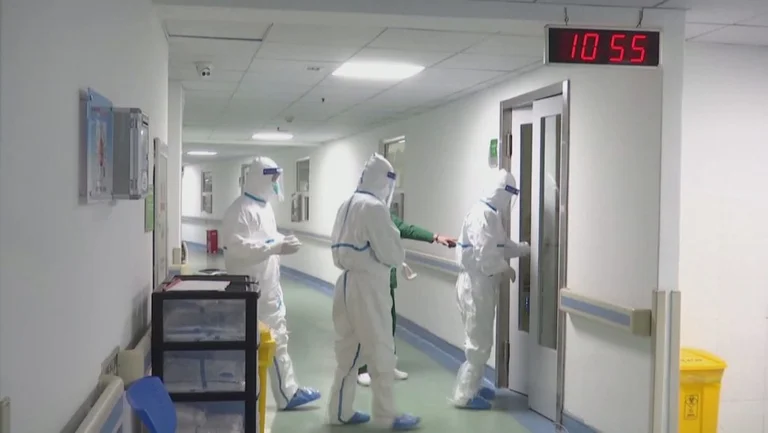
Based on unofficial information, Budimir Niciq says the situation in health institutions in this part of Kosovo is alarming; there are no tests and there are no medical and no essential tools for work.
“We are in a jumble: on one side doctors show us a version, but they dare not speak publicly, as Lazic comes and all of this exposes”, points out Budimir Niciq.
He explains that it is a small community that can easily reveal the identity of resources, especially if those in the media are represented through initials.
Where are the tests and where are the samples going?
Aleksandar Antonijevic, epidemiology specialist at the Centre for Public Health in Northern Mitrovica, which operates within the framework of Serbia's system, has stated earlier on REL that Gracanica sends an average of ten samples per day and that this is a sufficient “”.
Otherwise, Kosovo and Serbian health systems operate in Kosovo, while Serbian citizens can choose where they want to hand over the sample for testing for COVID-19, the disease that causes the coronobitus.
The hospital clinic centre in northern Mitrovica functions within Serbia's health system, so the collected samples are sent to the labs in Serbia.
Meanwhile, regional hospitals that operate within the Kosovo system, samples send them to the molecular microbiology laboratory near the National Public Health Institute in Pristina.
Ana Brnabiq, Serbia's prime minister, has declared 5 August that there are sufficient medical equipment in Kosovo and that doctors from Serbia are available to go to Kosovo, if necessary. It has also warned the opening of the laboratory in northern Mitrovica as a priority in order to accelerate and multiply the testing process.
Pasyan Hospital Director Exposes Information on Drug Lack and Tools
Jovan Simu, RTV Puls journalist from Sloova and Gjilan, says that at the general hospital in Pasyan, there are no means, medicines or syringes.
Meanwhile, the director of the hospital, Zoran Periq, exposes this.
We have a lot of OVIDD-19. The percentage of healings is large”, says Periq.
But journalist Siqim shows a very different mirror of the situation:
You should go to private clinics for lung recording. All this cost an average of 250-300 euros”, claims enemies who themselves are infected with coronarys and is found in property.
This journalist explains how some 30,000 Serbs live in Anamorawa, while the maximum that can be tested is six people.
If a whole family has all the symptoms (of COVID-19), they will test only one person. So we can never know the real mirror about the number of infected. This actually means that there are many more infected than what is said”, said Jovan Sim enemies, by RTV Puls.
That citizens refuse to speak publicly, Darko Dimitrijevic, journalist from Gracanica confirms.
“Frika is the best expression to describe the rejection of confirmations from official sources, which are neither typical nor natural for the situation in which we are located”, Dimitrijevic points out.
Ivan Vuckovic, a multi-year-old Kosovo Radio Television journalist from Leposaviqi, warns that it is difficult to do the journalist's work in Kosovo's north because citizens, according to him, refuse to speak when the situation is tense.
If we start a political topic or raise the question of responsibilities, this is where the story ends. He's scared. We've noticed this before doing our job. They consider this to be dangerous territory and can cause themselves problems”, Vuckovic claims.