 3 days ago
Will Merkel's EU presidency strengthen Germany and Europe?
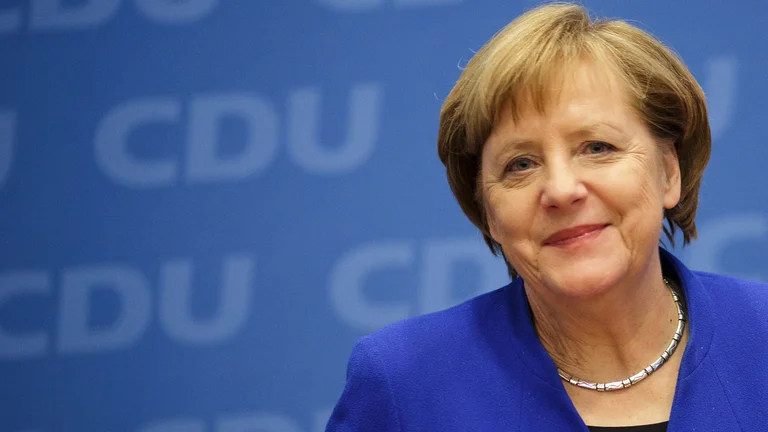
Periskopi(6 years ago)
(6 years ago)As the EU prepares to take place together on 17 July, to debate a 750 billion-euro stimulus package, taking over the European Commission presidency on Germany could not have come to a more convenient moment. Chancellor Angela Merkel, a star leader whose star seemed to be fading [...]
As the EU prepares to take place together on 17 July, to debate a 750 billion-euro stimulus package, taking over the European Commission presidency on Germany could not have come to a more convenient moment. Chancellor Angela Merkel, a star leader whose star seemed to be fading in front of the coronary pandemic, has already evolved, and has become one of the world's most pragmatistic leaders in the face of the crisis.
Two Decades of Power
Along with French President Emmanuel Macron, the new EU president is ace under the sleeve to push the bloc of member states to take drastic action to limit the economic consequences of COVID-19. It's actually unprecedented for Berlin to agree with a proposal like that of Merkel. In essence, the 750 billion-euro economic recovery plan will lead Germany to take up most of its debt in order to support its European neighbours.
For Merkel, the consequences of EU inaction would undoubtedly have significant consequences for Berlin, due to trade dependence among bloc members. Almost 70% of its exports are for EU members.
“Europe's future is our future”, Merkel said, next to the Macroni.
Objection to Plan
The plan, drafted by President Ursula von der Leyen, who has also served as defence minister in Merkel's government, faces opposition from some of the bloc's most cautious members. The Netherlands, Denmark and Austria are unwilling to agree on grants and prefer to lend on condition, Bloomberg reported. Sweden is also said to be seeking a better deal.
Merkel's challenge will be to convince her that joining forces is the best way to survive economic consequences.
I can tell you that the positions of member states are still far apart”, Merkel told EU policymakers on the first day of the new task.
Although there are points of disagreement among member states, there have been signals from the opposition that they could be eliminated. It has Macron's help in this matter, which illustrates the relationship both have created over the years.
“is our absolute priority”
And I put it on paper: It's our absolute priority. Without that, Europe would not rise to the challenge of”, Macron said. Referring to states that disagree with the details, he said “is not in their interest to see some members, especially important markets in the European economy, affected by this” situation.
However, Merkel is the leading actress in EU leadership in the French-German recovery plan, and her position gives her the opportunity to do so. Merkel firmly supports the EU recovery proposal, at the same time realises the tour of political farewell. It has the opportunity to play a perfect game before heading toward sunset.
Merkel's Last Bridge
The Chancellor announced that she will not seek to be re-elected in 2021, and that after her mandate as European Commission president will be completed next year, the icon leader will be out of politics for the first time in two decades.
Under Merkel's leadership, Berlin successfully led the adoption of the euro and the 2008 financial crisis. Recently, she has had to cope with the migration of 20 years of unrest in the Middle East and Brex. Migration in particular has resulted in a problem for Merkel's Christian Democrats. In fact, before COVID-19 invaded the world, Merkel and CSU were rapidly losing German support.
After her alleged successor, Annegret Kramp-Carrenbauer, resigned as party chairman, the power of the CDU was questioned, and that can happen again if the COVID-19 drags up the next election. Right extreme nationalists gathered around Germany's Alternative ( AfD), but it was the leftist party and Germany's Social Democratic Party (SDP), which mostly benefited at Merkel's expense, according to a POLITICO survey.
However, the way Merkel managed COVID-19 has led CDU support to reach the highest levels of all time. A May 7 Study by Infapest Dimap / ARD, found that 67% of Germans are satisfied or very satisfied with their government's response, and only 9% are not satisfied. The CDU won 5 points among voters at the expense of the Greens and the AfD.
While COVID-19 has been a stress test for most world leaders, Merkel has been an opportunity to remind Germans, why she is probably the most effective EU leader. Its alliance with Macroni has empowered the EU and enabled it to compensate for the weakening of American leadership, as well as to cope with mounting threats from Russia and China.
Hard Road
Although Merkel will not be in charge next year, her leadership put Germany and the EU on a path to becoming a global energy mediator. The challenges have never been greater. The world is still facing the pandemic of Coronavirus, which seems more and more likely to continue to hurt the planet for the rest of the year.
Then it's Brex, which has a deadline regardless of progress made. Merkel has taken a tough stance on negotiations with the United Kingdom and stated that “will have to live with the consequences of”, unless an agreement is reached.
And finally, it's Beijing's growing threat, which is committing ethnic genocide, is setting up concentration camps, destroying democracy in Hong Kong and trying to buy influence on every opportunity it shows. The Chinese threat, if it exists, is Merkel's main failure, a problem for which she offered no choice. However, nearly every Western leader can be blamed for this, except US President Donald Trump, who continues to implement sanctions against China.
Merkel's successor, as president of the EU Commission and German Chancellor, will face worse challenges than those faced by Merkel, but the outgoing leader has prepared the EU and Germany well for the time to come. / InsideOver World.al










