3 days ago
Virus, History, Nature and We
Periskopi(6 years ago)
(6 years ago)The hall is full this evening. Where silence ruled over past months, countries have now been occupied. And balconys. Barcelona's Open Operas place 3,000... flower vases, where spectators usually sit. Their green stands in contrast with the red of benches and gold chandeliers. Finally! View [...]
The hall is full this evening. Where silence ruled over past months, countries have now been occupied. And balconys. Barcelona's Open Operas place 3,000... flower vases, where spectators usually sit. Their green stands in contrast with the red of benches and gold chandeliers. Finally! The view was surreal, but normal was nothing these months. Who are you going to the concert with when you're still afraid of the virus and people aren't coming out? With flowers. They can hear, move, cough, have no fear, and radiate goodwill.
Quartet plays Cristem from Puccini. A work inspired by nature, by plants, that returns to it. Could there be something more natural? Finally, musicians bow down to the green public. A cactus, a aloe plant, begins to bend to what grows around us and gives us oxygen is gratitude. You can call this concert an excenter act. But this is, this extenuation takes us out of our egocentism, takes us away from the idea of being the center of the world that we possess from eternity. It is no coincidence that the title of this event is “Concert for Biozän”.
Some time ago I wrote in a novel that man must be silent for a moment to hear the voices of other confessions. Of animals, flowers, dragonfly, guacs... they have all gathered a lot of silence, but they confess even history, their story kept locked up turned into minerals and mosss, algae, lichen and honey...
Now this state of emergency of the coronobrian forces us to remain silent. A friend told me that he never experienced the change of seasons in this form. And I've looked through the window this time how the leaves grew, how many shades are green, and that would be rude and incorrect that you all sum up in a notion.
I had never heard the song of birds since childhood. I am even discerning which bird sings, reading about the diversity of birds. A neighbor told me that he has discovered 19 species of birds from the balcony. I wonder how our stories would sound if they were confessed by other creatures. Developing another attitude toward things would be a good exercise of empathy. We imagine the classics of literature. We tell, for example, “Platu and sea” from the perspective of the fish, more precisely the swordfish. His struggle with the old man who is not given, and the sea is no less dramatic than that of the old man with the sea and the sea.
In the history of the fish is he, the fish, the hero of the war for life and death, bleeding but still resisting. I would consider his version to be empathy. Environmental empathy. But music in a concert hall with flower vases is also a good start, a special gift. And (as always) the importance is mutual, like for flowers like us, but especially for us.
We experience the return of nature in many ways. We hear birds sing more clearly. Through our bodies, we feel the righteous vengeance of animals that are killed industrially in our slaughterhouses. If we do not understand this metaphysic message, we will later have a physical message expressed. That is what happens when you do not understand metaphysic messages in time.
If we want to live our lives even further, we need a radical change of perspective. We need to learn that from the virus. We need to expand our empathy not only to people, whom we have closer but also to those far away from us, different - colored people, (every time it seems absurd to mention this in 2020), to nature, from which we come. That would be ecological empathy.
Nature has returned. From what we have seen these weeks, we must learn that history also returns. The marginalised, unconventional one comes with an even greater flood. We need to find a way to talk to both of us about nature and history. All past conversations returned one day. And this day is today.
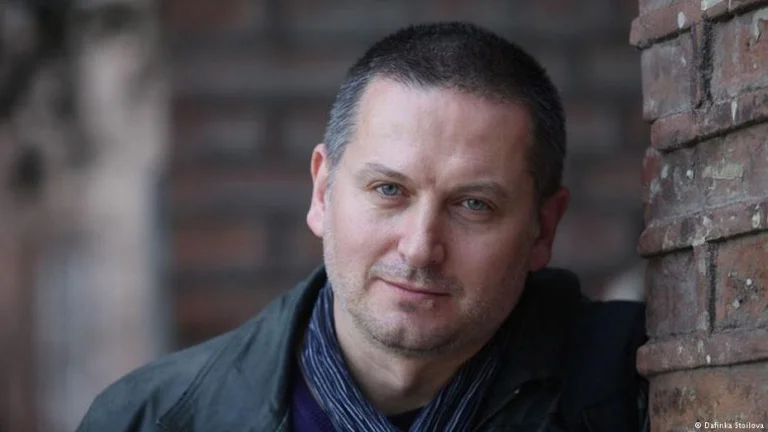
(Georgi Gospodinov is currently the most translated Bulgarian author. His novels “The natural Roman”, “The Fiscica of melancholia”, as well as the volumes of poetry and plays are translated into 25 languages. It was awarded the Angelus 2019 award and the Jan Michalski Literary Award in 2016)