 3 days ago
Economic crisis potential for new Kosovo-Albania economic model
Periskopi(6 years ago)
(6 years ago)What needs to be done now is exploiting this economic situation so that our economies -- Kosovo and Albania -- can emerge from the framework of action and thinking in which they are now two decades. Our small economies should not be further isolated as a result [...]
What needs to be done now is exploiting this economic situation so that our economies -- Kosovo and Albania -- can emerge from the framework of action and thinking in which they are now two decades. Our small economies should not be further isolated as a result of the economic crisis, but it would have to be used to turn this situation into a common economy. On the way to become a common economy, even the measures of combating the crisis would be such that they would not have a short-term socioeconomic effect, but their impact would be long-term, and in the function of changing our economic structure and accelerated but stable economic orientation.
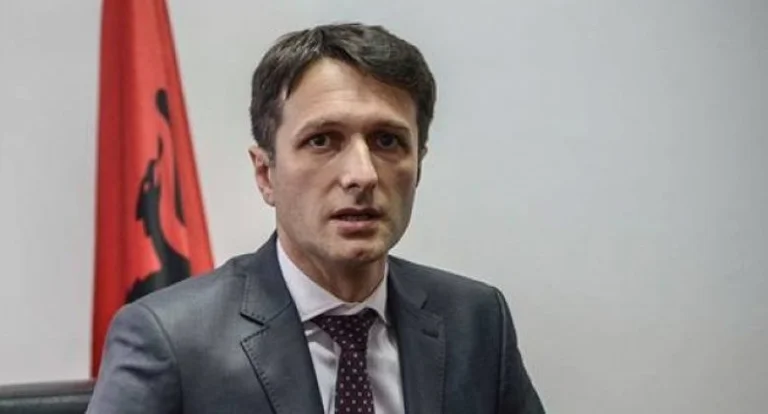
It says: Valon Murati
Usually, the crises that societies and sometimes large parts of mankind experience, except that they pose great dangers to societies and mankind, they can also offer great opportunities. They can pave roads by then, not very well-known, but which, being not conventional, can make great breakthroughs in human development. Such are economic crises. Economic models that, up to the economic crisis, have not even been able to imagine that they can be implemented more easily in such situations. He named two of them, known for the majority, as evidence of major overlaps: what is known as the NewDealʹ“The new US Agreement” after the Great Depression of 1929-1933, and the recovery of European economies after World War II through the Marshall Plan. In both cases, but nevertheless under completely different circumstances, in market economies we have state intervention (Us) in the function of overcoming the crisis and extending the road to rapid economic growth. In the first case, there is a characteristic of the American government's economic intervention, however, through investments in large public projects, to overcome a deep economic crisis as a result of a major recession and second through US financial aid overall in rebuilding Western European economies after World War II. In both cases, the return of economies has been achieved not only in normality, but the curve of development has taken off and the well-being of citizens has increased.
Today, the world faced with the consequences of the COVID-19 pandemic due to the months-long closure of economies is threatened with a long recession. The world's economies are reacting in different ways, but all by adapting to their interests will make efforts to strengthen their economies. Consequently, a return to national economies can be expected through stimulating packages to revive them. The United States has already allocated over $2 trillion in efforts to help the economy, while the EU, although late, is working on the creation of a 750 billion-euro fund that will be provided in the form of grants (500 billion euros) and loans (250 billion euros) designated economic sectors in the EU countries that are mostly economically affected by pandemic. Of course, this is also a response to European solidarity so missing in the first phase of pandemic. This fund is part of a Franco-German compromise (which proposed 500 billion billion euros, but the EU Commission raised it to 750 billion euros) and to many it was surprising how Germany, in principle conservative with regard to sharing financial responsibility and possible debts that could not be paid) with countries that have a small discipline of financial spending, was hired for such a fund in Europe economies. But unlike 2008 and the crisis in Greece and Portugal, when Germany was reluctant to take on the payment of debts from these countries, today a blow from the economies of Italy and Spain would mean a blow of the German economy, which has a major trade exchange with these two countries. Moreover, the German automotive industry depends on the production of parts made by the Italian industry. A blow of the latter would also severely damage the German industry itself.
The economic crisis will certainly hit Kosovo this time, as opposed to the slightest blow Kosovo suffered in 2008 due to its economic structure and its small integration at that time in the global economy. Of course, the Kosovo government will continue to take measures, and will try to keep the shock smaller. The first emergency package measures were more naturally of socioeconomic nature, while the last economic package, the economic recovery package proposed these days by incumbent Finance Minister Besnik Bislimi, is supposed to be longer and more influential not only in overcoming the crisis but also in opening opportunities for economic development. We have a similar situation of government intervention in the Republic of Albania. These measures will be criticised and praised, depending on both political and economic interests, but also the vision of the economic school representing those who will debate them. One is true: the trend of measures of the two states is completely in the spirit of isolation and self-responding, and in this case, also of ignoring each other and of the possibility of solidarity or of co-operation in the shared overcoming of this economic crisis. The opposite would have to happen. What needs to be done now is the exploitation of this economic situation so that our economies -- Kosovo and Albania -- can emerge from the framework of action and thinking in which they are now two decades. Our small economies should not be further isolated as a result of the economic crisis, but it would have to be used to turn this situation into a common economy. On the way to become a common economy, even the measures of combating the crisis would be such that they would not have a short-term socioeconomic effect, but their impact would be long-term, and in the function of changing our economic structure and accelerated but stable economic orientation.
To become a common economy requires political vision and courage to overcome the barriers so far, but also relevant models of economic development and concrete projects must be developed. My friend Gjergj Bujuku, manager of Albania's Coffindertria, one of the biggest supporters of a joint Albanian economy has been lobling for a different economic thinking and therefore another economic model. While I was the diaspora minister several times we have organised joint conferences with Kofidustria and relevant ministries in Tirana and Pristina to present these new economic models, but unfortunately they have not advanced beyond these conferences. The project, which had been launched and treated as the possibility of a successful model of co-operation, was that of interconction 400. The KV (funded by German Kfw) which was once blocked by Serbia, but which eventually resulted in Kosovo's exit from Serbia's energy bloc and joining Albania (an extremely positive development for the energy independence of Kosovo and Albania and empowering their energy potential). However, other major projects are not too much to impress policy-makers Pristina and Tirana, nor do internationals. Personally, I had the conviction that the obstacles on this road were two: first, our provincial politicians in Pristina and Tirana had (and they seem to still have) difficult to slow down from the provincial mental boundaries and only think about their court in the short term electoral plan (even when it's in question economic development) and second, there was a constant international resistance to a new economic model other than those for us to assume. The IMF, the BB, or even the EU had promoted to Kosovo and Albania for years. And let's not even talk about fears that such economic projects could also be pre-coupled by other political developments in the region. However, we are now embarking on new circumstances, when policy-makers in decision-making positions should be bold enough to have large economic projects go through the great perspective of economic development. At the same time, conditions are also being created that, with concrete and well-worked projects both as profitable financial models, this new model of economic development and co-operation between Kosovo and Albania are being pushed forward, even in relation to international political bodies and economic and financial ones.
What's the main philosophy behind my friend George Buyuk's economic model? According to him, the only way to change the economic structure of Kosovo and Albania is by designing several major joint economic development projects, worth up to 10 billion euros, which would move the entire Albanian common economy at large, raising not only economic well-being but also social and political mentality. These joint projects can be: investments in Trepca and the creation of metallurgy around the nation, investments in Albania's chromium industry, investments in a new thermal power plant to up to 500MW (be it on the plains of Kosovo, whether in Dukagjini), investments in renewable energy resources (however it takes advantage of the vast water potential of the Republic of Albania), joint energy power supply, investments in a major tourist project in Brezovica, investments in the field of information technology to turn Kosovo into a Balkan SilicVleyan railway, agriculture and integrated tourism through joint projects and projects in Kosovo, which cross the region. The basic idea is for these major economic projects to be initiatives for Kosovo and Albania, that is to initially be investments of our countries, which, being such, create security to open the door to investments from the diaspora in the form of shares in these projects, and then even through the withdrawal of serious strategic investors depending on the sector. These drafts and others would certainly have to access the site of a joint government and professional expert from both the academy and the civil society and the business, and should be forwarded to the necessary legal changes. Of course, a common public investment authority would have to be established that would carry the burden of design and initial investments in these joint projects.
With such a new economic model not only paving the way for easier overcoming the crisis, but conditions for such an economic development would develop that would change the economic landscape of Kosovo and Albania, occupying the lost decades. So with state investments in major projects in the initial phase and the introduction of money in circulation, not only would the aggregate demand so much wanted to overcome the economic crisis, but the entire chain of national economy would be revived and re-enacted. New economic development horizons that would have lasting effects not only on the economic plan but also on other areas, especially education, social issues, rule of law, and political stability. Second, the diaspora's financial and human and intellectual resources could be mobilized, putting them in service to the country, with mutual benefit. Usually the diaspora finances we haven't known and couldn't direct them in the right way even because of the lack of detailed economic projects in which we would invite the diaspora to invest. Such projects, in which the diaspora would have the advantage of purchasing stocks, would affect their greatest approach to their homeland and enable them to invest not only in businessmen but also in those who have savings and want something of them to invest in their country. All this development would make our economy safer, more stable and reliable even for foreign investors. Coming to our market would open up other prospects and help change our economic thinking. And last, but not in importance, such an economic model would break the provincial barriers between Pristina and Tirana, affecting the creation of a common economy also create common interest in the political project of the union.
And if we don't dare to move out of the country even in these times of crisis, we'll be condemned to act in these little situations with debates over how many hundreds of millions got into our small economies, whether in which sectors they got into or where they should get in, who's taking advantage of the most, and who's the least of the interventions in the economy, but always keeping small in development and in mind, and always standing far behind the world. This world is for those who dare. So let's use this moment for the big economic movement.










