 a day ago
Periscop analysis: Waiting for pro-government civic protests
Periskopi(6 years ago)
(6 years ago)These days are clarifying public actions expected to be taken shortly after the long-awaited Constitutional Court decision. At least for starters, civic protests will be organised at the request for early parliamentary elections, already asserting that the Constitutional decision will be in favour of the LDK initiative to form governments through [...]
These days are clarifying public actions expected to be taken shortly after the long-awaited Constitutional Court decision. At least for the start, civic protests will be organised at the request for early parliamentary elections, already prejudiced that the Constitutional decision will be in favour of the LDK initiative to form governments through the new parliamentary majority.
Perscope Analysis
Last night, on TV's Pressing Report T7, Rron Gjinovci and Dibran Hoxha from the NGO ORCA said they are not alone in the protest initiative, citing support by several local NGOs such as Interra, AdMovre, Inject and other groups committed to gender equality and women's rights.
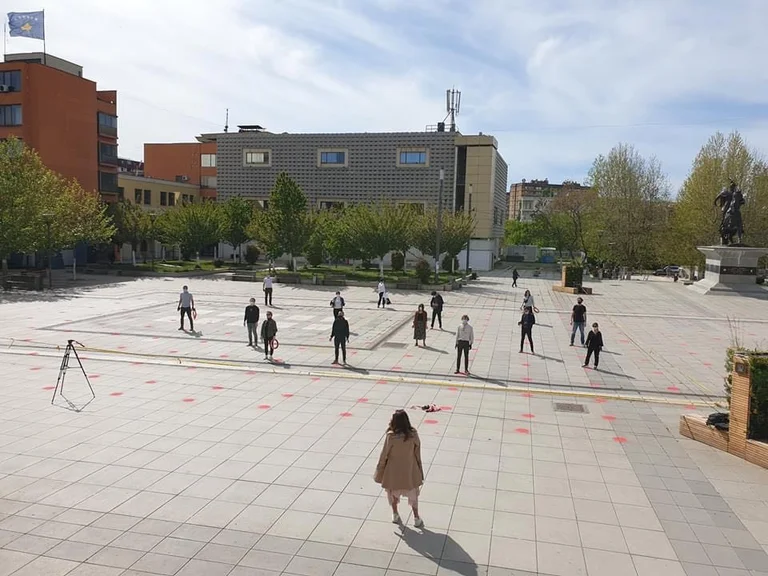
They also detailedly explained last week's commitment to the spatial design of the protest in conditions of social distance during the pandemic period. According to them, it is possible to protest by respecting the required twom distance between participants.
Days earlier, mass protests had also threatened the leadership of the Vetevendosje Movement, judged according to an email/post of its secretary, Vlora Hadzimurdi.
Warned of May 2nd, they were cancelled following the Constitutional Court's decision on interim measures, which suspended the rapid formation of the new government by the LDK and its new partners in the Assembly.
Although Djindovci and Hoxha insist that the protests that will be organised by civil society organisations have no party agenda, should be stressed that now for at least a year, they and representatives of the NGOs mentioned were perceived as public supporters of the Vetevendosje Movement and, in particular, its chairman Albin Kurti.
Launched by Djindovci (ORCA), Shkelzen Gashi (AddMovere, by late Kurti political adviser) and Luljeta Aliu (Inject), all were regular participants in public discussions on media and social networks, supporting the Kurti organisation's party programme and goals.
Therefore, warnings of Djindjic protests, which in Pressing were called to the great support from civil society, are problematic in at least two aspects: • Calling for protests before publishing the Constitutional decision is a serious prejudice of its contents.
From here on, it turns into an effort to prepare and manipulate public access to the agenda of a political party. • The smuggling of civil society's concept into the agenda of a political party threatens with further damage to the nongovernmental mandate of NGOs, especially the fact that it is a protest that supports the goals of a subject that currently controls government.
In short, it's pro-government protests by non-governmental organisations. Moreover, in an effort to relate the support of the Vetevendosje movement agenda, Djindovci and Hoxha stressed that new elections are being sought by other political parties, while waiting here. PDK and, even PSD. It was a pity to see such an approach, but say amniscient, against these subjects he took into account the accusations and public denigrations that Djindov and these activists repeatedly attributed to them over the years. But the current need to evade public contact with Kurti and Vetevendosje is forcing them to make tactical scuttles and even rigid opponents. Of course, the situations that are taking place during these days are promising initiatives and actions that could easily end up in a major political and social confusion. The claims of activists like Djindovci, that the Constitutional decision is not equivalent to civic integrity, is as irresponsible as it is because it aims to abuse the category of civic political will as long as legal decisions clash with any party agenda. It is expected that similar positions of Djindjic from O The RCA will be frequented the following days by both self-called activists and certain media and different interest groups. There will be these indicators of the gradual distribution process of deep social division that has begun many years earlier and is much deeper than formal clashes among political parties today. More than ever, these days can be seen how across public discussions borders between political discord and social hostility, between cultural differences and interpersonial hatred.
Between refusing to lose and obsession with revenge. Of course, all of us remain in expectation of an epilogue from today's drama. We are all its participants, and, of all those involved, Djindovs will depend on whether its epilogue will slip into a social tragedy or a public farce.










