15 minutes ago
The secret of the ostrich's decorated eggs found in the British museum
Periskopi(6 years ago)
(6 years ago)If you wanted to give an extravagant gift 5,000 years ago, you might have chosen ostrich eggs. Now some of these beautiful Easter eggs - size objects are found in the British Museum of London. Eggs were found in Italy, but their origins have long been a mystery, no ostriches [...]
If you wanted to give an extravagant gift 5,000 years ago, you might have chosen ostrich eggs.
Now some of these beautiful Easter eggs - size objects are found in the British Museum of London.
The eggs were found in Italy, but their origins have long been a mystery, the ostriches are not indigenous to Europe.
Now, research into the museum collection by an international team of archaeologists reveals new knowledge of their history.
People throughout Europe, the Mediterranean, and North Africa traded ostrich eggs up to 5,000 years ago, in the Middle Ages of Bronz and Hekuri.
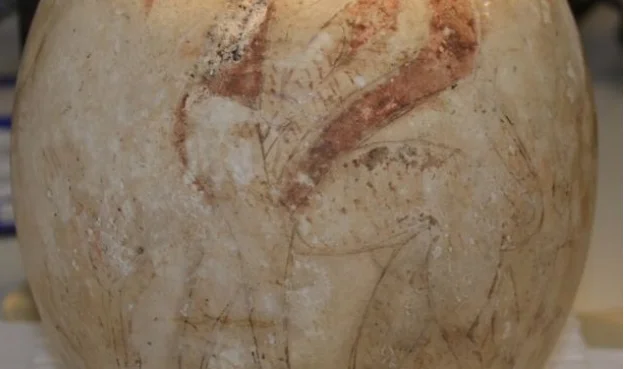
The eggs were decorated in many ways painting, decorated with precious ivory or metals, or covered with small glass or other materials.
The five eggs in the collection of the British Museum are decorated with animals, flowers, geometry models, soldiers, and chariots.
Archaeologists usually find the eggs in the burial sites of the richest individuals, and they were probably luxury items, explains Tamar Hodos, project leader at the University of Bristol.
But working where the eggs were laid may reveal more about their history, says the new research published today in the magazine Antiquities.
Dr. Hodo's team were eager to find out where the ostrich eggs came from and whether the ostriches were wild or cultivated.
Wild forces are extremely dangerous, so that the ancient Greek historian Xenophon wrote that no one could catch them.
The discovery of this kind of information helps us to better understand ancient civilizations and trade patterns that laid the foundation for the modern world.
Archaeologists analyzed isotopes, or chemical elements, in egg shells.
Using the eggs of modern-day ostrich in Ga Egypt, Israel, Jordan, and Turkey, researchers compared isotopes to ancient and modern eggs to track their origins.
The findings suggest that ostrich eggs could be traded at great distances in the Nile Delta in northern Egypt and Levantin (including Jordan, Syria and Turkey).
The Hodos team also believes the ostriches were wild, suggesting that traders went to great lengths to get the eggs, Kosovo Preress broadcasts.
Researchers used a number of tools and techniques to try to recreate the methods the ancient artisans used to decorate the eggs, but eventually the team was unable to repeat the decoration.
This suggests that the eggs keep many secrets and that to tell their fullest history, more research is needed, says Hodos.
Archaeologists now plan to investigate the symbols and uses of stycot eggs, and why they became so popular in the Mediterranean, where ostriches were not indigenous.