a day ago
Why do only redefinition of borders end the conflict?
Periskopi(6 years ago)
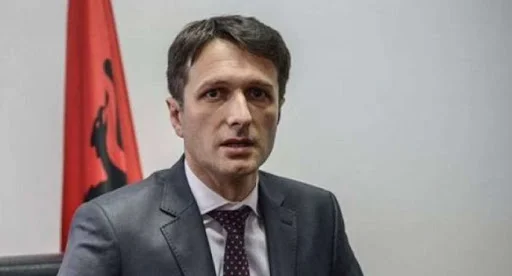
(6 years ago)Valon Murati, like the only global power, which is in the process of reforming its foreign policy in the function of preventing Russian and Chinese insight, is also determined that through resolving problems between Kosovo and Serbia weaken Russian influence, to bring Serbia under [...] influence.
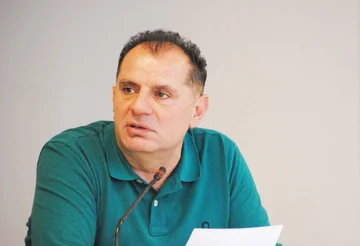
Valon Murati
The US, like the only global power, which is in the process of reforming its foreign policy in the function of preventing Russian and Chinese depination, is also determined that through resolving problems between Kosovo and Serbia weaken the Russian influence, put Serbia under the American and European influence, as well as consolidate Kosovo and the Albanian factor as a dam of detification of Russian interests in the Balkans, respectively, in the Adriatic. That is why the current American administration, more than ever, is determined to find a solution to the reports between Kosovo and Serbia. Any other interpretation is the indictee, the biased or irresponsible.
- In times of great crisis, the weaknesses and shortcomings of a society and a state body include, just as such crises are moments of social and institutional mobilization. And it should also be moments of personal and social catharsity for us to solve with another approach to solve the old problems that have conveyed us as society and as a state. After 2008, nothing more than this current medical emergency period has witnessed the real state of control of power and practical sovereignty in the northern part of Kosovo. Serbia and its measures are those that apply even there, while our power is largely formal. On Kosovo territory, with recommendations from Serbia's institutions, entire cities are placed in quarantine. Moreover, in the last few days, Kosovo Serb citizens, who mostly receive services either in Serbia or in parallel health institutions, were put on the list of the sick and the dead, so, in those that respond to Serbia, not Kosovo. Of course, at this point it is important to save people's lives, regardless of national and racial affiliation and no matter who cares and who takes responsibility for medical intervention, because it is a common human struggle. However, in any sovereign state of the world, regardless of the dramatic situation, there are some procedures that need to be followed, however simplified because of the situation. However, what I said is more about spreading the conflict of sovereignty in the north that resurfaced publicly at this time of pandemic.
- In recent years Kosovo's most visible power in the north of the country is exercised through police and customs, but this -- rather than being a substantial power -- actually the broadcasts as a symbolic power and allowed primarily because of Serbia's own international presence and interests, which is the result of the April 2013 agreement. But real political power has and has had Serbia, which it has exercised through different institutions in the north, ironically, not only through parallel institutions, but also those formally of the Republic of Kosovo (such as municipalities and their powers derived from the Kosovo elections). So the stories of the integration of the north, which have sold to us past governments (those of the PDK, the LDK and the AAK), cannot buy anymore. Let us not forget that all this sovereignty complexities are ultimately maintained by KFOR presence there. Thus, the real power over security in the north has KFOR, which -- both in all of Kosovo and there -- operates according to Resolution 1244. Even the occasional interventions of the Kosovo police in the north occur only after co-ordinating with KFOR and with its approval. Serbian municipalities in the north have been integrated as much as they care about Serbia and as much as whenever they want it can destabilise Kosovo through them. This has only come to the fore. But since past governments (represented by parties now in opposition and in power) bear the main blame that they have never explained the complexity of the situation in the north and have often promoted that the north was integrated (especially from the April 2013 agreement and beyond) and have offered wrong solutions, LV's approach to the opposition has been tough, demanding police and military intervention in the north to establish Kosovo's full sovereignty there. This extremist and populist rhetoric was intended to increase LV's patriotic credentials in public opinion, realisticly as a daily policy was done for vote jobs, but essentially prevented any constructive debate on resolving problems in the country's north and, therefore, prevented the solution of problems with Serbia. Thus, being the most vocal opposition force, the LV consumed this role without results and overshadowed other rational options. And this is a huge damage done to Kosovo, by a party that promotes itself as progressive and hopeful for the country. Now that it is in power, language has changed. The prime minister in office, Albin Kurti, accuses others of wanting to stir up bloodshed in this pandemic era and invites for calm and quiet while others ( P DK, LDK, AAK and Initiative, but President Thaci, who had confirmed the weather that the north was integrated, hard-languageed, require intervention and establishment of sovereignty in the north. The rhetoric of all of these, being stokes, is incredible, and it caused reasonable frustration in much of public opinion. Turned role, unfortunately, choice as usually wrong and populist on all sides. The problem of the north is not a police or military problem, nor can it be solved by such means. Moreover, to be realistic, such a solution is not even allowed by the international community. But, too, it cannot be resolved by ignoring the situation there and Serbia's continued interventions in that territory. This is a complex political problem of our reports with Serbia and which should be solved only with political dialogue. And the road to the solution runs through Eastern Kosovo. But for that a little later.
- Prime Minister Kurti, in addition to the rhetoric of intervention in the north to establish sovereignty recently, when he realized that he has drawn close to power, but on the line of rejecting dialogue with Serbia, has propagand that Kosovo, instead of dialogue with Serbia, should develop dialogue with local Serbs. The idea of shifting dialogue, from dialogue with Serbia to that with local Serbs, has been not only one of the biggest political-propagandistic manipulations, but, if it did, it would be one of the biggest strategic mistakes. The conflict between Kosovo and Serbia and between Albanians and Serbia is not a typical ethnic conflict, of people living in a territory and fighting for dominance over it. No! It is a conflict that lies in Serbian national and state project from Nacheranies The Garashhanian in 1844, aimed at expanding the Serbian state on Albanian-inhabited trains. So from 1877/1878 onward this conflict has been between Albanians and the Serbian state, not between Albanians and minority Serbs in Kosovo. Serbs in Kosovo have been repeatedly manipulated by Serbian power and, subsequently, have at times been beneficial, and sometimes the victim of this manipulation. If we treat this as a conflict between Albanians and Serbs in Kosovo, we will amnist all Serbian chauvinist powers from 1878, especially those from 1912 to Milosevic. The solutions that were made in the Ahtisaari Pack and in the Kosovo Constitution have also been made, not for Kosovo Serbs, but for Serbia, having a kind of direct influence on Serbs in Kosovo, to have some kind of power in Kosovo, and thus to recognise Kosovo's independence. Consequently, Kosovo has no problem with Serbs within it, but with Serbia and its manipulation of them for its own interests. So there is no possibility that through any dialogue with Kosovo Serbs, problems with Serbia will be solved, but only the opposite can happen. Otherwise, Kosovo Serbs are part of institutions and dialogue is made with them daily. But they cannot be expected to function independently without resolving problems with Serbia.
- Since 6 October, for those who have wanted to be realistic, it has been clear that the main issue the new government will deal with will be dialogue with Serbia. At the same time, because of the prime minister's earlier positions in office, Mr. Kurti, it has been known that this will also be the main challenge this government will have. If someone had anticipated short-lived government life expectancy, it was not about internal issues, but the question of dialogue. And the fee debate, its removal or failure, has been and is a debate on dialogue. So even the collapse of government at the worst time for the country, which seemed to have been triggered at this moment by former minister Veliu's dismissal, was actually just the epilogue known what the fate of this government would be because of dialogue. Just as former Prime Minister Veliu's dismissal was a trigger for faster government decline, so the public struggle between coalition partners for pay and reciprocity is, in fact, the struggle for fate and dynamic dialogue. In essence, the Kurti government fell, not because of Agim Veliu, nor because of the fee and reciprocity. It collapsed due to dialogue and reluctance that Prime Minister Kurti had with this process, on the one hand, and due to pressure from the US administration that this issue must continue with accelerated dynamics. This American pressure was completely carried to LDK in the form of the immediate removal of the unconditional fee, which meant that no reciprocity measures were accepted against Serbia. The reasons for the reluctance of Prime Minister Kurti to become part of the dialogue may be different, but those in sight have to do with his fears that he is becoming part of a dialogue in which President Thaci's role continues to be important, or what he has now highlighted several times, lest he is trying to become a sort of decor in the agreement that has already been carried out. Thus, as former Prime Minister Haradinaj once used the fee to prevent dialogue that, according to him, led to divisions, Prime Minister Kurti used the fee first, and then reciprocity, as a means to slow down the dialogue process with Serbia. So he, positioning himself against a possible Thaci-Wucciq agreement, actually positioned himself against the dynamic dialogue that the American administration is imposing. The reluctance to become part of dialogue, through the use of the policy of partially removing the fee or reciprocity, is actually an excuse that waiting and not entering the dialogue would now bring priority to Kosovo, because the best “day” can come. Moreover, the report with President Thaci, a match of emphasis on egos, is an additional element, perhaps pushing the prime minister to think that the wait is in his favour, and therefore Kosovo's. And especially the expectation that may be linked to the passage of President Thaci's current mandate, and perhaps even some evental change in American administration. On the other hand, all these internal developments, the Tramp administration, through the Grandell and Costets ambassadors and the US Special Representative for the Balkans, Z. Palmer, replied that not only is there no written agreement, but that they do not know there is an agreement to exchange territories between Thaci and Vuciqi, for what was now trumpeted for almost two years and repeated over and over from Prime Minister Kurti to the day of distrust at the Kosovo Assembly.
- When the country's leading politicians speak publicly about dialogue, they treat it with a serious lack of sincerity. They have built the record that this dialogue will end with recognition of Kosovo, and it is only Serbia that should and will make the compromise. This they certainly say publicly, and they are in reality afraid of the truth they have never faced or publicly opposed, never giving alternatives. They are well aware that compromises are expected from the dialogue not only Serbia (Kosovo recognition) but also Kosovo. Clearly, in this format Serbia does not recognise Kosovo, so we have dialogue and we have international interference for dialogue. From here come the once-in-a-secret intercasts, once open that dialogue is made by our governments but also by the opposition, whatever the parties that represent them. But, on the other hand, to us, because of close party interests, there has never been a normal debate about dialogue from which it would have to be clearly and rationally articulated that dialogue and the final solution to problems with Serbia is in the interest of Kosovo. Kosovo is isolated. Kosovo has a problem with international legitimacy. Not a member of the UN, OSCE, Council of Europe, Interpol, and U NESCOs etc. He cannot become an EU member because five states do not recognise us. In many reports dealing with investment opportunities, Kosovo figures as a country with fragile political stability (such as a conflict country, presenting the country's north as problematic in terms of control and full extent of sovereignty), so serious investors are reluctant to come to Kosovo. We have a constitution that makes the state dysfunctional, because it enables the Serb community to block its functioning through the constitutional privileges they have. No constitutional change can be made without 2/3 of minority votes in the Kosovo Assembly, and none of the laws addressing eight important areas for the functioning of our state can be changed without the 1/2 votes of minority deputies. Here it should be noted that Serbian deputies, who will continue to be influenced by Belgrade, until a political solution between the two countries (of this impact can continue depending on the agreement and the solution), are not interested in making changes that Kosovo makes functional state. Also having these problems and having a lack of continued stability, especially in the country's north, political discours within Kosovo have been focused and will focus on big topics in the future again and again, which makes it difficult for a maximum focus on socio-economic development, fighting corruption and rule of law. Most of the recent governments have come to power with economic development agendas, and will be remembered on the issue of dialogue with Serbia, which has even brought them down to the bottom. The most typical examples are the Mustafa and Haradinaj government. Even the current government received the same fate, but it happened faster than ever, even under pandemic circumstances. There has been a lack of sincerity of almost the entire political spectrum that in the election campaign has not been dealt with by dialogue at all, while everyone knows that it is the first job he will expect once he enters the prime minister's office.
- Of course, besides our interest, dialogue and resolution of the dispute between Kosovo and Serbia is also the interest of our allies. It is the interest of the EU and the states that make up it, because they basically want the stability and the possibility of EU enlargement in a troubled Balkans. Their interest is stable Kosovo, but also a Serbia with minimal Russian influence and part of the sphere of influence and Euro-Atlantic interest. A Serbia with open problems with Kosovo is always an instrument of Russian politics to destabilise the region. On the other hand, the US, as the only global power, which is in the process of reforming its foreign policy in the function of preventing Russian and Chinese penetration, is also determined that through resolving problems between Kosovo and Serbia weaken Russian influence, to bring Serbia under the American and European influence, as well as to consolidate Kosovo and the Albanian factor as a dam of detencing Russian interests in the Balkans, respectively, into the Adriatic. That is why the current US administration, more than ever, is determined to find a solution for reports between Kosovo and Serbia. Any other interpretation is the indictee, the biased or irresponsible. Moreover, as it is recently seen, this administration is taking full control of the EU's negotiating process, which really did not prove political intelligence when it appointed Miroslav Lajcak for the emissary of talks between Kosovo and Serbia. Not only does Lajcak's chief, Josef Borrell, but he himself comes from a country that has not recognised Kosovo and both in various situations have been committed against recognitions of Kosovo's independence. And as a start, this EU position is not good, without prejudiced to the will of both Borelli and Lajcak for a Kosovo-Serbia agreement, without overstepping the role of the EU and our intention for integration into it. But, on the other hand, let us not forget that our policy has consistently demanded that the United States guide the dialogue between Kosovo and Serbia.
- Serbia on the other hand has an interest in either solving the problem, because it is convinced that Kosovo is lost, and that it is a heavy political and economic burden for it, especially in the EU integration process. But it aims to back down by putting out a compromise to come out and wash before Serbian public opinion. Serbia is also aware that in this case the possibility of its destabilisation is even smaller by Russia. It will continue to play its centuries-old game between the West and Russia, but with the resolution of problems with Kosovo it will be in a much more favourable position. The entire situation testifies to an important historical moment, which we must use to close the chapter of the Albanian-Serbian conflict through an agreement between Kosovo and Serbia. Of course, this dialogue will not be easy, and there are many traps and surprises if we are not unique to make the best of it. Some options on the horizon appear as to how this dialogue might end. Two of them are: 1. Reset borders, and 2. Association plus, or, as they say, Ahtisaari plus-plus, which meant political-territorial autonomy for Serbs in Kosovo. The other two variants, which can actually be implemented without the final agreement being reached, are association under the Constitutional Court's decision, or even the continuation of Quo status
- Reassigning the borders between Kosovo and Serbia, which would have to include Albanian parts of three municipalities in eastern Kosovo (Albanian parts of Presevo, Bujanovac and Medvedja) and Serb parts of three northern Kosovo municipalities (Leposaviqi, Zubin Potoku and Zvecani, without seven Albanian villages), would pave the way for final resolution of the conflict between Kosovo and Serbia, subsequently of the Albanian-Serbian conflict. Such a solution would function the state of Kosovo, removing restrictions Kosovo's Constitution has a burden since Pakos of Ahtisaari, such as blocking privileges for Serbs in Kosovo. This does not in any way mean limiting rights for all minorities in Kosovo, including the Serb one, but only lifting the blocking and anti-democratic privileges. Such an agreement, with necessary constitutional changes, would open the possibilities not only of turning Kosovo into a fully sovereign state, with open doors to be admitted to international organisations as well, but would have the opportunity to create a popular free will report with the Republic of Albania. Such an agreement would also be a write-off to eastern Kosovo Albanians who continue to live under pressure, while historically they have given as much to our freedom of Kosovo as we have. Such a solution would create space for Kosovo citizens eventually to decide whether Kosovo will be a fully sovereign state, a sovereign state with more special ties to the Republic of Albania, or even decide for joint forms of state organisation with the Republic of Albania, which could include from the union between the two states (kind of confederation or federation) to the option of creating a unique state. Such a situation, especially the last two options, would create such a balance of forces in the Balkans, whether military or economic, how eventually Serbian appetites would stop against Albanian trains and create real opportunities for co-operation and reconciliation between the two peoples and the two countries. Such a state, not only would it be the best guarantee to cultivate European values of democracy, human rights and minority and multi-culturalism, but it would also be the safest dam to penetrate Russian interests in this part of the Balkans. Consequently, it would continue to be the most reliable ally of the United States in this part of the world. This extraordinary case has been opened in the last two years since the U.S., in operation of its geo-strategic interests, without being determined to resolve, have given indicators that if the parties agree, the subject of borders can be opened, which they have not previously allowed. Even part of the European states would not prevent such a solution if both sides agree. In this case, this would not be at all precedent, and the less dangerous “precedent for other states in the region, because at the heart of this agreement, it would be the agreement of the parties. If it were a precedent, it would be a positive precedent.
- The other three options, association plus (political-territorial autonomy for Serbs in Kosovo), application of the model of association according to the Kosovo Constitutional Court's act, or the rest of the situation as it is, Kosovo is left disabled inside, dysfunctional and potentially influential by Serbia in continuation. Of course, depending on which options will be implemented, state dysfunction will distinguish from scale, but basically Serbia remains present in Kosovo through domestic constitutional or judicial solutions to the Serb minority. The odds of becoming a second Bosnia and Herzegovina are real. The association option plus or Ahtisaari plus-plus, which is actually political-territorial autonomy, not only for the north, but would include other municipalities in the Serb majority, which is the variant that mostly approaches Bosnia and Herzegovina's present-day dysfunctional model, and which would give Serbia the most power in Kosovo. Combined with current constitutional privileges, this version seriously hits Kosovo's citizenship, even if it formally becomes part of the UN. Even the version of association according to the Constitutional Court's decision is essentially the continuation of the Kosovo state's dysfunction. This association, as well as the preliminary version, does not imply the end of the conflict, but an endless, daily and very painful conflict for Kosovo. The association, though not legally today, would easily be able tomorrow actually and politically transformed into an autonomous entity, especially when combined with constitutional privileges that Serbs have with the constitution. We finally have the option of status quo, so continuing the current waiting situation for “better days”. This has also been the option favoured by a part of the political, media and civil society -- which they thought should expect a more favourable political moment, changes in the politics of the American administration, etc. Consequently, this option has been dominant in the last two years in LV, LDK, PDK and AAK. But as long as there's remained such at first art, the last three have at least publicly begun to change discurs about this issue after the recent extraordinary American pressure, which was followed by the beginning of sanctions, especially in the area of economic projects. This stance, apart from a deep political gullibility, is also a lack of courage to take political responsibility. Indeed, this would mean the continuation of Kosovo's lack of functionality, Serbia's continued involvement in Kosovo by exploiting the constitutional privileges of Serbs, rejection in international mechanisms, perhaps even continuing the process of credulity and internal fatigue in the socio-economic plan, crushing it into political. On the other hand, changes in American foreign policy are more structural than party leaders and militants in Pristina think and are oriented towards closing crisis centres in regions that are under the American influence, because these crisis grounds are being used politically and economically in terms of security from Russia, while by China. On the other hand, the crisis in the EU, the rise of Great Britain by itself, as well as the continued strengthening of the extreme right in major countries such as Germany, France and Italy give no indication that the EU will be the factor that only without the United States can project the implementation force for an agreement between Kosovo and Serbia. Moreover, the economic crisis that will be generated by the pandemic of COVID-19, and which can as usual be followed by a rotating political crisis within the EU (even in crisis) may put the issue of dialogue with Serbia in margins, the greatest consequences of which Kosovo and its citizens will bear.
- And if, however, any of the options of association are postponed, or we won't have a deal, but will continue. Suja status, I have full conviction that after a few years, we will again end up changing borders that we will be interested in ourselves, but by then we can lose not only energy and it can be reflected in underdevelopion, in external and internal conflicts, with real possibilities of losing the northern part of Mitrovica, and not at all dealing with the issue of Eastern Kosovo. The exhumation we've made for the last two years of dialogue with Serbia, especially after the most serious American involvement in this process through President Trump's letter to the presidents Thaci and Vuciq, Kosovo can cost a lot. In the situation we are in, no one can tell us which direction negotiations will go and what a final agreement might look like. Our policy's public stances are those that were dealt with more or less above and are largely characterized by red blockage lines, and not by any offer or platform that would pave the way for substantial solutions to problems between Kosovo and Serbia. In this situation, even rejection of the agreement will not be any option with which Kosovo wins. On the other hand, the US has an interest in closing this chapter, interest related to weakening Russian influence in Serbia, and opening its doors to the EU and perhaps even in NATO in the future. We can come to the situation that if we reject the possible agreement, Serbia can unilaterally open roads to the EU and build a closer partnership with the US. So, in this context, procrastinating dialogue has been and continues to be harmful to Kosovo. On the other hand, the most combated version in public opinion in the most irrational way, the one redefining borders, would be a golden opportunity for Kosovo and Albanians, and the only option that would eventually close the chapter of the Albanian-Serbian conflict in the Balkans, but would also open the doors to Kosovo's stability. I personally remain with deep conviction, but also with the hope that other options will not only be difficult to handle and accept, by our political representatives, but above all, it will be difficult to implement, so they will not have to be backed up by Americans, knowing that these solutions may only seem to appear to be, but would essentially only postpone the conflict.