15 hours ago
Policy solidarity, lest technocrats kill Europe
Periskopi(6 years ago)
(6 years ago)Europe is not dictatorship. Europe is neither a country. Europe is a multi-progressive political system, with overlapping structures of legitimacy, crossing national boundaries, which we use in good times, and then we have the opportunity to block in bad days. Therefore, the European Union has difficulty getting [...]
Europe is not dictatorship. Europe is neither a country. Europe is a multi-progressive political system, with overlapping structures of legitimacy, crossing national boundaries, which we use in good times, and then we have the opportunity to block in bad days. Hence, the European Union has difficulty making firm decisions under pressure. But in a crisis like today, this should not be an excuse.
In many parts of the continent, anger at Europe's responses to pandemics is becoming ritualistic. It is not about any opposition to illegal or wrong exercise of power as elsewhere in the world. The anger of many Europeans in this crisis is directed at another extreme: lack of political leadership, lack of clarity and solidarity, and not using the force of political unity to do good and prevent the worst.
Europe will emerge from this weakened crisis if technocrats overlap politics. For experts, the Eurogroup package adopted Thursday may be completely acceptable, but the political message behind it is fatal: the policy of the coronary crisis in Europe is nothing more than a continuation of the old euro crisis policy, driven by technocratic thought and distrust. But distrust is a clear political signal, distrust is the biggest enemy of political integration and democracy. Europe is negotiating its importance.
This is a cynical historical crisis, where Italy and Spain -- the two biggest euro crisis countries -- are also the most affected by the pandemic. But instead of regret, the pavulani conditioning is working. To solidify with Italy in the long run?
The question is the same in both the new crisis and the old. And this has been a guiding principle in German European politics since the past decade to prevent the eventual collapse of debt dams.
The old euro crisis script is back on the charts: responsibility and control should be national. In Germany few observe the cynicism of using these terms, selected since the euro crisis, as well as the troubled loans in Italian banks and patients in critical condition in Italian hospitals.
In Italy, on the other hand, improper coldness of fiscal policy formulas is severely experienced. Neither does the German Chancellor's word for a symmetrical <x0 symmetry” help signal that the pandemic would affect all member states. Merkel's analysis is correct, but what does it conclude?
From the perspective of economic policy, a symmetrical shock should be followed by a symmetrical response, a genuine European response, whether through Eurobonds, the EU budget or a guaranteed collective rescue package. Of course, the technical pattern of these instruments is important. But negotiation becomes politically dangerous if it gives the impression that ultimately it has to do with the concept of control and national responsibility, as true solidarity has thus been avoided.
For a suitable solution to the pandemic shock, two factors would be needed: clear leadership at the European level and a clear commitment of Germany not to think first as a country, but as a European leader. Germany could have done this. But that never happened.
But why? Germany has a destiny in this crisis: We were able to react early because of a later outbreak of pandemic. Older people were warned from images dating from Italy and were isolated at the right time.
The low mortality rate in Germany would certainly not be possible without a clever crisis policy, but it also has much to do with fate. Unfortunately, Germany did not understand this coincidence as such and did not view it as an opportunity to show European solidarity.
Rather, there are many in our country who have taken the position of students of fiscal and health policy patterns. We're well organized and we've done business wisely, so we've got plenty of intensive care beds. We're well organized and we've done business wisely, so we can allow a bazooka as a response to the crisis. We're organized and we've done business wisely - and that's exactly why we shouldn't risk the rules of good organisation and wise business.
In large parts of Europe, however, Germany is not viewed as a model economic student. There the rules fall, and the view is quite different. Isn't the success of the German economy in the past decade largely due to current account excesses? Wasn't Germany the thief iron in the currency union? Has not Germany promoted the crisis situation in other countries?
Distorted images of this kind have damaged Germany's role in the past decade. But in fact we have to ask the question: would it have been better for Europe's timing that the euro crisis policy was a little less severe.
Germany would have invested more in its country. The suspicion of other Europeans comes from nothing. The division between the power of exports and the exploitation of neighbours is narrow. And Germany has never made serious efforts to include its de-factional dominance in European economic policy through solidarity.
Hegemonia is traditionally based on tribulation or generosity. Germany was a major hub, as long as Berlin has always been wise to convey European treaties and regulations through Brussels. In line with the circumstances, not even the factor of generosity has been completely absent, Berlin through Frankfurt led European Central Bank's expansion policy. But what remained was the image of the non-solid German.
The coronary crisis was now the second chance to reflect on a smart, long-term and successful European policy. Germany would have the opportunity to finally take a political position with the leader. Corona's acts have a truth: The moral exaggeration of a financial policy instrument, such as the only real answer for a social independence, is not appropriate. You don't save Europe.
Joint activities provide answers to central political questions, what exactly should be financed with it, who decides what expenses, and what honest moves are associated with it. Obligations do not function without politics.
The continent has a long history in fighting great political authority. But today it is more important than ever to seek political guidance. Because Europe is not a dictatorship, not even a state, it can be done through member states. This war is hard. But it's worth leading him. Germany must now assume this responsibility. Otherwise, we would have a failure before history. /Mapo/
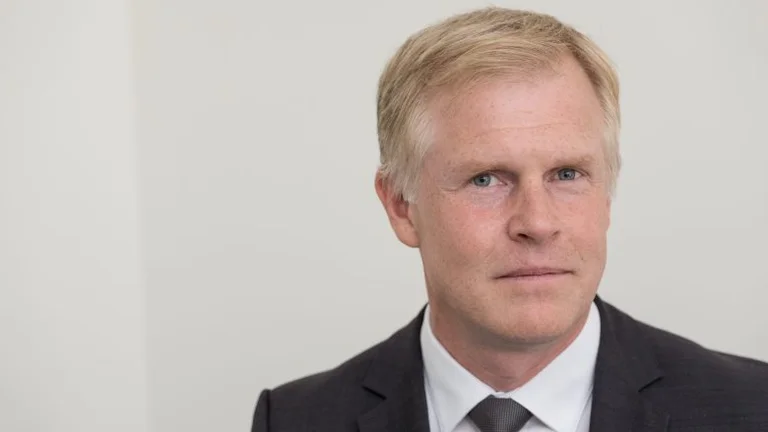
(Autor is president and professor of political economy at Berlin's “Hertie School” and director of the research centre “Jacques Delors”)