11 hours ago
Coronavirus' Pandemia is a portal to the Other World
Periskopi(6 years ago)
(6 years ago)Who can say now about something online that “became viral” without getting a little tangy? Who can examine the various items: door handle, vegetables, anything without imagining the fly of these viruses waiting to enter our lungs? Who could think of kissing [...]
Who could think of kissing a stranger, getting on a bus, or sending kids to school without a feeling of fear? Who can think of ordinary pleasure without feeling danger? Who of us has not become an epidemiologist, virologist, statistics, and prophet today? What scientist or doctor is not praying secretly for a miracle? What priest is not at least secretly praying for science?
And even as the virus multiplys, who can't be amazed at the song of the birds in the cities, the few pedestrians in the passing zebras, and the silence in the sky?
The number of cases this week exceeded over 1 million affected. More than 50,000 of them have already died. Projections say the number will go to hundreds of thousands, perhaps even affecting millions. The virus has quickly plowed and released along trade routes, and the serious disease has confined people to their countries, their cities, and their homes.
But unlike the circulation of international capital, this virus requires reproduction, not profit, and unwittingly to a degree has turned the course of that capital. Fight immigrant controls, biometrics, digital surveillance and any other kind of data analysis, and so far has hit the world's richest and most powerful nations.
This may only be temporary, but at least for as long as we examine its parts, make evaluations on it, and decide whether we want to fix it or look for a better engine for it (Capital).
The leaders who are managing this pandemic want to talk about war. They don't even mention war as a metaphor, but they mention it literally. But if it really was war, then who would be a country better prepared than America? If they didn't kill their gloves, but their guns, bombs, submarines, nuclear weapons, would there be any reaction?
Night after night, half a world away, some of us watch New York Governor's press conferences with a hard - to - explain fascination. We follow statistics and hear stories of crowded hospitals in the U.S., unpaid nurses who work beyond hours to make clown masks. For American states that push together for ventilators, for doctors' dilemmas which patient they treat and who they let die. And we think only, God. This is America! ”
Tragedy is immediate, real, epic And it is appearing before our eyes. But it's not even new. It's the ruins of a train that was leaning off track for years. Who doesn't remember the videos of the patients “x1> patients still in hospital clothes, asswashes, leaving around the street corners? Hospital doors that were often closed for the poor of the United States. No matter how sick they were, how painful they were.
At least not until now because, in the age of the virus, a poor person's disease can affect the health of rich society. Yet, even now, Bernie Sanders, the persistent senator, has sought health care for all, is considered a marginal candidate in the race to become president, even from his party.
And what about my country, my poor-pasanco-pasanic country, India, stuck somewhere between fedalism and religious fundamentalism, Casta and capitalism, led by an extreme-right Hindu nationalist?
In December, while China was fighting the outbreak of the virus in Wuhan, the government of India was facing the uprising of hundreds of thousands of its citizens protesting an anti-Islamic discrimination law that had just passed into parliament.
The first case with Covid-19 was confirmed in India on January 30th, just days after we hosted the Amazon-eating forest and the Coronavirus-reputant, Jair Bolsonaro. But there was much to do in February for the virus to be accommodated on the list of ruling party priorities. It was then President Donald Trump's official visit, scheduled for last week of February. He was greeted with a million-strong audience at a sports stadium in the state of Gujarati. All of this took a lot of money, and a lot of time to get organized.
Then we had the Delhi Assembly elections where the Bharatiya Yanata Party was expected to lose if it did not also exploit a Hindu nationalist campaign, filled with threats of physical violence and shouting for “traitors”.
And yet he lost. Then we had the appointment of punishment for the Delhi Muslims, who were blamed for their humiliation. Armed Hindu gangster activists, backed by police, attacked Muslims in working class neighborhoods in north-East Delhi. Homes, shops, mosques, and schools were burned. Muslims who were prepared for the attack attacked. More than 50 people, mostly Muslims and some Hindus, were killed.
Thousands fled to refugee camps in local cemetery. The disabled bodies had not yet cleaned up the blood when government officials had held their first meeting with Covid-19shi, and most Indians heard of something called hand shampoo.
Mars was a busy month, too. The first two weeks went into trying to overthrow the government in the central Indian state of Grandya Pradesh and install a government from the ruling party instead. On March 11, the World Health Organization ( O BSh) announced that Coddy-19shi was the pandemic. Two days later, on March 13th, the minister of health said the Coronavirus “was not a health emergency”.
Finally, on March 19, the Indian prime minister addressed the nation. It seemed that he had not worked hard for the coronary. He took the script from France and Italy. He told us about the need for “social modification” (lightly understood in a society that practices beaver division) and called for the day of “people closing the population” on March 22nd. He didn't say anything about what his government would do for the crisis, but he asked the people to come out onto the balcony, and they would beat up their pots and whistles to greet the health workers.
He did not mention that, until then, India had been exporting protective equipment and respiratory pipes instead of holding them for Indian health workers and our hospitals.
Not surprisingly, Narendra Mode's request was taken with great enthusiasm. There were gears that taught pots, dances in the community, and processions. Not that far away. In the days that followed, men leaped into the powers of the sacred cow dung, and supporters of the ruling party held feasts drinking cow urine. To avoid falling behind, many Muslim organisations claimed that the Almighty was the answer to the virus and called for mass gatherings in mosques.
March 24, 8:00 p.m.Modi shows up on TV again to announce that from midnight onward, all of India will be in quarantine. Shops will be closed. All transport, public and private, will be canceled.
He said he was making that decision not only as prime minister but also as head of our family. Who else could decide, without consulting state governments that would have to implement this decision, that a nation of 1.8 billion people would be quarantined by zero preparation and with a four-hour notice? His methods definitely give the impression that the Indian prime minister thinks of citizens as a hostile force that should be ambushed, all of a sudden, and not believed.
We were in quarantine. Many health professionals and epidemologists have applauded the move. Maybe they were right in theory. But certainly no one can support the catastrophic lack of planning and preparation that turned the world's largest and most punitive quarantine to the exact opposite of what was required to be achieved.
The man who loves spectacles had created the mother of all spectacles.
While the world was amazed, India discovered itself in all its shame... its brutal, structural, social and economic inequality, its callous indifference to suffering.
Karantina worked as a chemical experiment that suddenly gives light to hidden things. Until the shops, restaurants, factories, and construction tissue were stopped and closed until the wealthy and middle class were closed in their homes and neighborhoods, our small and large cities began to squeeze citizens of the working class into immigrants as despised, unwanted acronyms.
Many of them fired from their bosses and employers, millions of poor, hungry, thirsty, young and old, women, bura, children, sick people, blind people, disabled people, without any place to go, without seemingly public transportation, began a long walk towards their villages. He walks for days, towards Bac Ashdown, Agros, Azamgarh, Aligarh, Luchnowit, Gorakpurit hundreds of miles away. Some died on the way.
They knew they were going home to potentially slow down death by starvation. Perhaps they knew they could have the virus with them, and they could infect their families, their parents and grandparents at home, but they desperately needed a family, housing, and dignity, just like food, if not love.
As they walked, many of them were brutally beaten and humiliated by the police, who had taken the task of strictly applying quarantine. Young people were forced to bow down and dance like frogs in the Austro. Outside of the city of Barleyl, a group was bound together and poured over a seed of chemical spray.
A few days later, worried that the population leaving could spread the virus through the villages, the government closed the boundaries for these ships as well. The men who had been walking for days were stopped, and were forced to return to the camps of cities from whence they had been driven.
The memory of the transfer of the people of 1947 occurred among the elders when India was separated and Pakistan was born. The difference was that this was being driven by class division, not religious. Yet, these are no longer India's poor people. These were people with jobs in the city and homes where to return. The unemployed, the homeless, and the survivors remained where they were - in towns and villages, where deep disaster was increasing long before this tragedy occurred. And during these terrible days, Social Affairs Minister Amit Shah did not appear at all in public.
When my walk started in Delhi, I used the press pass and went to Ghazipur, bordering Delhi and Uttar Pradesh.
The scene was Scriptural. Or maybe not. The Bible could not have known such numbers. The carat to keep physical distance had resulted in physical compression on an unthinkable scale. This is the truth even within Indian neighborhoods and cities. The main roads may have been emptied, but the poor have been locked up in crowded dwellings with slums and wretched neighborhoods.
Every poor man I talked to was worried about the virus. But it was less real, less present in their lives than canned unemployment, hunger, and police violence. Of all the people I talked to that day, including a group of Muslim tailors who only survived an anti-Muslim attack a week ago, the words of one of my best men. He was a carpenter named Ramjeet, planning to walk all the way from Gorakpuri to the border with Nepal.
Maybe when Mode decided to do this, no one said anything about us. Maybe he knows that we exist, he said”
Named “NE” About 460 million people are summed up.
State governments in India (as in America) have shown greater hearts and understanding of the crisis. Unions, ordinary citizens and other collective groups are distributing emergency food and rations. The central government has been slow in countering depressing funding appeals. It turned out that Prime Minister Modi's National Relief Fund has no cash available. And instead, charity money is being poured into a somewhat mysterious foundation called PM-Cares (Prime Minister does for you). Pre-packaged food with Mod's face on it has begun to appear.
In addition, the prime minister has shared his yogas videos, in which a drawing version of Mode with a muscular body demonstrates yoga asanas to help people cope with self - stress.
narcissism is very disturbing. Perhaps one of these yogaves, our prime minister will ask the French prime minister to allow us to take back some of the Rafale fighter jets and get the money, 7.8 billion euros, to then give people hungry. No doubt France would understand us.
As quarantine enters its second week, food supply chains have been broken, medicines and essential foods are decreasing. Thousands of truck drivers are still on highways, with little food and water. The seeds, ready to be harvested, are quickly decaying.
The economic crisis is here. The political crisis is ongoing. The media ʹmeinstreem has introduced coronary reports to its poisonous 24/7 anti-mysmilian campaign. A Muslim organisation called “Tabligi Jamaat”, which held a meeting in Delhi before national quarantine was declared, turned out to be “super-ex3> of the virus. This is being used to stigmatize and demonize Muslims. The general tone suggests that Muslims invented the virus and deliberately distributed it as jihad form.
Coddy's crisis is still coming. Or not. We don't know. When it comes and if it does, we are sure it will be fought well, with all the prevalent prejudices of religion, Cassta and the class that exist.
Today (April 2nd) in India, there are about 22,000 cases confirmed by Corleone and 58 dead. These are completely incredible numbers, due to the very small number of tests. Experts' opinion differs sharply from each other. Some predict millions of cases. Some feel that the number will be too small. We may never know the conditions of the crisis, even when it hits us. All we know is that hospitals have not been crowded yet.
Hospitals and public clinics in India are not able to deal with even nearly 1 million children who die of diarrhea, malnutrition, and other annual health issues, with hundreds of thousands of tuberculosis patients (a quarter of the world's cases), a malnourished population and anemic harmful from a large number of minor diseases that prove fatal to them will not be able to cope with a crisis like Europe and the United States.
The entire health system is very pending as hospitals are dealing only with the virus. The trauma centre at the legendary All India Institute of Medical Sciences has been closed, hundreds of patients known as cancer refugees living on roads outside that large hospital were expelled as animals.
People will get sick and die in their own homes. We may never know the confessions they had. They may not even become statistics. We can only hope that studies that say that the virus likes cold weather are true (even though some research has questioned this). Humans have never had more juice for a hot, punctuated Indian wine.
What is this thing that happened to us? It's a virus, yeah. There is no moral value within itself. But it's definitely more than virus. Some believe it's God's way of turning our minds. Some that is Chinese conspiracy to take control of the world.
Whatever it is, the coronary made the tough one kneel and stopped the world as nothing before. Our minds are earnestly looking for a return to “abnormality”, trying to connect our future to our past, and refusing to recognize any cracks in it. But there is a breach. And in the midst of this terrible despair, it offers us a chance to reconsider the apocalypse we have created for ourselves. Nothing could be worse than getting back to normal.
Historically, pandemics have forced people to perish with the past and to imagine a new world. Even this pandemic is no different. It's a portal, an exit from this world to the next.
We can decide to ignore him by dragging the corpses of our prejudices and hatreds, our independence, our bank records and dead ideas, dead rivers and smoke skies. Or we can walk toward her with a small suitcase ready to imagine another world. And willing to fight for it.
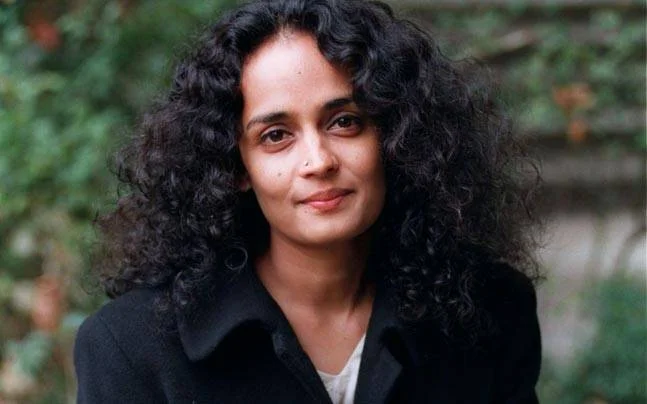
The Financial Times. Areundhat Roy is a famous Indian writer.